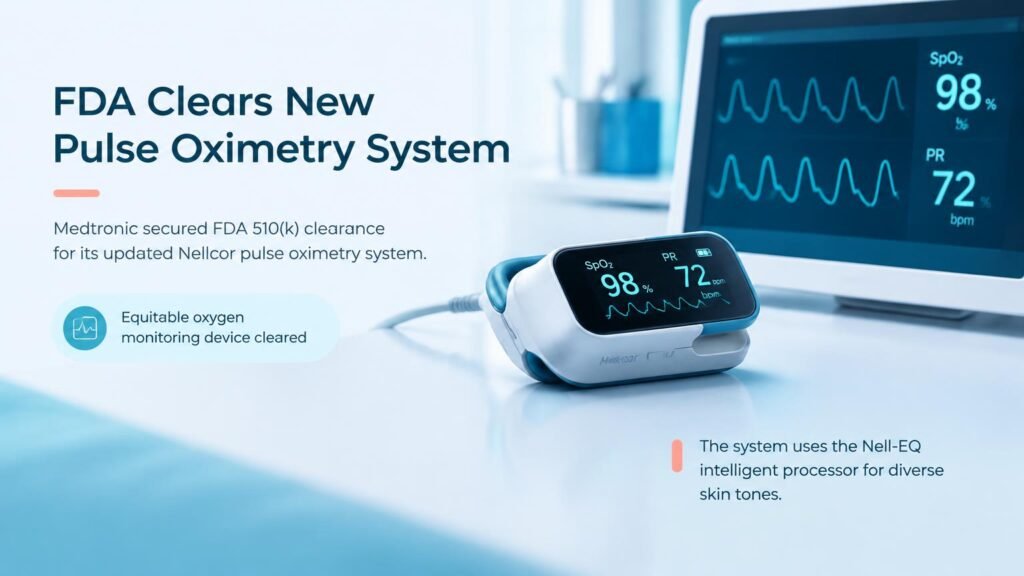
A newly cleared pulse oximeter aims to eliminate the racial bias that has compromised patient safety in hospitals for decades.
For years, clinicians have operated under a dangerous reality. Standard pulse oximeters are less accurate for patients with darker skin. This discrepancy can mask occult hypoxemia, delaying critical oxygen therapy in intensive care units and emergency departments.
The FDA clearance of the Nellcor pulse oximetry system with the Nell-EQ processor signals a shift from merely acknowledging this bias to actively regulating it. The system integrates patient- and sensor-specific signal characteristics to standardize accuracy across diverse skin tones.
The Regulatory Shift
This is not just a routine product update. It is a direct response to a tightening regulatory environment, aligning with the newly published ISO 80601-2-61:2026 standards and draft FDA guidance. In verification testing, the processor exceeded the FDA’s draft-recommended accuracy thresholds across all skin tones.
This clearance raises the baseline for the entire patient monitoring industry. Market competitors will face intense pressure to prove their devices meet these same rigorous, equitable standards. Procurement departments will likely begin prioritizing skin-tone-agnostic validation in their purchasing decisions.
The Clinical Limits
However, laboratory verification studies do not automatically guarantee perfect real-world performance. Clinicians must still monitor patients holistically rather than relying solely on digital readouts.
Hospitals must now weigh the capital cost of upgrading to these newer sensors against the clinical necessity of equitable diagnostics. The era of accepting lower diagnostic accuracy for non-white patients is drawing to a close.