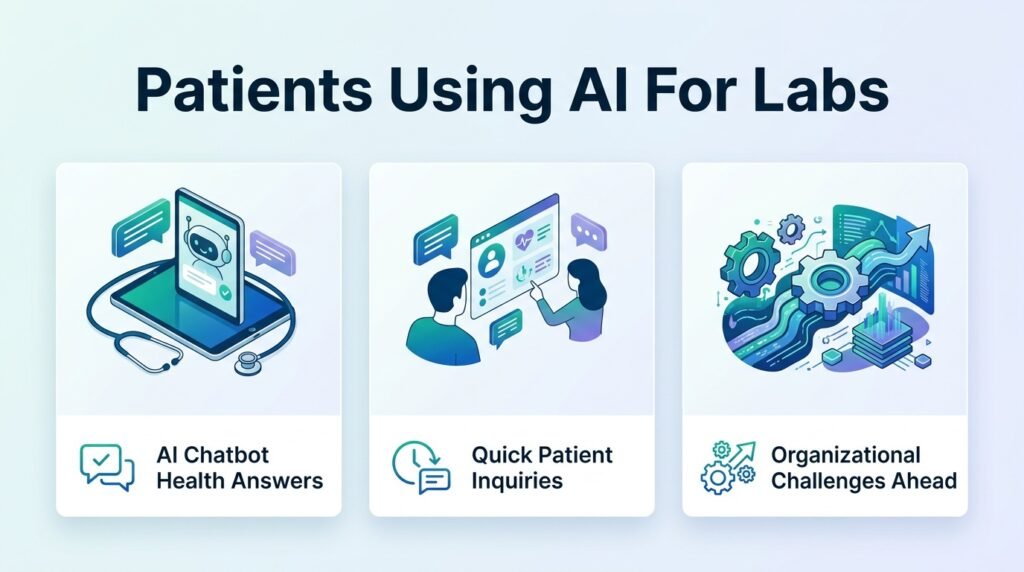
Desperate to skip long wait times, patients are pasting highly sensitive medical data into general-purpose chatbots.
Waiting days for a doctor to explain a blood test is agonizing. It is no surprise that patients are taking matters into their own hands.
By uploading complex medical documents into AI tools, patients get instant, easy-to-read explanations. This shift has forced the industry’s hand. Tech giants and diagnostic firms are rushing to formalize the trend. OpenAI recently launched ChatGPT Health to integrate medical records, while Quest Diagnostics introduced its own Quest AI Companion to decode lab results.
The clinical blindspot
But convenience comes with severe clinical blindspots. General AI models lack a patient’s complete medical history. They read numbers in a vacuum.
A slightly elevated liver enzyme might be normal for one patient but critical for another. AI cannot know this. Even worse, these models still confidently hallucinate incorrect medical advice.
The privacy trap
Then there is the data trap. Patients seeking quick answers routinely upload sensitive records to public, non-HIPAA-compliant platforms.
This exposes private health data to corporate training models.
Health systems must act. They cannot simply tell patients to stop. Instead, providers must offer secure, integrated AI tools or risk losing control of the patient relationship entirely. The era of the physician as the sole gatekeeper of diagnostic data is officially over. Health organizations must adapt or watch their patients self-diagnose in the dark.