A massive funding round for fall-prediction technology signals a major shift in how we fund and manage elder care.
The senior living sector has historically been slow to adopt deep tech. Operators have relied on manual checks and reactive call buttons for decades. But a massive capital injection is forcing a rethink of how we protect an aging population.
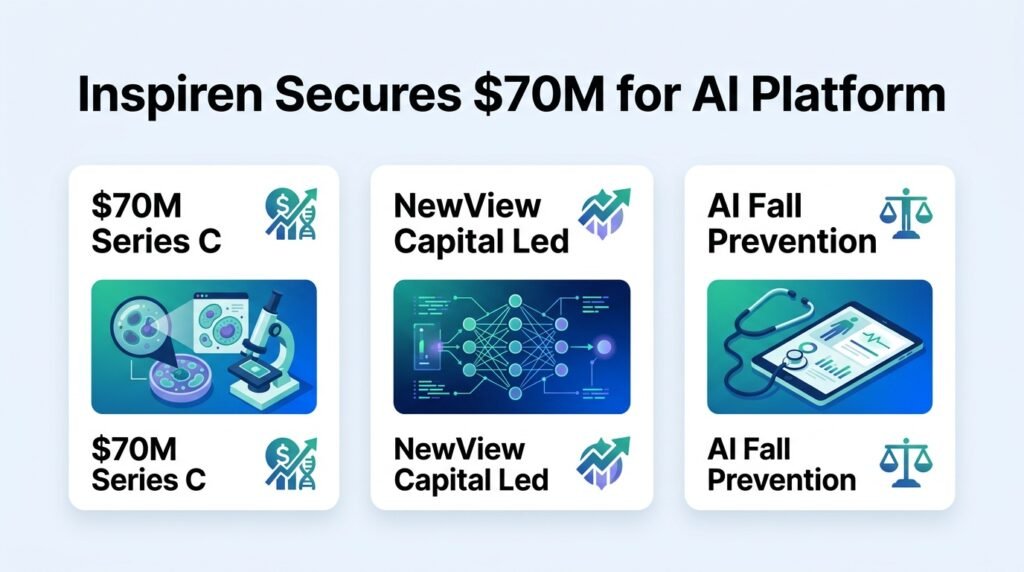
Inspiren just secured a $70 million Series C funding round, valuing the company at $550 million. This brings its total funding to $225 million, making it the most heavily capitalized technology firm in the senior living space.
This is not just another speculative AI play. The company’s subscription revenues quadrupled to $29 million, proving that senior care operators are willing to pay for passive monitoring.
The safety payoff
The technology uses ambient sensors and computer vision to predict falls before they happen. In partner facilities, these sensors reduced resident falls by up to 48% and cut post-fall emergency room visits by over 70%.
For operators, this is a financial lifesaver. Staffing shortages plague elder care, and physically checking rooms every hour is no longer viable. Ambient monitoring shifts the burden from overworked staff to passive software.
The privacy trade-off
Yet, scaling this technology to 40,000 residents across 500 facilities raises quiet questions about privacy. Living under the constant gaze of computer vision, even for safety, alters the home-like environment of senior facilities.
As the North American population ages rapidly, the industry must balance this loss of absolute privacy against the undeniable benefit of keeping seniors out of the emergency room.