
A major radiology practice is deploying its own AI reporting software to thousands of clinicians, bypassing the slow enterprise sales cycles that usually stall healthcare technology.
For years, digital health developers have hit a brick wall trying to sell to hospitals. Enterprise procurement cycles take years, leaving clinicians stuck with legacy dictation tools that feel decades old.
Now, the largest radiology practice in the US is taking matters into its own hands.
The direct deployment shortcut
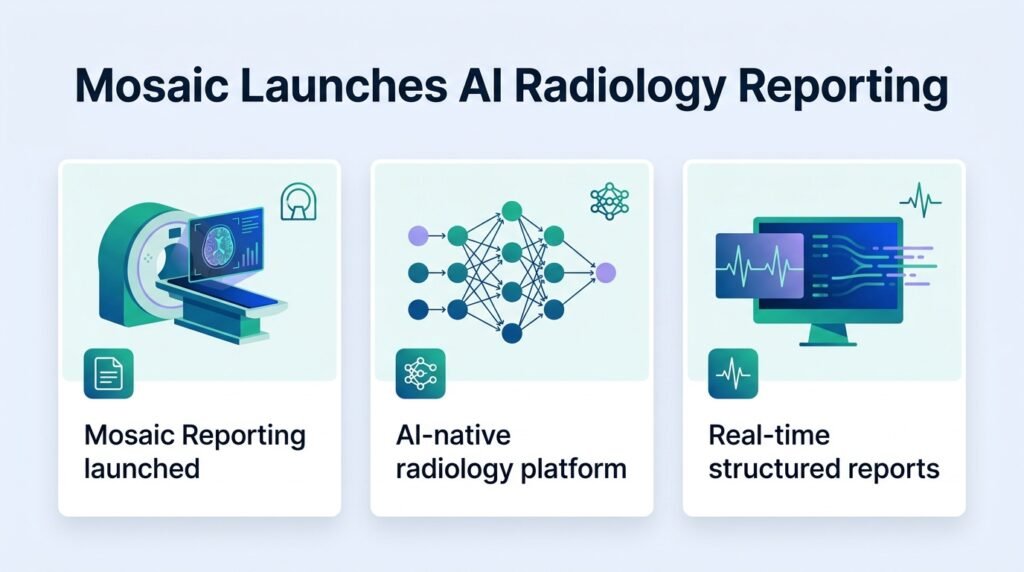
Mosaic Clinical Technologies has launched an AI-native reporting platform designed to replace dominant legacy systems. Instead of pitching individual hospital systems, the software is deploying directly across Radiology Partners’ network of thousands of radiologists.
This is a massive distribution shortcut. By leveraging its own clinical network, the company completely bypasses the typical hospital procurement bureaucracy.
The software uses ambient voice AI and large language models to construct structured reports in real time as radiologists interpret medical images.
Challenging legacy IT
The immediate goal is to ease chronic radiologist shortages and rising imaging volumes. But the broader strategic move is about infrastructure.
The platform is part of an enterprise imaging operating system called MosaicOS. By integrating fragmented AI tools into a single workflow, this launch signals a shift where clinical groups become their own software developers.
They are scaling proprietary tools internally, bypassing traditional sales channels entirely. If this model succeeds, it could redefine how clinical software is distributed. Legacy IT vendors may soon find themselves locked out of the very networks they once dominated.