Medical hardware is no longer enough to win the operating room as the real battle shifts to the software connecting it all.
The Closed-Loop Operating Room
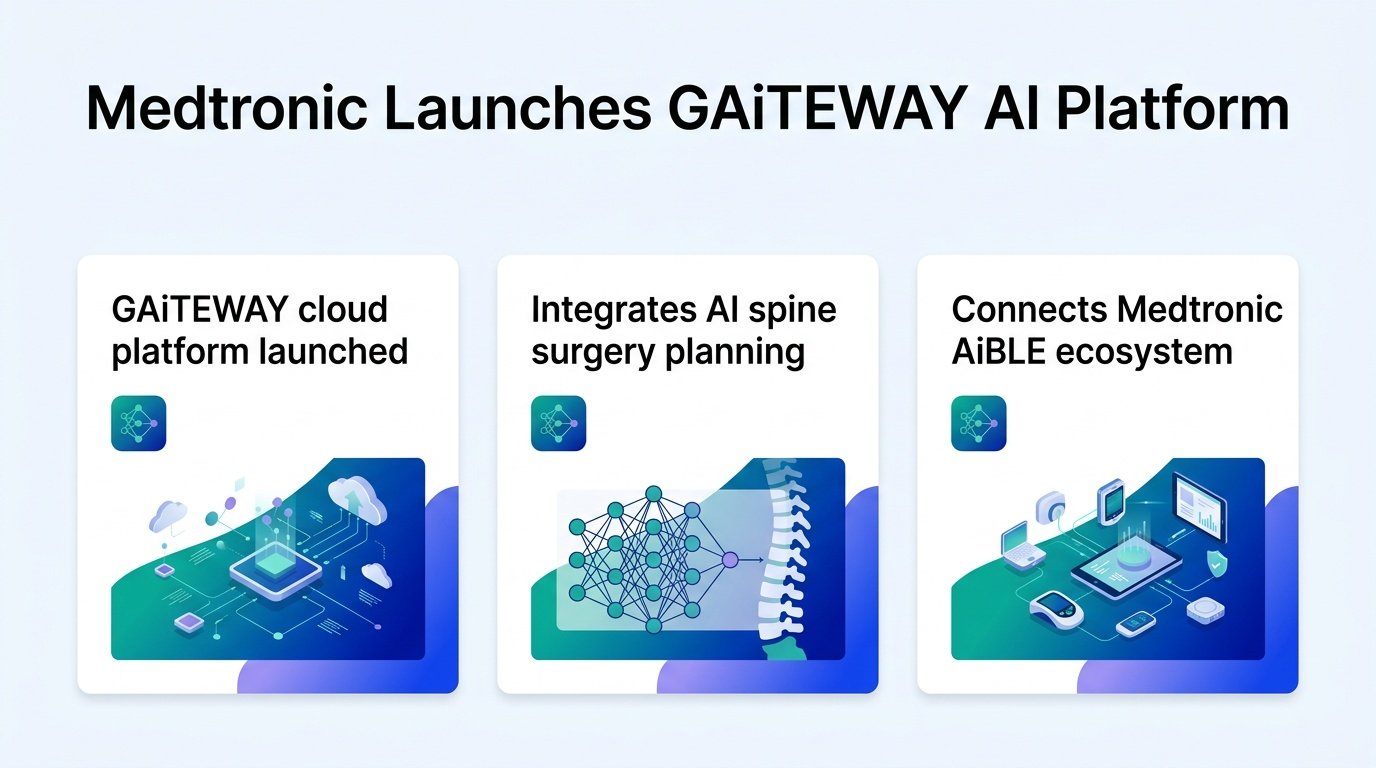
For years, medical device companies sold implants and navigation hardware as standalone tools. Medtronic is shifting this paradigm by launching its GAiTEWAY platform. This cloud-based system is designed to link pre-operative AI planning directly with real-time intraoperative tracking.
This is not just an incremental software update. It is an aggressive play to lock hospitals into a single digital ecosystem. By connecting its Stealth AXiS surgical system to post-operative analytics, the company wants to control the entire lifecycle of a spine surgery.
Surgeons have long complained about fragmented workflows. They plan a surgery on one computer, execute it using another machine, and track patient recovery on a separate system entirely. GAiTEWAY attempts to bridge these gaps.
The Data Lock-In
The strategy mirrors what we see across the wider medtech landscape. Competitors like Stryker and SMAIO are racing to build similar closed loops. The goal is simple: make the software so essential to the surgeon’s workflow that switching to a rival’s hardware becomes unthinkable.
However, this ecosystem play comes with friction. Hospitals must grapple with the reality of proprietary data silos. If a clinic uses hardware from multiple vendors, a closed platform like this forces a difficult choice. They must either standardize all equipment under one brand or lose the benefits of integrated AI analytics.
Ultimately, the success of this digital push will not be measured by how smart the AI is. It will be measured by how willing cash-strapped hospitals are to commit to a single vendor’s digital vision. The hardware sale is now just the entry ticket. The software is the actual product.