Silicon Valley is pivoting its charitable giving toward local American organizations, but this hyper-local focus leaves global health crises in the dark.
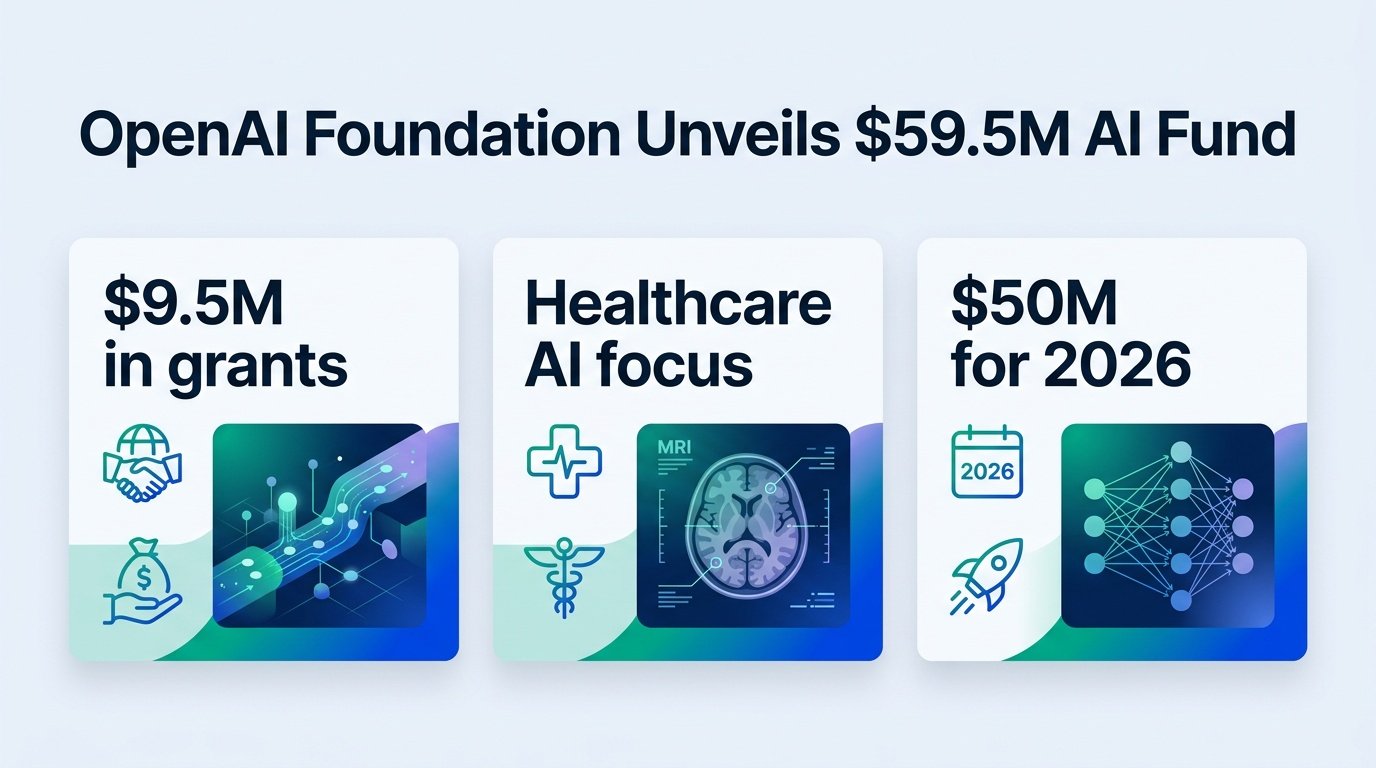
The OpenAI Foundation just finalized its initial $50 million commitment with a final $9.5 million batch of grants. While this round heavily targets healthcare, the next $50 million phase for 2026 shifts toward community services, arts, and local journalism.
This is unrestricted cash. For struggling clinics, receiving funding without rigid strings attached is incredibly rare. It allows local operators to experiment with AI on their own terms.
The Global Tradeoff
But this strategy reveals a deep tension in tech philanthropy. By focusing on politically diverse, US-based groups, the fund is choosing domestic goodwill over global utility.
Critics argue this is a massive missed opportunity.
Spending millions to help a US clinic adopt AI scheduling tools does far less measurable good than funding basic healthcare in low-income nations. The choice to fund domestic nonprofits rather than high-impact global health initiatives suggests a political motive.
A Strategic Shield
This is not just charity. It is strategic positioning.
By embedding AI tools into local American civic life, tech giants build a grassroots defense against regulatory crackdowns. It is much harder for politicians to restrict AI when local clinics, newspapers, and arts councils claim they cannot survive without it.
The real limit is execution. Without in-house technical expertise, these small organizations may end up spending their unrestricted cash on expensive consultants rather than lasting clinical improvements.