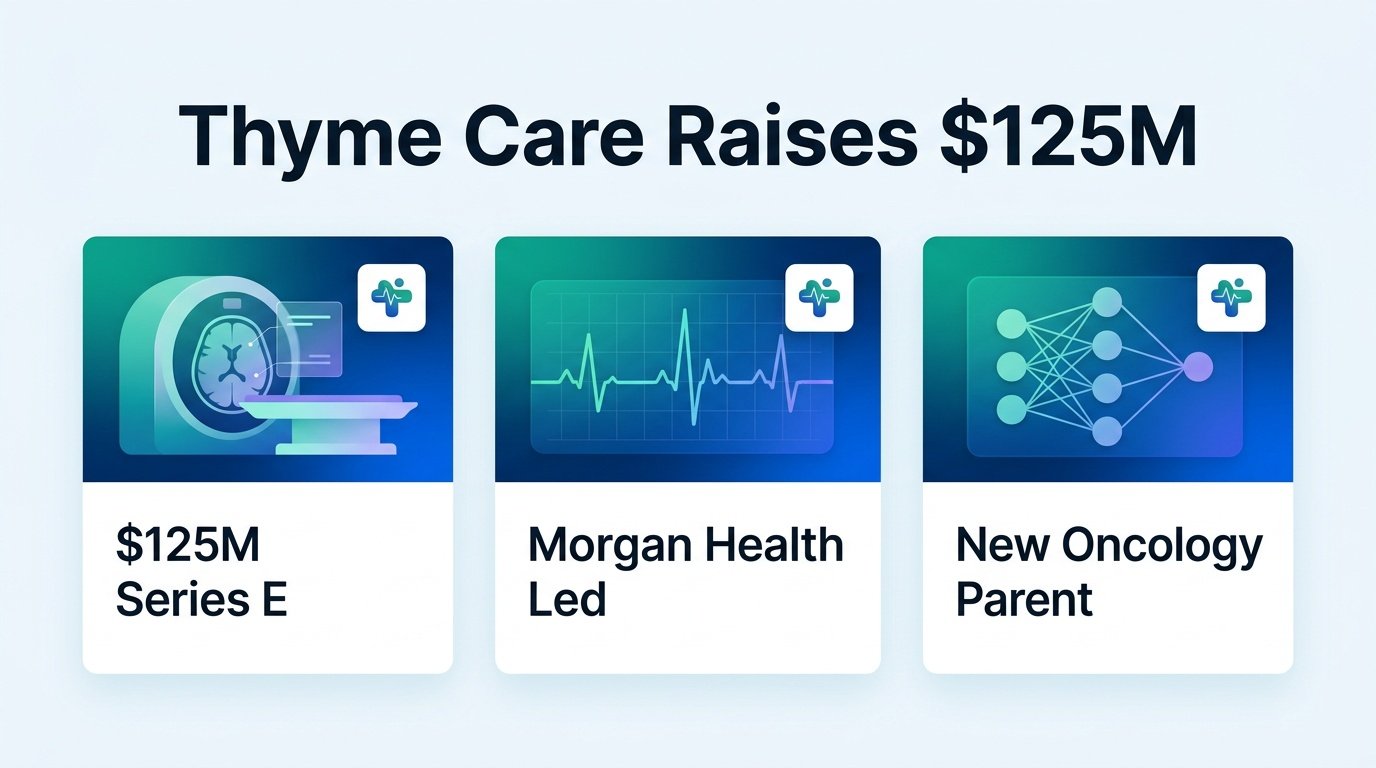
A massive new funding round for value-based cancer care signals that investors are betting on structural reform over simple care coordination.
Can a startup successfully manage the astronomical costs of modern cancer therapies without sacrificing patient outcomes?
Thyme Care is betting it can. By raising $125 million and doubling its valuation to over $2 billion in less than a year, the company is proving that value-based oncology is no longer a niche experiment. The startup now manages $7 billion in oncology spend across 10.5 million covered lives.
The Structural Shift
The real story here is not just the cash. It is the creation of a new parent entity, Thyme Companies, designed to incubate independent businesses. This restructuring suggests that simple care coordination is no longer enough to sustain venture-scale growth.
To justify its new valuation, the company must directly intervene in the most expensive aspects of oncology. The new entities will target two specific bottlenecks: biosimilar adoption and clinical trial enrollment. Pushing cheaper biosimilars directly targets the high-margin drug spend that traditional clinics rely on.
The Execution Risk
But scaling this model introduces significant friction. Value-based care relies on changing oncologist prescribing behavior, which is notoriously difficult. Furthermore, accelerating clinical trial enrollment requires solving deep-seated access issues that capital alone cannot fix.
By moving its co-founder to executive chairman to lead this new incubation arm, the company is signaling that its future lies in corporate spin-offs. Whether these new businesses can actually bend the cost curve remains the multi-billion-dollar question.