The NHS cannot build a modern digital health service when nearly all its technology budget is spent keeping obsolete systems on life support.
The UK government wants to shift the NHS from analogue to digital. It plans to back this ambition with a £10 billion fund and rapid AI rollouts. But a stark reality check shows that local healthcare trusts are financially paralyzed by their own infrastructure.
The Maintenance Trap
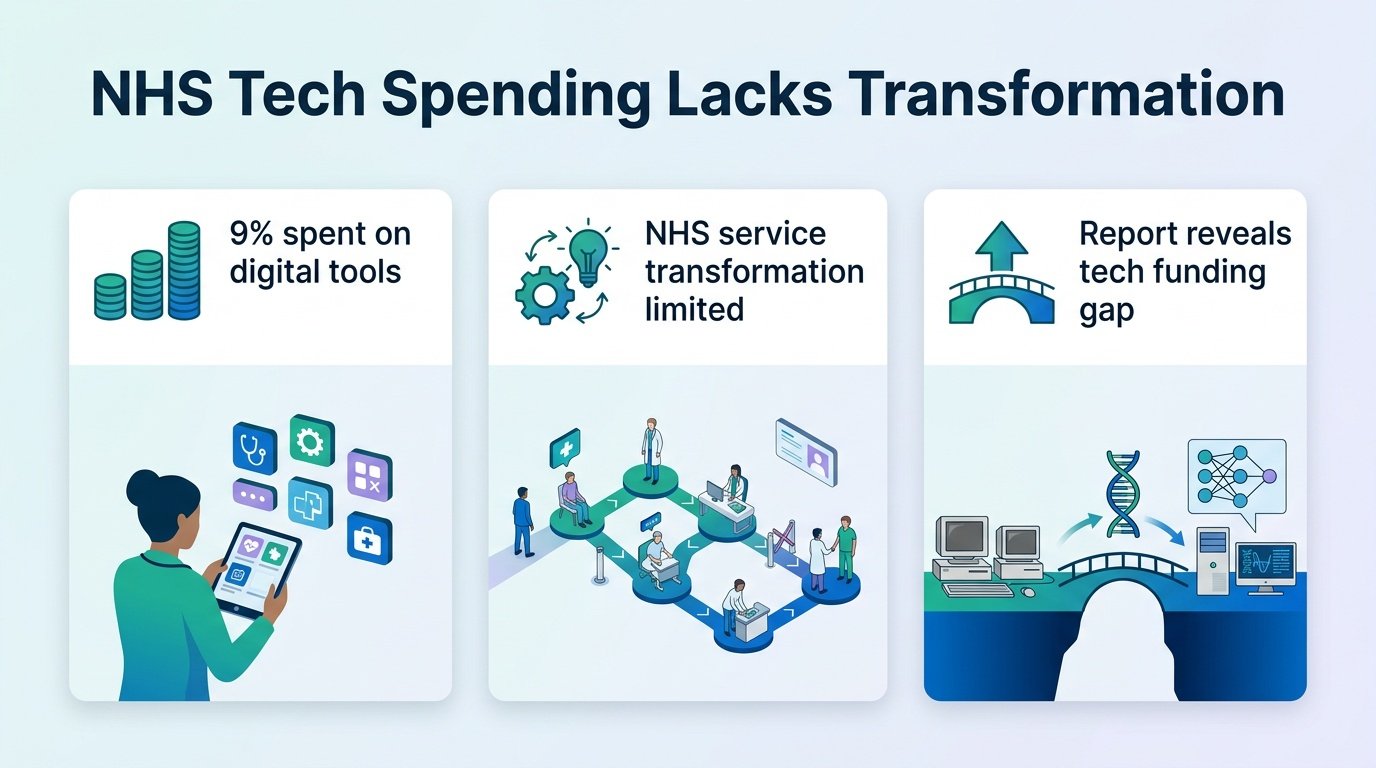
Out of an estimated £1.3 billion in local NHS technology spending, a staggering 65% is consumed by simply maintaining legacy systems. That leaves a mere 9% for clinical tools like remote monitoring.
The math simply does not work. You cannot deploy cutting-edge clinical algorithms when your budget is eaten by decades-old software maintenance. This is not a funding shortage. It is an allocation crisis.
The Strategy Gap
This budget bottleneck threatens the entire 10-Year Health Plan. Policymakers talk of a digital shift, but local managers are forced to spend their cash just to keep the lights on.
Buying new software is easy. Turning off old software is hard. It requires retraining staff, migrating fragile patient data, and accepting short-term disruption. But continuing to patch up failing systems is a slow-motion disaster.
Without a deliberate strategy to retire old infrastructure, the new £10 billion fund risks being swallowed by the same maintenance black hole. True modernization requires shutting down the past, not just funding the future. If the NHS does not actively decommission its legacy tech, its digital ambitions will remain expensive science fiction.