A proactive seal for lung biopsies could finally eliminate one of the healthcare system’s most expensive diagnostic complications.
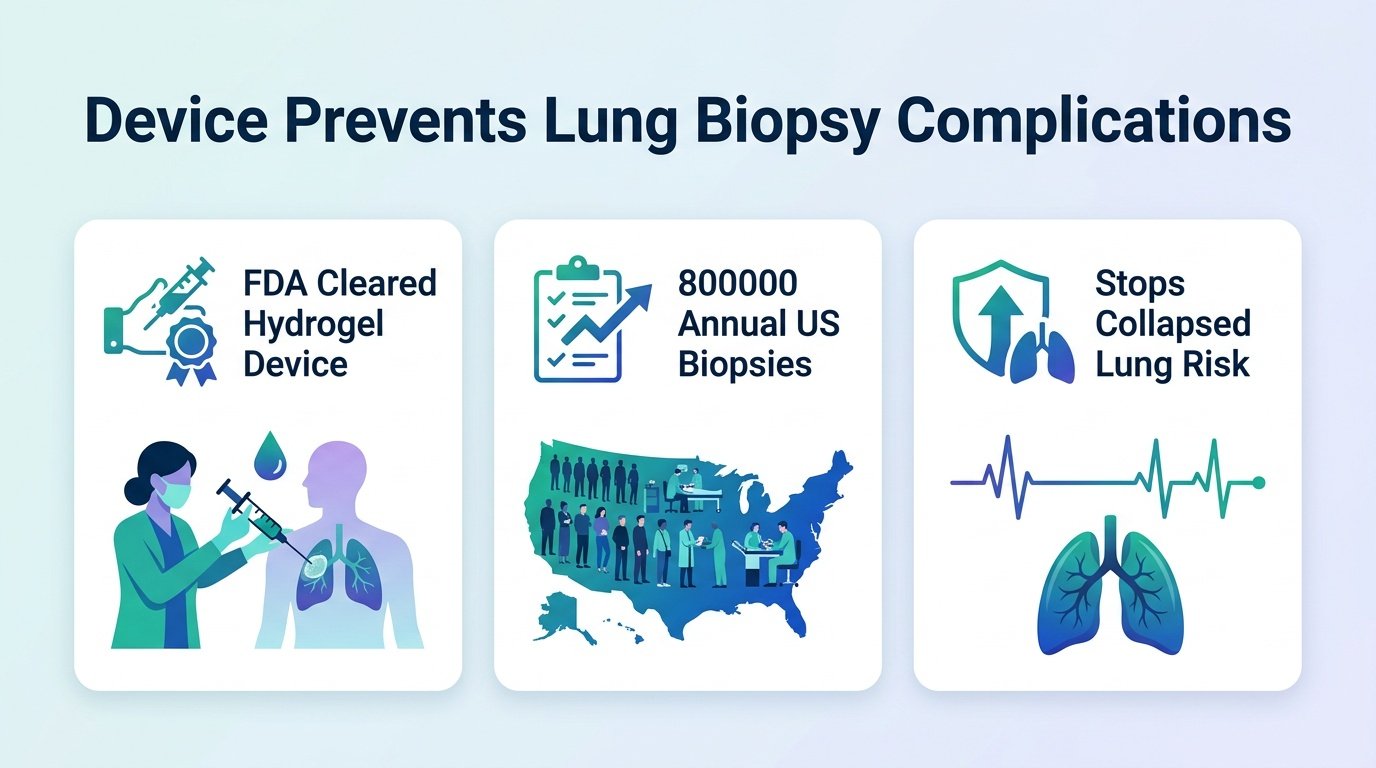
For decades, diagnosing lung cancer has carried a bizarrely high tax. Up to one-third of the 800,000 lung biopsies performed annually in the U.S. result in a collapsed lung. This single complication drains over $750 million from healthcare providers every year. It is a systemic inefficiency we have simply accepted as the cost of doing business.
The traditional response has been entirely reactive. Doctors wait for the lung to fail, then scramble to patch it with retrospective treatments. A newly FDA-cleared hydrogel device flips this paradigm by plugging the needle tract before the damage can even start.
The Proactive Shift
The system deploys a biodegradable hydrogel plug during the biopsy itself, sealing the pathway before tissue extraction. In preclinical trials, this proactive approach cut collapsed lung cases by 70 percent compared to existing systems.
This is not just a clinical victory. It is a financial necessity for hospitals operating on razor-thin margins.
The Adoption Hurdle
But clearance does not equal adoption. Selio Medical is raising a €5 million Series A to launch in two New York medical centers in late 2026. They are targeting a $450 million U.S. market.
The real test is human behavior. Interventional radiologists are notoriously loyal to their established workflows. To succeed, this technology must prove it does not add precious minutes to a high-pressure procedure. If it slows down the clinic, even a 70 percent complication reduction might not be enough to force a change in habit.