As hospitals rush to adopt ambient AI scribes, clinicians are quietly signing off on a massive liability shift.
AI scribes promise to cure clinical burnout by automating paperwork. But the rush to deploy these tools ignores a harsh legal reality. When an AI misinterprets a patient, the doctor still carries the entire legal blame. The technology is fast, but it is also creating a dangerous illusion of accuracy.
The invisible errors
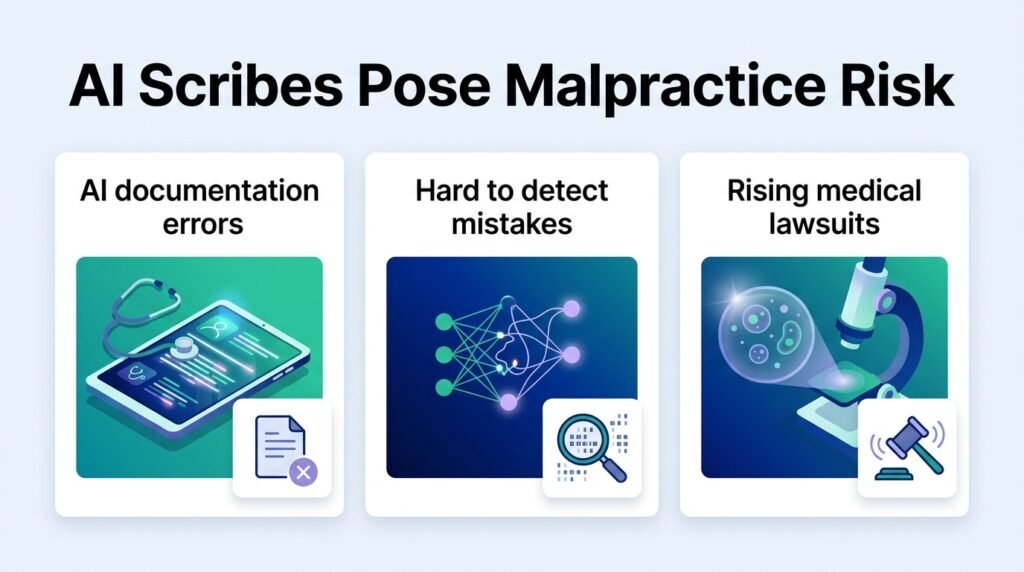
These tools do not just save time. They also introduce subtle, hard-to-detect errors. Recent warnings show AI scribes frequently misidentify drug names and diagnoses. In one case, a system falsely documented a patient as having severe nerve damage. This is not a minor typo. It is a clinical error that alters patient care.
Furthermore, AI lacks clinical intuition. It misses critical non-verbal cues like a patient’s hesitant tone or physical gestures. This creates a polished but inaccurate medical record that looks professional but lacks truth.
The liability trap
Because regulators hesitate to classify these scribes as medical devices, clinicians remain solely liable for the signed-off records. Busy doctors often skim these AI-generated summaries. That oversight is a malpractice lawsuit waiting to happen.
Malpractice insurers are sounding the alarm. Over-reliance on unverified AI summaries turns a time-saving tool into a legal hazard. If a doctor signs off on a hallucinated diagnosis, they cannot blame the software in court. Hospitals must slow down. They need to treat AI outputs as highly suspect drafts, not finished medical records. The efficiency gain is not worth the legal exposure.