
GLP-1 drugs delay dementia in some diabetes patients
New data suggests popular weight-loss and diabetes drugs might buy older patients a few precious months of cognitive health, but only if doctors target the right individuals.
Do blockbuster metabolic drugs actually protect the aging brain, or are we overhyping a systemic side effect?
For years, researchers have chased a clean link between metabolic control and cognitive preservation. This target trial emulation suggests the brain-saving effect of GLP-1 receptor agonists is real, but vanishingly small for the average patient. The true value of this analysis is not in confirming a broad medical miracle, but in identifying the niche population where these drugs actually move the needle.
The selective cognitive shield
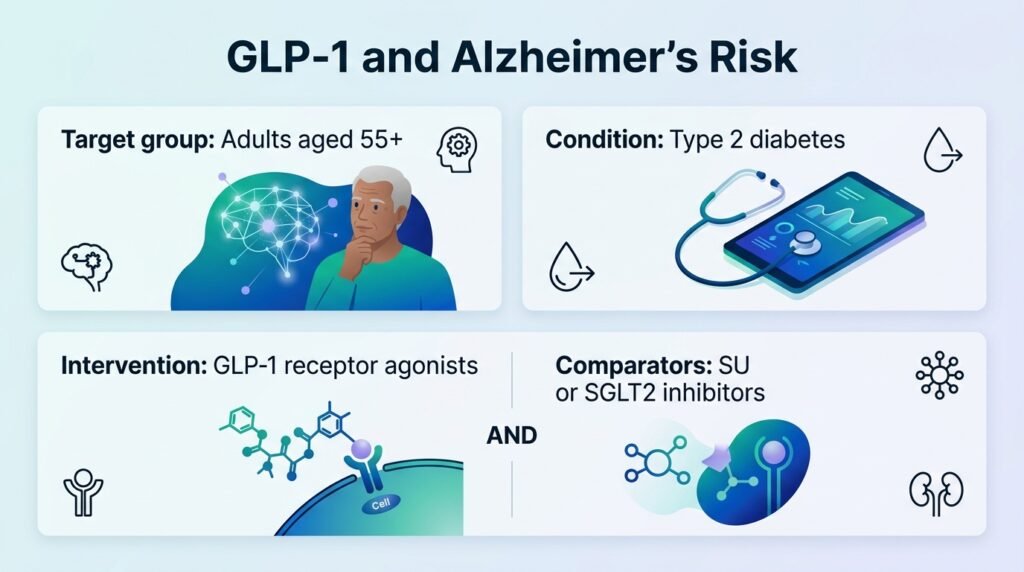
Researchers analyzed electronic health records from the All of Us database, focusing on adults aged 55 years or older with type 2 diabetes and no prior dementia. They compared GLP-1 receptor agonists against two other drug classes over a 48-month period. The analysis split patients into two distinct comparison groups to measure dementia-free survival.
The data revealed modest but highly specific gains:
- In the GLP-1 versus sulfonylurea comparison of 6,328 individuals, GLP-1 initiation was associated with an average survival gain of 0.21 months, with a number needed to treat (NNT) of approximately 202.
- The highest-benefit subgroup in the sulfonylurea comparison gained 0.45 months of dementia-free survival.
- In the SGLT2 inhibitor comparison of 3,070 individuals, the average survival gain was a non-significant 0.06 months, with an NNT of 245.
- The highest-benefit subgroup in the SGLT2 comparison saw the largest jump, gaining 0.83 months of cognitive health.
This clinical variation mirrors older laboratory findings. Early animal research, such as a study showing how a dual incretin agonist reduces neuroinflammation in mice, proved that these metabolic pathways directly interact with brain tissue. But translating those cellular victories to human clinics requires precise targeting.
Who actually benefits?
The real story lies in the patient profiles. The machine learning model showed that the predicted cognitive benefit was not uniform. Instead, the strongest protective effects were concentrated in patients characterized by older age, insulin use, lower HbA1c, and lower BMI.
This finding complicates the easy narrative that simply losing weight or lowering blood sugar automatically preserves the brain. If glycemic control alone drove the benefit, patients with the highest HbA1c would show the most improvement. Instead, the drugs appear to work best as a neuroprotective shield for patients who are already relatively lean and metabolically stable but require insulin.
A guide for clinicians
This matters because it shifts the clinical question from whether we should prescribe GLP-1s for brain health to whom we should prescribe them to. Prescribing these expensive therapies to every aging diabetic patient to prevent cognitive decline is inefficient. Clinicians should instead look at these drugs as highly targeted tools for a specific sub-population of older insulin users.
Of course, this study has clear boundaries. It is an observational target trial emulation, not a randomized controlled trial. The recorded delays in dementia are measured in weeks, not years, and rely entirely on what clinicians chose to document in electronic records. Until clinical trials confirm these patterns, diabetes treatment selection must still be guided by cardiovascular, renal, and glycemic realities.
Read the full study in medRxiv.