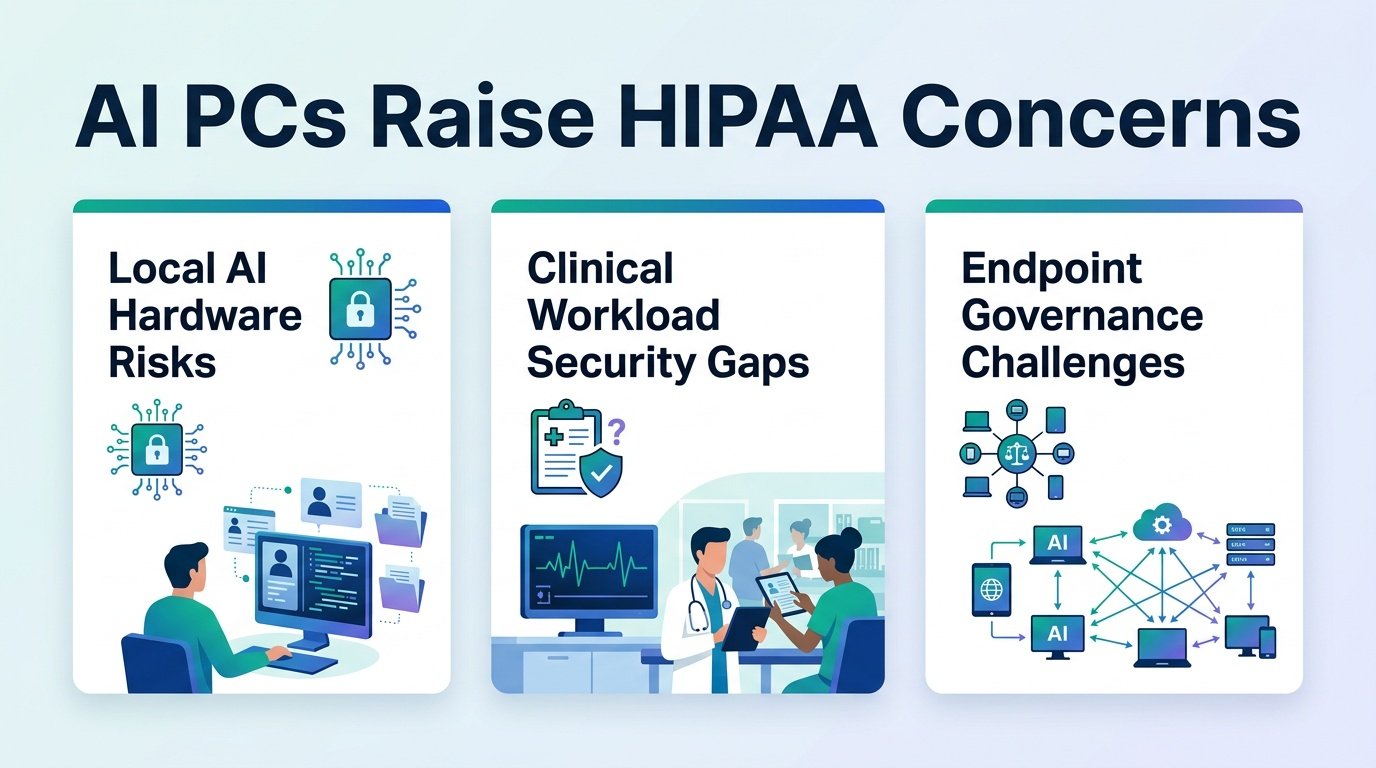
Healthcare IT departments are rushing to deploy AI PCs, but they are unknowingly creating decentralized data traps for protected health information.
The promise of the AI PC is tempting. By running artificial intelligence models locally on the device rather than relying entirely on cloud infrastructure, these machines promise faster clinical documentation and rapid image analysis. On paper, this looks like a massive privacy win. Keeping patient data off third-party servers should theoretically make compliance easier.
But the reality is much messier.
The Shadow AI Threat
The shift to local processing is colliding with a quiet crisis in clinical workflows. Up to 57% of healthcare staff already admit to using unauthorized “shadow AI” tools.
When these tools run on local hardware, they create decentralized, highly sensitive data stores. Every AI PC becomes a potential leak point. If sensitive clinical notes or medical images sit unmonitored on a doctor’s laptop, HIPAA compliance falls apart. Compliance is not a paperwork exercise.
Securing the Endpoint
Relying on standard cloud security protocols will not work anymore. Organizations must actively monitor, govern, and delete local data.
IT teams must ensure that any integrated AI vendors sign formal Business Associate Agreements. More importantly, they must enforce rigorous endpoint security. If they do not, these advanced devices will become decentralized liabilities.
The convenience of local AI is undeniable. Doctors can draft notes and analyze images without waiting for cloud lag. But convenience often breeds complacency. If IT teams do not treat these PCs with the same security rigor as a central server, the next major data breach will not happen in the cloud. It will happen on a laptop in a clinic hallway.