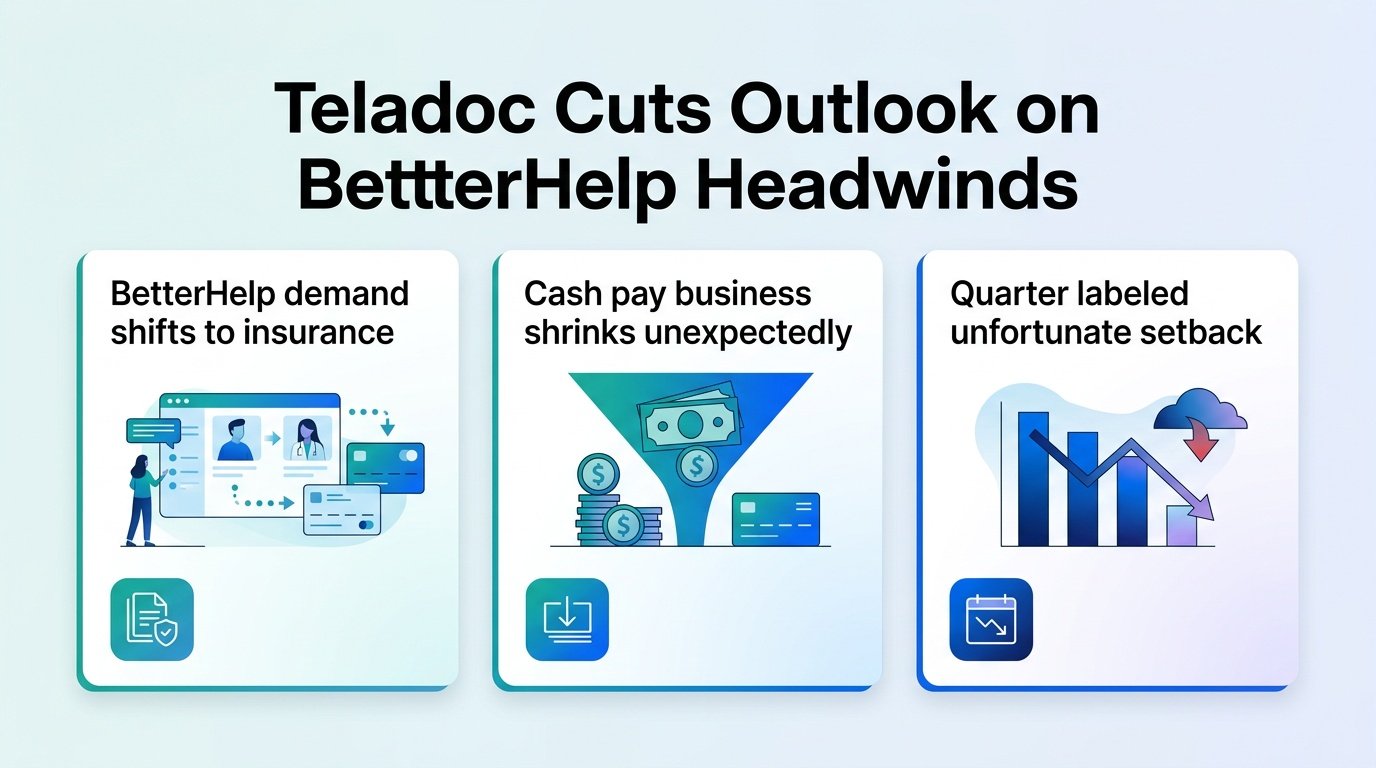
Digital health giants are discovering that giving consumers what they want—insurance-covered therapy—might actually break their business models.
For years, virtual mental health platforms minted money on direct-to-consumer cash payments. Patients paid upfront, and companies avoided the bureaucratic nightmare of insurance billing. But that era is ending. Up to 80% of mental health consumers now demand insurance coverage rather than paying out of pocket.
This shift should be a victory for access. Instead, it has triggered a financial crisis for the industry’s biggest players.
The Credentialing Bottleneck
When patients pay cash, onboarding therapists is simple. When insurance companies pay, therapists must go through rigorous credentialing. This bottleneck has paralyzed provider capacity.
One major virtual care provider recently saw its stock plunge over 20% after lowering its full-year revenue guidance to between $2.36 billion and $2.45 billion. The math is brutal. High-margin cash revenue is evaporating faster than low-margin insurance revenue can replace it.
The Margin Trap
To survive, platforms are slashing advertising budgets to protect shrinking margins. They are shifting focus from acquiring patients to recruiting and credentialing therapists. But recruiting licensed professionals in a shortage is expensive and slow.
This transition exposes a structural flaw in digital health. Scale was supposed to make these platforms highly profitable. Instead, heavy reliance on traditional insurance networks is dragging them back to the slow, low-margin realities of legacy healthcare. Add in looming securities-law investigations, and the path to recovery looks incredibly steep.