When a child faces a mental health crisis, the current system offers only two real options: months on a waiting list for basic therapy, or a chaotic, expensive trip to the emergency room.
The vast space between mild anxiety and acute psychiatric crisis is a dangerous void. Traditional pediatric mental health care lacks nuance. Families either over-pay for intensive clinical interventions they do not need, or languish without support until a minor issue becomes a critical emergency.
The Missing Middle
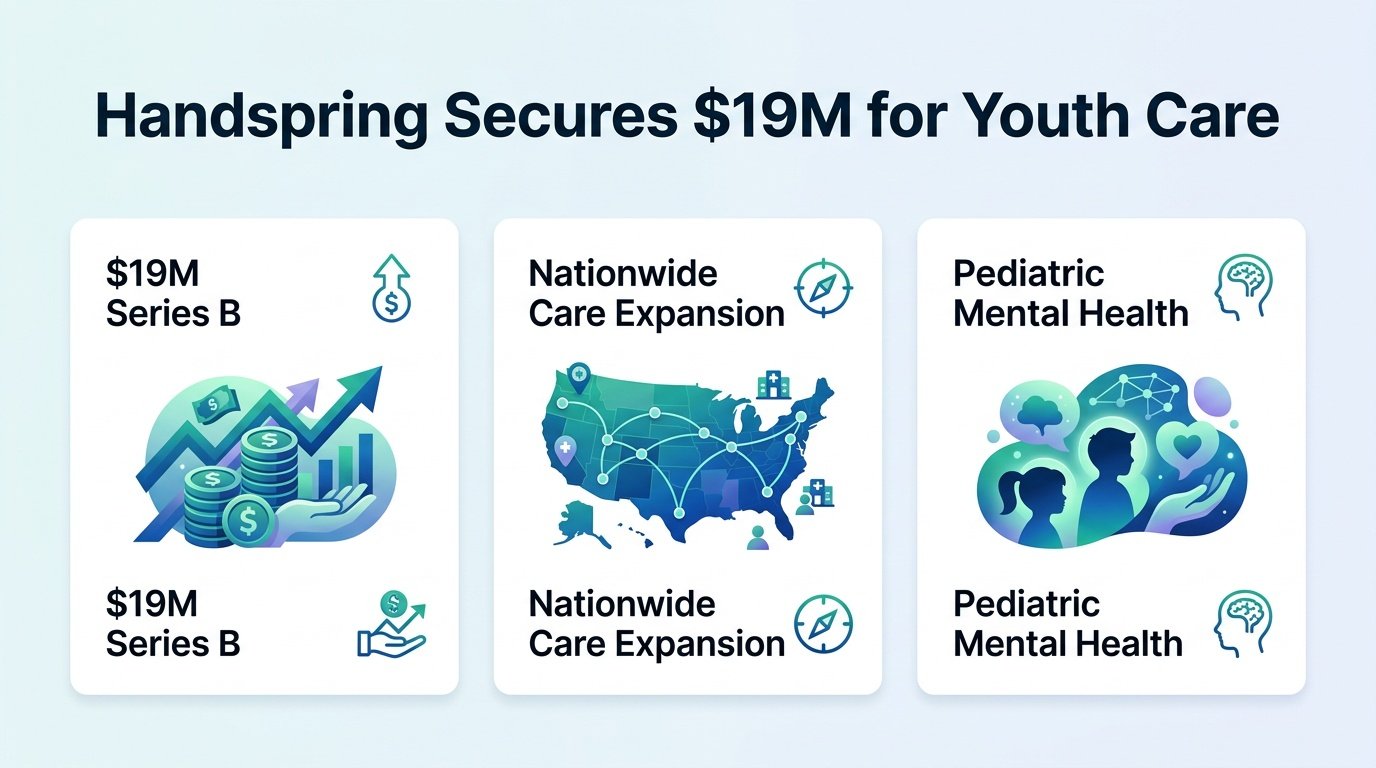
By securing a $19 million Series B funding round, pediatric mental health provider Handspring is betting that the solution lies in triaging this “missing middle.” This brings their total funding to $37 million. This momentum, fueled by a reported tenfold revenue growth over two years and the acquisition of Joon Care, highlights a shift in how investors view pediatric care.
Instead of relying on gig-economy contractors, Handspring directly employs its clinicians. This structural choice allows them to deliver structured, evidence-based therapies tailored to specific severity levels. Payers are increasingly demanding this level of accountability over loose networks of independent contractors.
The Scaling Hurdle
But clinical employment is a heavy, expensive model to scale. While employing clinicians improves quality control, it collides directly with a severe national shortage of youth mental health providers. Handspring’s expansion will test whether a high-overhead, employed-provider model can truly achieve national scale without diluting care or burning out its workforce.
The real test is not just keeping kids out of the emergency room. It is proving that a venture-backed platform can maintain clinical integrity when the pressure to scale clinical headcount meets a depleted labor market.