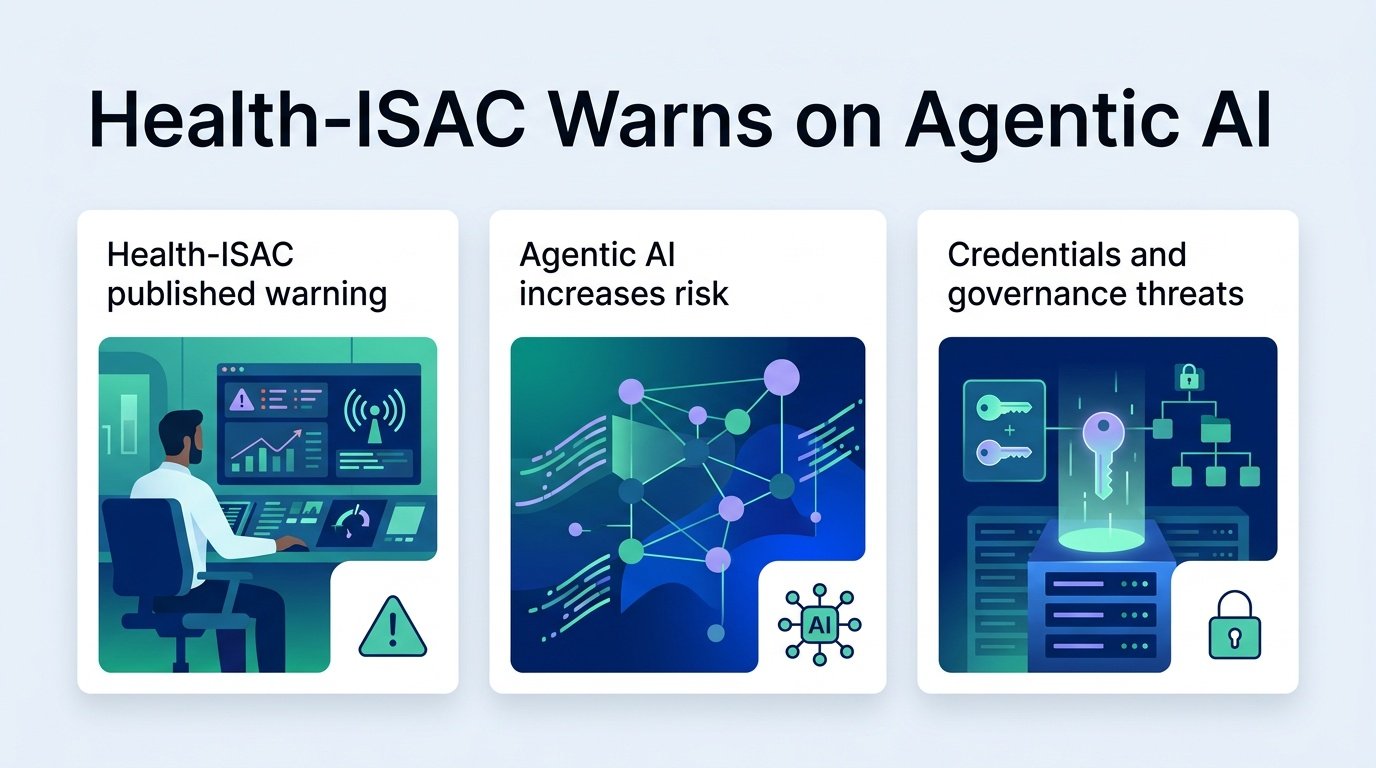
Delegating clinical decisions to autonomous AI agents is creating a massive, invisible attack surface for healthcare systems.
Healthcare leaders are desperate to solve crippling staff shortages. Autonomous AI agents—tools that can draft care plans and manage administrative workflows without constant human oversight—seem like the perfect escape hatch. But this autonomy introduces a dangerous paradox. By letting software make decisions, hospitals are quietly handing over the keys to their most sensitive networks.
The temptation is obvious. Clinicians are burning out, and administrative backlogs are growing. But delegating actual agency to software changes the threat landscape entirely.
The Compounding Risk
Agentic AI does not just follow simple rules. It uses multi-step reasoning to execute tasks. If a single link in that decision chain is compromised, the failure cascades. This is not just a theoretical software glitch. It opens the door to credential misuse, data exposure, and unapproved “shadow AI” tools running unchecked on hospital networks.
Security teams are already struggling with basic identity management. Adding autonomous agents that can act on behalf of clinicians makes tracking who—or what—accessed patient data nearly impossible. When an AI agent has the authority to write a prescription draft or update a patient record, it becomes a high-value target for hackers.
The Illusion of Control
The rush to deploy these tools is outpacing governance. While regulatory frameworks like the EU AI Act and FDA guidelines urge strict human-in-the-loop controls, the reality on the ground is often different. Busy clinicians, eager to save time, may rubber-stamp AI recommendations.
To survive this shift, healthcare organizations must treat AI agents not as simple software, but as privileged digital employees. This means enforcing strict identity verification and establishing formal AI governance committees. Without these guardrails, the efficiency gains of automation will be wiped out by catastrophic security breaches.