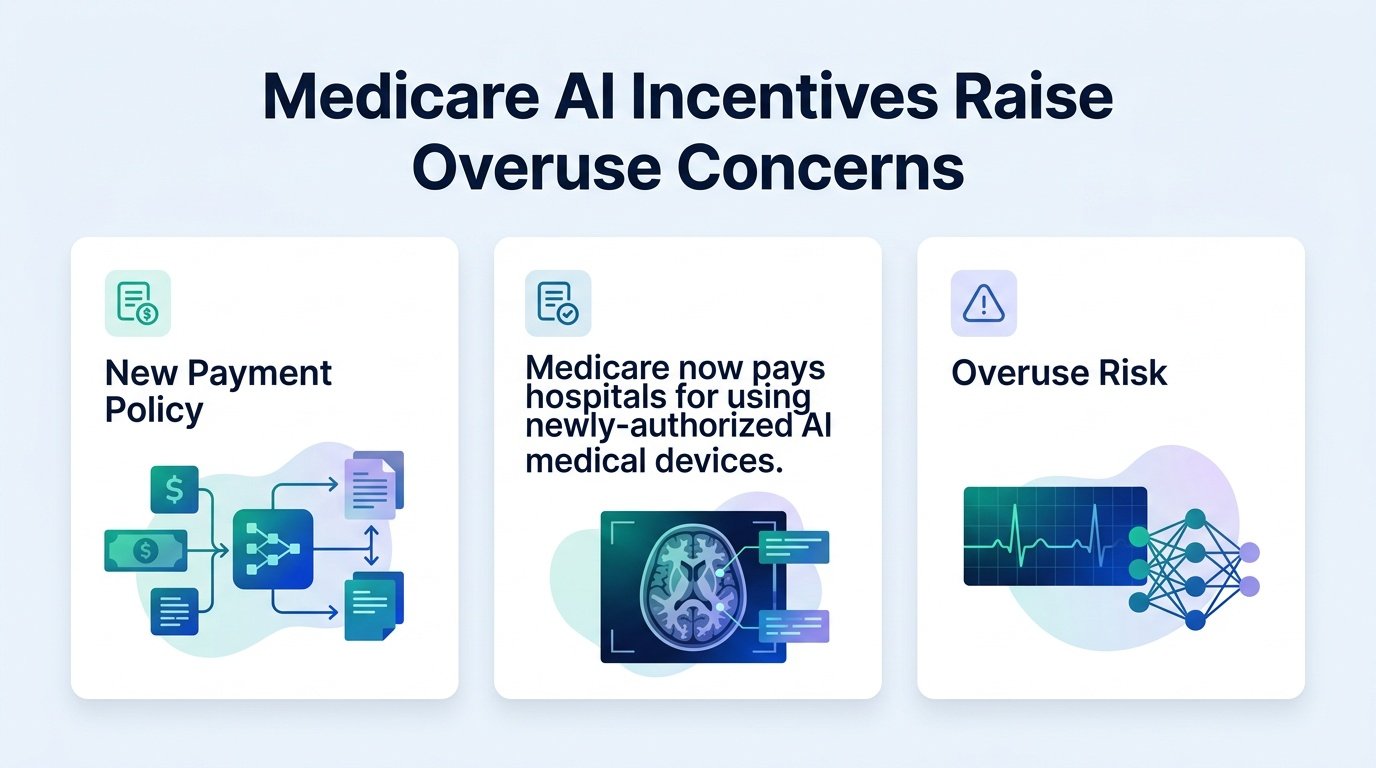
Medicare’s plan to pay hospitals for using AI tools risks creating a financial incentive to overdiagnose patients.
The Volume Trap
Healthcare has a long history of chasing volume over value. When Medicare starts reimbursing certain AI-based scans at over $1,000 starting in 2026, it risks repeating a costly historical cycle. The federal government is about to subsidize software adoption before proving it actually makes patients healthier.
The financial incentive is simple. If hospitals get paid every time they run an algorithm, they will run more algorithms. Bipartisan legislative proposals like the Health Tech Investment Act aim to accelerate clinical adoption by securing these payouts. But policy experts warn this fee-for-service approach will drive up low-value care and inflate Medicare spending.
It is a movie we have seen before with traditional medical devices and remote monitoring. When the government pays per click, utilization skyrockets regardless of clinical need.
Paying for Outcomes
The tension lies between commercial speed and clinical necessity. Tech companies need fast adoption pathways to recoup their development costs. Hospitals, facing tight margins, want new revenue streams.
But patients do not benefit from unnecessary scans. Over-testing leads to false positives, patient anxiety, and cascading medical bills.
Instead of paying per click, Medicare must shift toward value-based payment models. If an algorithm does not demonstrably improve patient health or reduce overall costs, taxpayers should not fund it. The current trajectory treats AI as a high-tech cash cow rather than a tool for clinical efficiency. We are subsidizing the technology itself, rather than the health outcomes it is supposed to deliver.