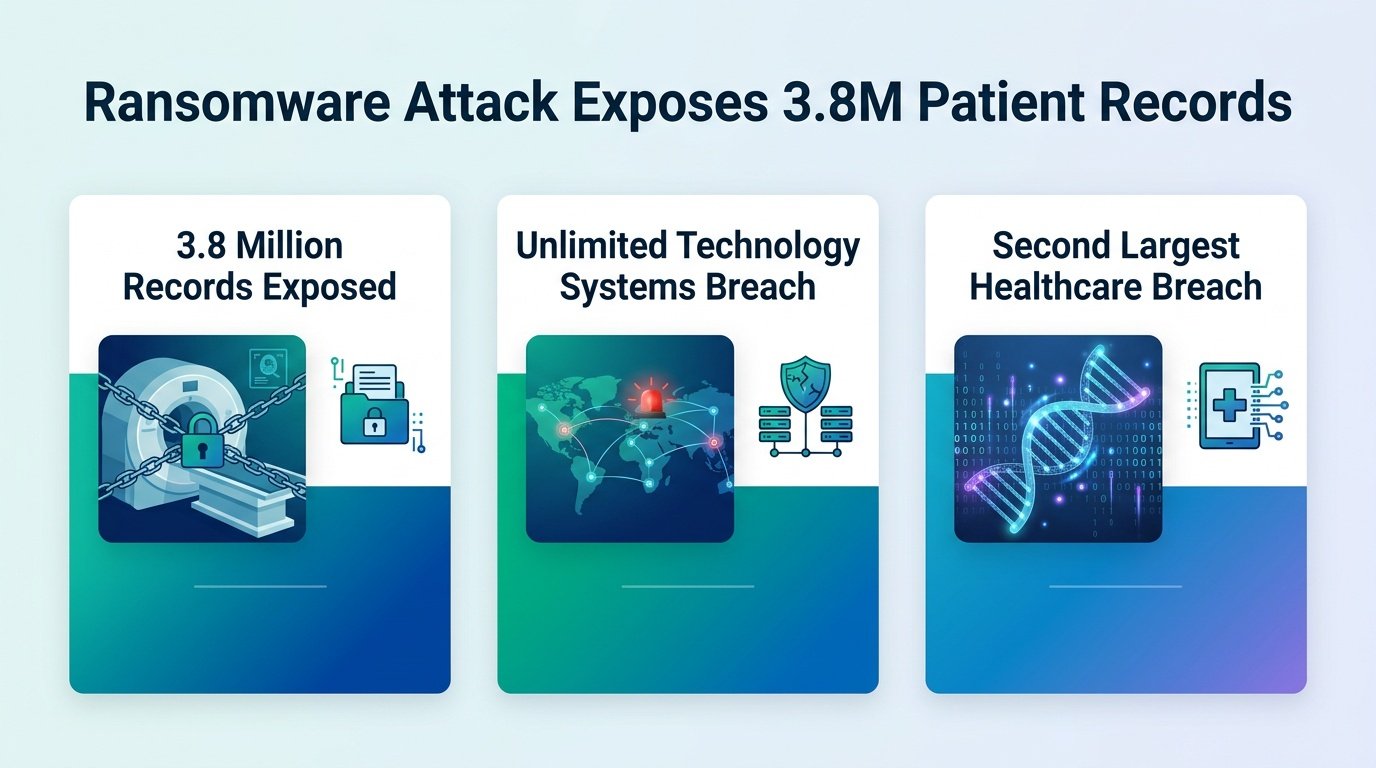
A massive data breach exposing 3.8 million patient records exposes the severe vulnerability of backend healthcare vendors.
Healthcare cybersecurity has a visibility problem. When hackers targeted Unlimited Technology Systems, they did not just breach a billing vendor. They accessed 3.8 million patient records, marking one of the largest healthcare data breaches of the year.
But the real alarm bell is not the sheer scale of the incident. It is the specific type of data stolen.
The Unstructured Data Trap
Hackers walked away with unstructured scanned documents, including driver’s licenses and patient intake forms. Unlike standardized medical codes stored in secure databases, scanned PDFs and images are notoriously difficult to track, audit, and protect.
Most security tools are designed to flag unusual activity in structured databases. They often miss unauthorized access to static image files stored in secondary folders. This blind spot makes administrative vendors prime targets for ransomware groups who know exactly where the weakest locks are.
Specialty clinics routinely outsource administrative tasks to third-party vendors to cut costs. Yet this creates a massive, poorly monitored attack surface. The affected vendor serves over 4,500 oncology offices and 6,500 specialty providers. A single point of failure compromised millions of patients across thousands of independent clinics.
The Lag in Detection
The timeline reveals another systemic failure. The breach occurred in October 2025 but only surfaced in regulatory filings in mid-2026. This months-long gap gave bad actors a massive head start to exploit the stolen identities.
The financial fallout will likely trigger a reckoning for specialty clinics. When a vendor falls, the clinical brands suffer the immediate reputational hit. Organizations must demand stricter data-destruction policies from their partners, ensuring that scanned intake forms are purged immediately after processing rather than archived indefinitely.