When commercial software cannot keep pace with clinical reality, health systems are forced to become software developers.
For decades, hospital IT departments operated strictly as cost centers. They bought rigid, off-the-shelf software and forced clinicians to adapt to its limitations. But in highly specialized fields like oncology, this passive model is breaking down.
FDA drug approvals move faster than commercial software update cycles. When a new cancer therapy is approved, clinicians cannot wait six months for an enterprise vendor to update their decision-support tools.
The build-to-sell shift
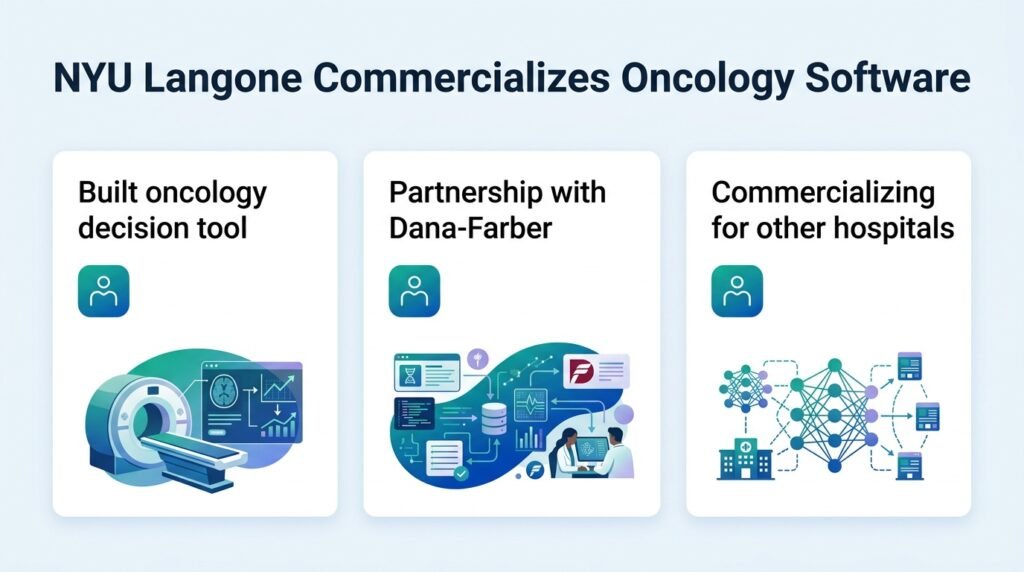
To bridge this gap, NYU Langone Health and Dana-Farber Cancer Institute co-developed Solavia Decision Suite. The tool guides clinicians through complex cancer treatment pathways directly within the electronic health record.
Instead of keeping this tool proprietary, the institutions are commercializing it. They are turning custom internal software into a licensed product for other health systems.
This is not an isolated experiment. It signals a structural shift where major health systems act as software vendors.
The commercial risk
But building software is not the same as maintaining it.
Health systems excel at clinical validation, but they lack the dedicated sales, customer support, and engineering infrastructure of pure-play tech companies. If these academic institutions cannot scale their support operations, their custom tools risk becoming expensive, outdated legacy code for the hospitals that buy them.
Still, the financial incentive is too strong to ignore. By licensing internal tools, hospitals are attempting to rewrite their balance sheets, turning IT from a capital drain into a high-margin revenue stream.