Regulators are forcing a public reckoning over whether marginal cancer screening benefits justify the risks of widespread adoption.
The FDA’s decision to convene an advisory committee for Grail’s multi-cancer early detection test, Galleri, signals a critical shift in how we evaluate advanced diagnostics. This is not a victory lap. It is a high-stakes clinical interrogation.
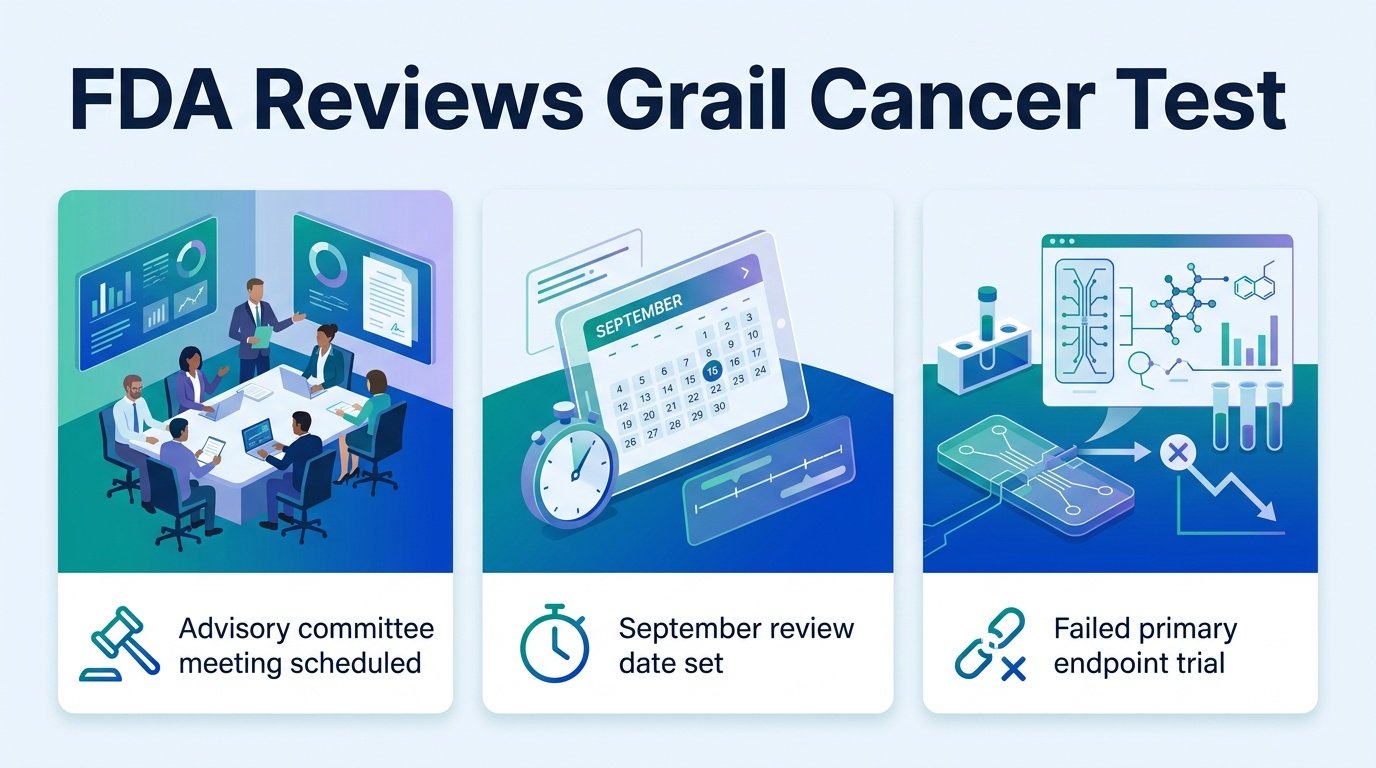
Earlier this year, Grail’s massive 142,000-participant trial missed its primary endpoint. The test failed to show a statistically significant reduction in late-stage cancer diagnoses. Yet, the company’s stock rebounded on news of the FDA panel, as markets cling to secondary data showing a 14% reduction in stage 4 diagnoses.
The Screening Dilemma
Can secondary success rescue a failed primary goal? That is the question the FDA must answer on September 23.
Grail points to high specificity and shifts toward earlier-stage detection. But clinical trial design exists for a reason. When a trial misses its main goal, relying on positive secondary signals is a risky regulatory path.
If the FDA lowers the bar for approval based on secondary trends, it sets a concerning precedent. We risk flooding the healthcare system with worried-well patients chasing false positives.
Commercial Reality vs. Clinical Proof
Meanwhile, commercialization is outpacing clinical validation. Grail already sells the test for $699 through telehealth partnerships.
This creates a bizarre disconnect. Consumers can buy a test today that clinical trials suggest might not deliver on its core promise. The upcoming advisory meeting will decide if regulatory standards will bend to accommodate commercial momentum, or hold the line on hard clinical evidence.