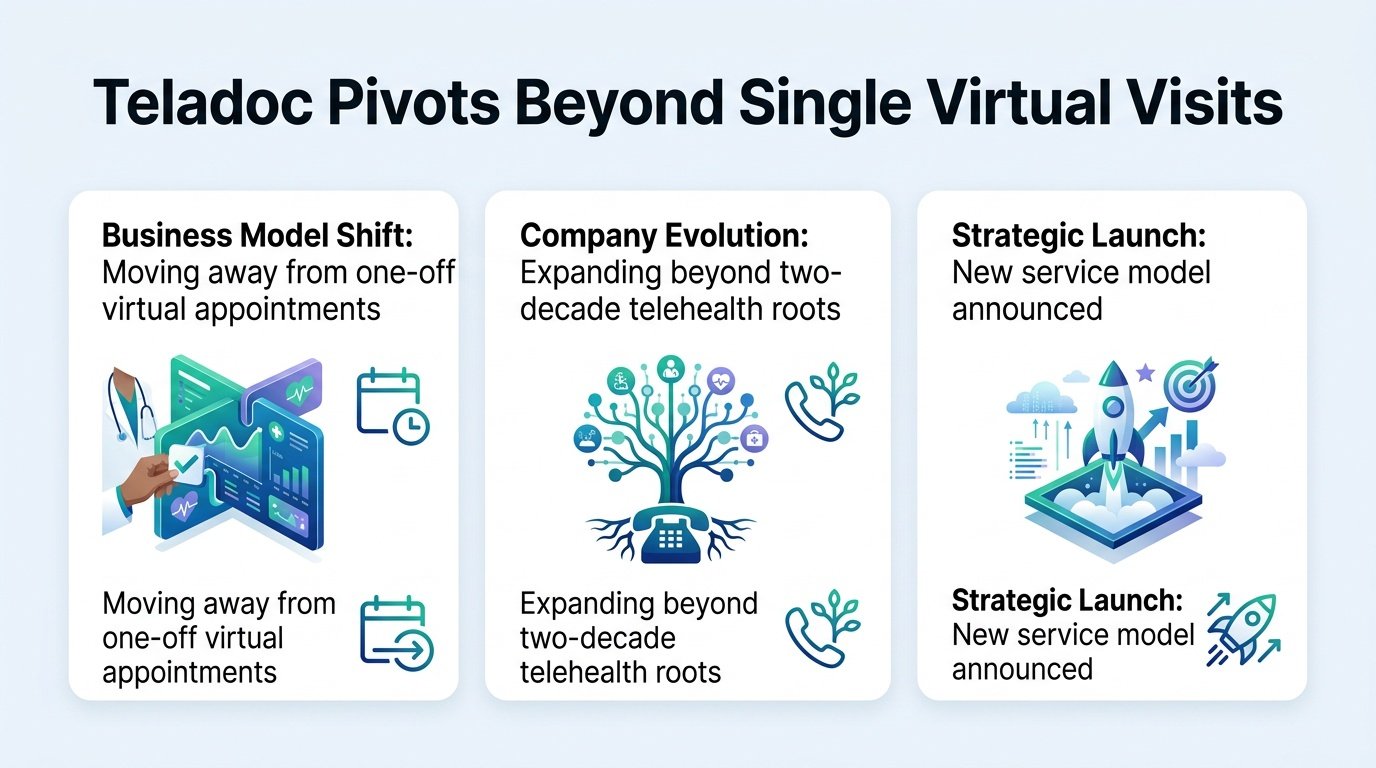
The pioneer of quick-fix telemedicine is admitting that its original business model is no longer enough to survive.
For two decades, virtual healthcare meant one thing: dialing up a random doctor to cure a quick sinus infection. It was convenient, cheap, and highly transactional. But convenience is no longer a differentiator in a market flooded with copycats. A post-pandemic stock decline forced a reckoning, proving that buyers want more than just digital waiting rooms.
Now, Teladoc is shifting toward integrated, whole-person care with its new Teladoc One initiative. Under CEO Chuck Divita, the company is attempting a massive turnaround. This is not just a product update. It is a quiet admission that the single-visit model is a dead end for long-term growth.
The Outcome-Based Gamble
To make this shift stick, the company is doing something radical for a legacy telehealth provider. It is tying its fees directly to proven medical cost savings and clinical outcomes.
Moving away from traditional flat-fee contracts is a high-stakes bet. If patients do not actually get healthier, Teladoc’s revenue will suffer. This pivot reflects a deeper shift in healthcare purchasing. Employers and insurers are tired of paying subscription fees for digital health tools that employees use once and abandon. They want lower overall claims, not just virtual urgent care.
Can Legacy Tech Pivot?
But turning a massive virtual-visit engine into a coordinated care ecosystem is incredibly difficult. Teladoc must seamlessly bridge virtual care, mental health, and in-person referrals.
The real test is whether a platform built for speed can transition to managing complex, chronic conditions over years. If it fails, this pivot is just an expensive rebranding of the same old transactional care.