As health systems rush to adopt artificial intelligence, the technology is shifting from a luxury upgrade to a survival tool for burned-out clinicians.
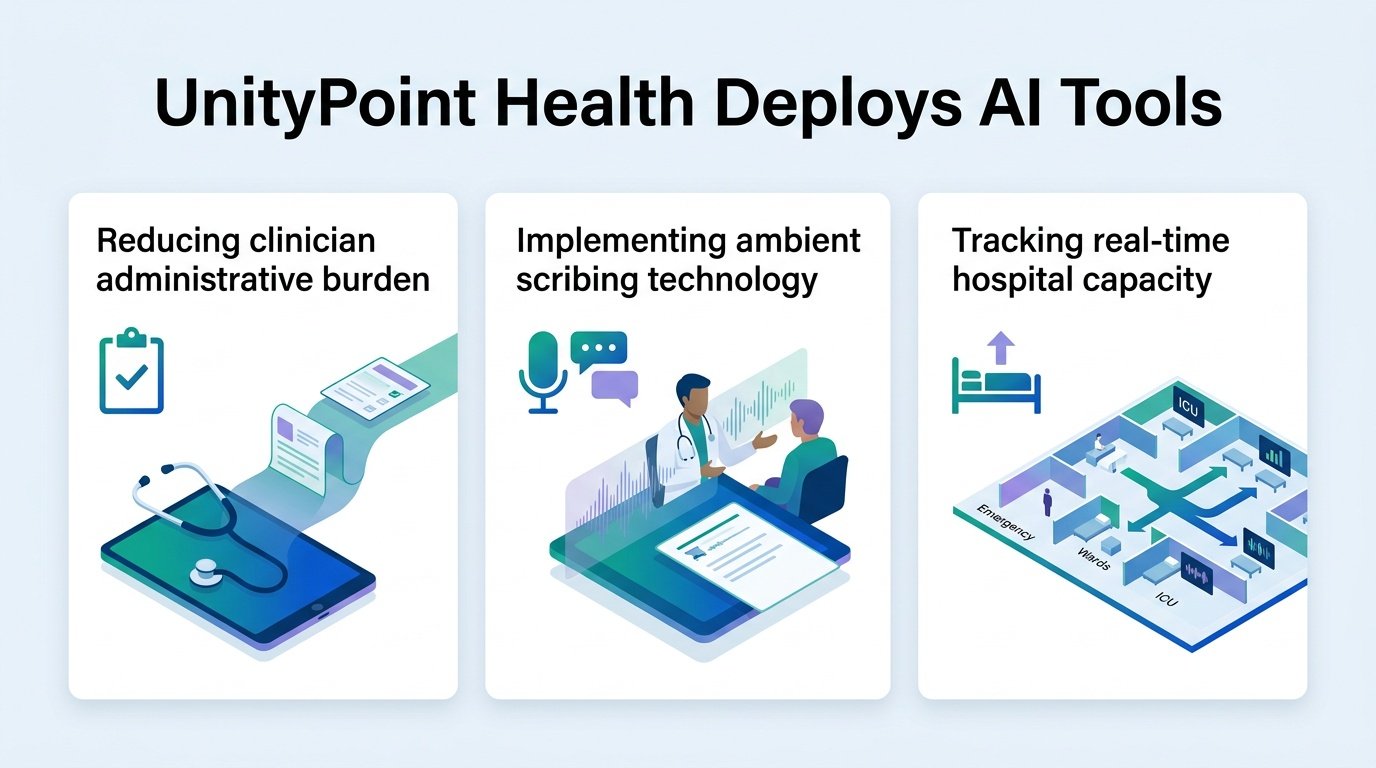
UnityPoint Health is deploying ambient scribing, real-time capacity tracking, and AI-powered chart reviews across its 35-hospital network. By partnering with the Mayo Clinic Platform_Insights program, the system aims to ease administrative burdens, especially in cash-strapped rural areas.
The infrastructure shift
This is no longer about testing flashy pilot programs. It is a race to secure basic operational stability. Health systems are drowning in paperwork, and doctors are spending more time facing screens than patients.
AI tools are rapidly becoming standard clinical infrastructure. The market has shifted from tech startups pitching niche features to a brutal competition for enterprise-wide health system contracts. If a hospital system does not integrate these tools directly into its electronic health records now, it risks losing its workforce to competitors who do.
The reality check
Yet, deploying these tools is only half the battle. While ambient scribing promises to cut keyboard time, its success depends on deep integration. If clinicians must still manually correct AI-generated charts or fight clunky software interfaces, the administrative burden simply morphs rather than disappears.
True efficiency requires predictive analytics that work quietly in the background. For rural clinics, this infrastructure could bridge the gap in specialist access. For the broader industry, it proves that AI’s real value lies not in clinical decision-making, but in quiet administrative relief.