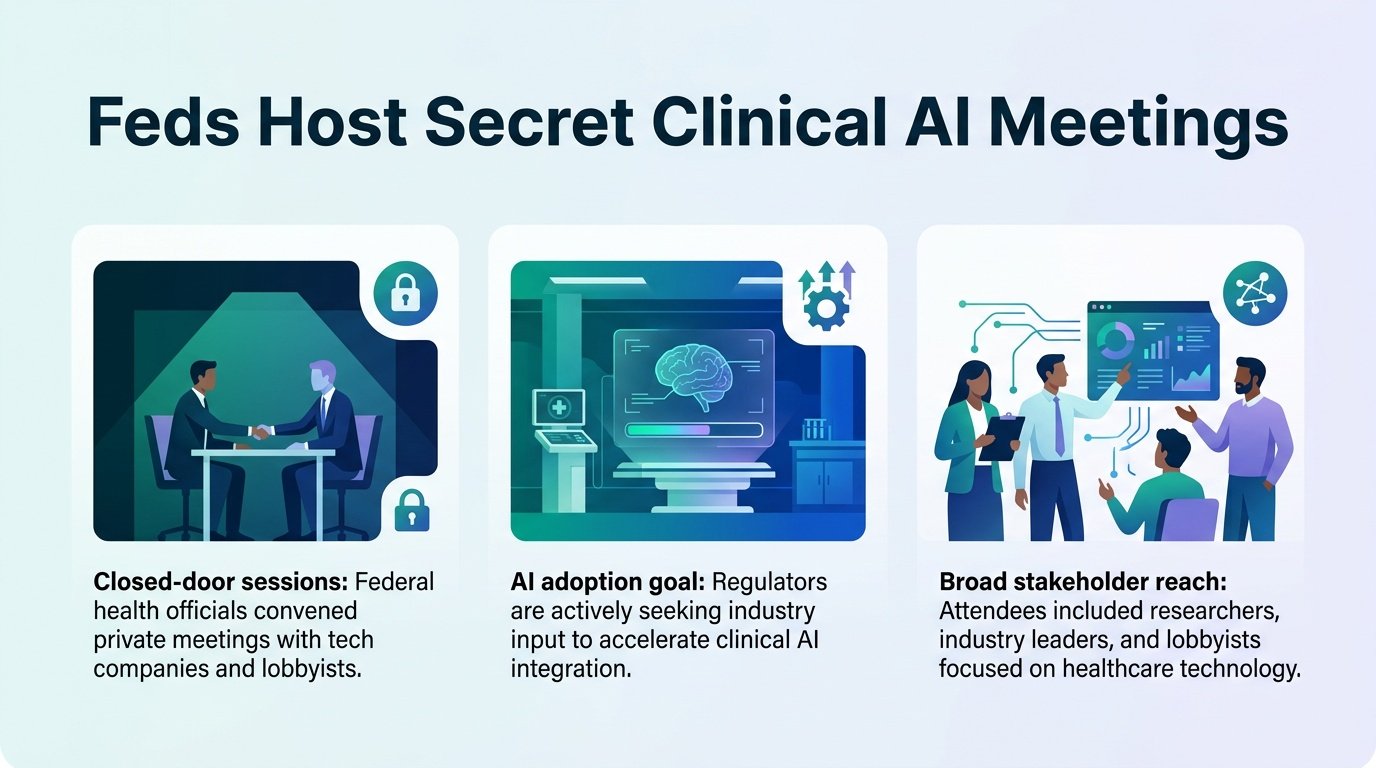
Federal officials are quietly clearing the runway for clinical AI, but their hands-off approach is triggering a chaotic state-level rebellion.
Behind closed doors, federal regulators are huddling with tech lobbyists to accelerate clinical AI adoption. The goal is clear: strip away bureaucratic friction. The federal government is actively leaning toward a deregulatory posture, even proposing to scale back key AI transparency requirements under the HTI-5 rule.
But this federal retreat is creating a massive power vacuum.
The State-Level Rebellion
Instead of a unified national framework, developers now face a chaotic patchwork of local laws. In 2026 alone, state lawmakers have introduced hundreds of bills targeting clinical AI oversight, patient consent, and therapy chatbots. While Washington quietly opens the door for industry insiders, state capitols are building their own walls.
This regulatory divide is a compliance nightmare for healthcare software developers. A tool that is perfectly legal to deploy in one state could violate patient consent laws just across the state line.
The Safety Deficit
Medical groups like the American Medical Association are already sounding the alarm. They warn that independent clinical AI currently lacks the basic safeguards needed to protect patient safety.
The push for fast-tracked AI adoption is backfiring. By refusing to set firm, transparent national guardrails, federal agencies are forcing states to write their own rules. This creates the exact regulatory chaos the industry was trying to avoid.