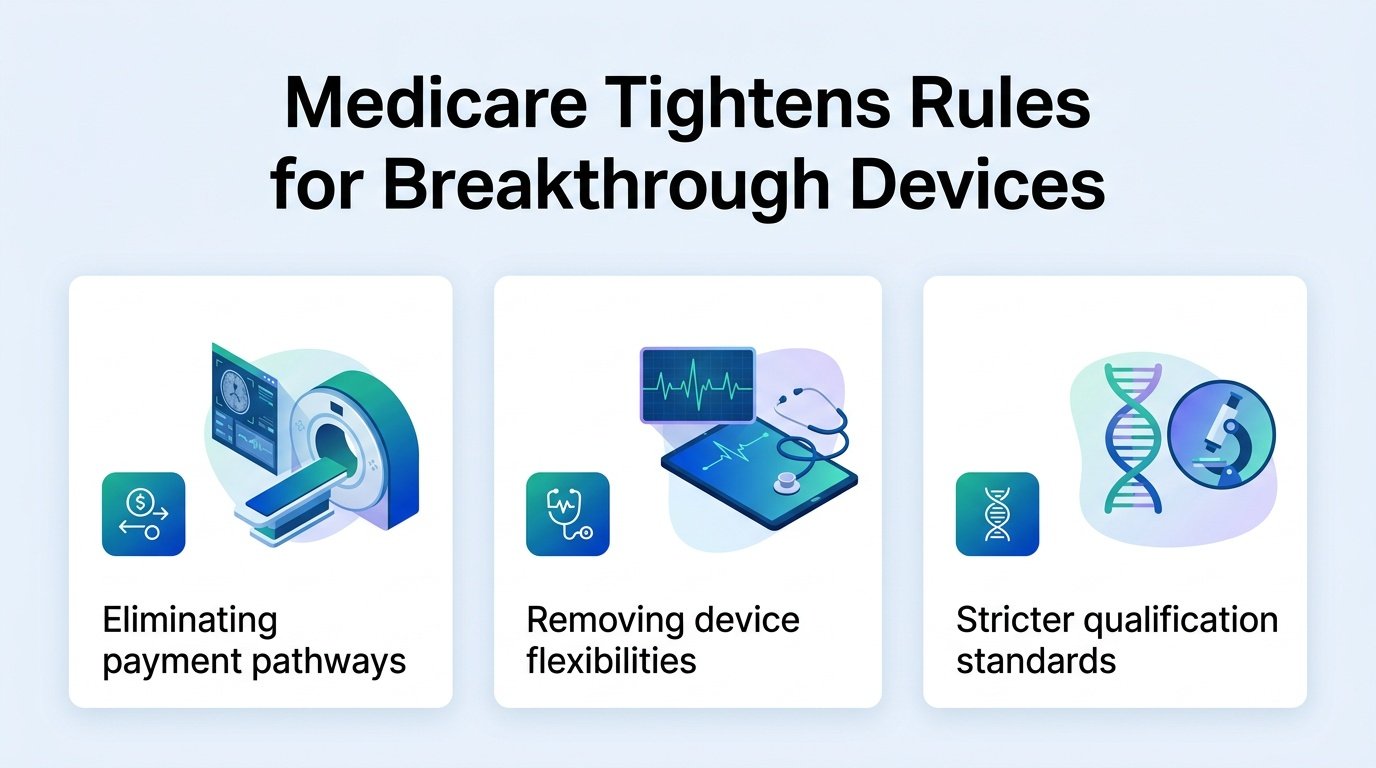
Federal regulators are closing the fast track to extra Medicare funding, forcing medical device makers to prove real clinical value rather than relying on a prestigious FDA label.
For years, securing a breakthrough designation from the FDA was a regulatory golden ticket. It did not just speed up review. It also bypassed tough hurdles to secure extra Medicare payments.
That regulatory shortcut is officially dead.
The New Reality
The Centers for Medicare & Medicaid Services proposed repealing the alternative New Technology Add-on Payment pathway. Under the new rules, breakthrough devices must prove substantial clinical improvement to qualify for supplemental payments.
This is a massive shift in philosophy. Medicare is signaling that regulatory novelty does not automatically equal clinical value. The agency will no longer subsidize expensive new tools simply because they are new.
Device makers can no longer rely on early-stage hype. They must design clinical trials that measure hard patient outcomes from the very beginning.
The RAPID Compromise
To soften the blow, regulators introduced the RAPID coverage pathway. This joint initiative between the FDA and Medicare aims to align clinical trial expectations early. The goal is to slash the gap between FDA authorization and Medicare coverage to just 60 to 90 days.
Industry groups are pushing back on the funding cuts but welcome the faster timeline.
The message to health tech developers is clear. The era of getting paid for potential is over. If you want premium reimbursement, you must build trials that prove your tool actually keeps patients healthier, not just that it is technologically novel.