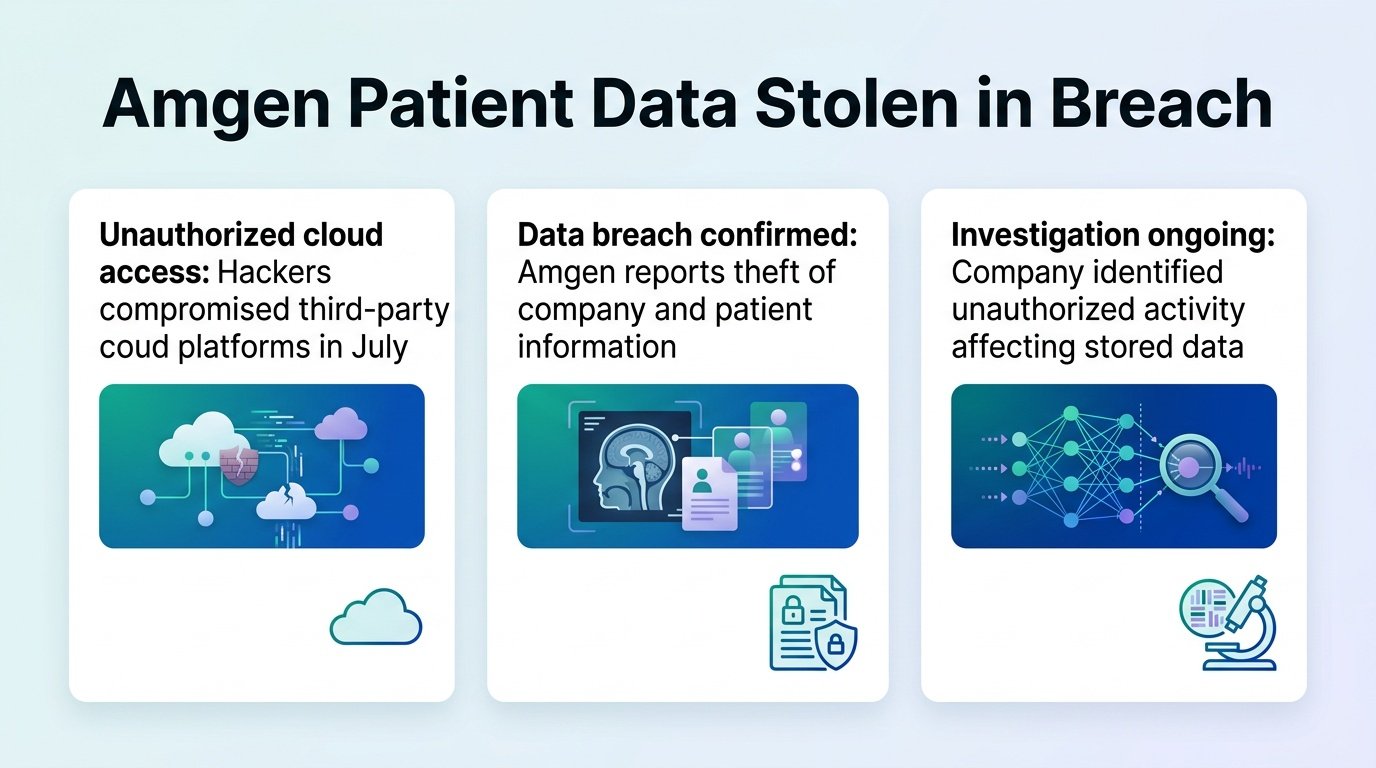
A major security breach at Amgen exposes the dangerous vulnerability of relying on third-party cloud providers to store sensitive patient data.
The pharmaceutical giant recently disclosed that hackers infiltrated its systems through hosted cloud platforms. While the company claims its manufacturing and financial reporting remain unaffected, the incident was deemed material in an SEC filing due to the high volume of compromised files.
This is not an isolated slip-up. It is part of a systemic vulnerability.
The supply chain trap
Modern drugmakers do not operate in a vacuum. They rely on a web of external vendors to manage data. Hackers know this. By targeting third-party cloud hosts, cybercriminals can bypass a pharmaceutical giant’s primary defenses.
Amgen joins a growing list of industry leaders, including Novo Nordisk and Abbott Laboratories, hit by similar supply chain attacks. The strategy is clear. Why try to breach a fortress when you can slip through the back door of a trusted supplier?
The industry has treated vendor security as a compliance checkbox for too long.
More than a digital headache
For Amgen, the timing is brutal. The company is already battling declining sales of older medicines and regulatory scrutiny over a recent study retraction for its rare-disease drug Tavneos.
Now, it must manage the fallout of stolen patient information and potential litigation.
The industry must rethink its relationship with external vendors. Trusting a third-party cloud provider should no longer mean outsourcing the liability. Until drugmakers enforce stricter, unified security protocols across their entire digital supply chain, patient data will remain an easy target.