Big Pharma is learning that keeping proprietary data locked in a vault is no longer the fastest way to win the drug discovery race.
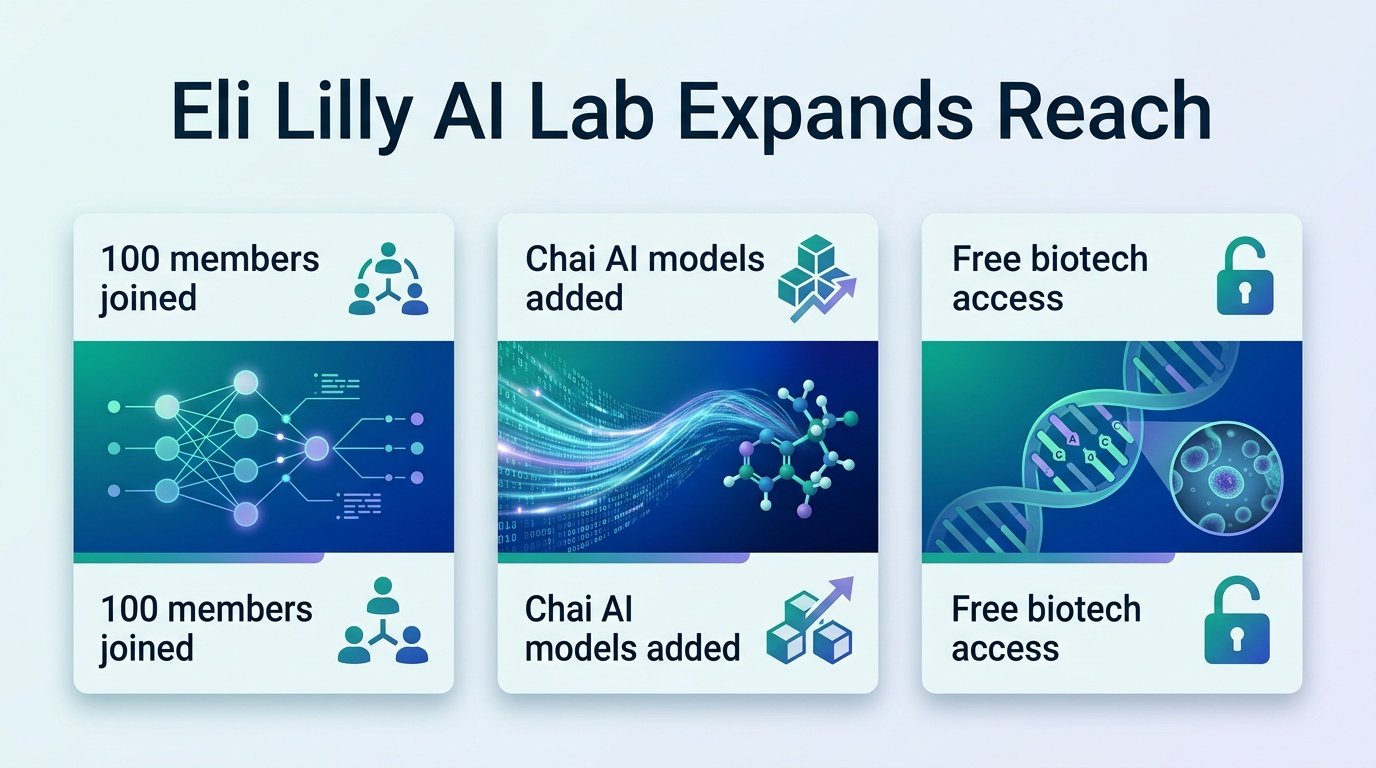
Eli Lilly’s TuneLab platform just crossed 100 member biotechs while integrating Chai Discovery’s AI models. This milestone signals a massive shift in how drug giants deploy their most valuable asset: historical research data.
Instead of hoarding discoveries, Lilly is sharing predictive models built on over $1 billion of proprietary data.
The Federated Shift
The platform relies on federated learning. This technology allows small biotechs to run AI models on Lilly’s massive datasets without either side exposing their intellectual property.
By adding Chai’s miniprotein design suite, TuneLab is moving beyond small molecules into complex biologics. But this is not charity. It is a calculated ecosystem play.
The Ecosystem Play
By subsidizing access to advanced AI, Lilly positions itself as the preferred partner for emerging biotechs. It gets an early look at promising pipelines before competitors do.
However, Lilly does not have a monopoly on this technology. Competitors like Pfizer and Novartis are also leveraging Chai’s tools. Chai itself recently secured $400 million in Series C funding, pushing its valuation to $3.8 billion.
The real test is whether federated learning can actually deliver viable clinical candidates. If it does, the traditional, closed-door R&D model is dead. If it does not, pharma has simply built a very expensive way to accelerate early-stage failures. The industry is betting billions that sharing data is safer than hoarding it.