
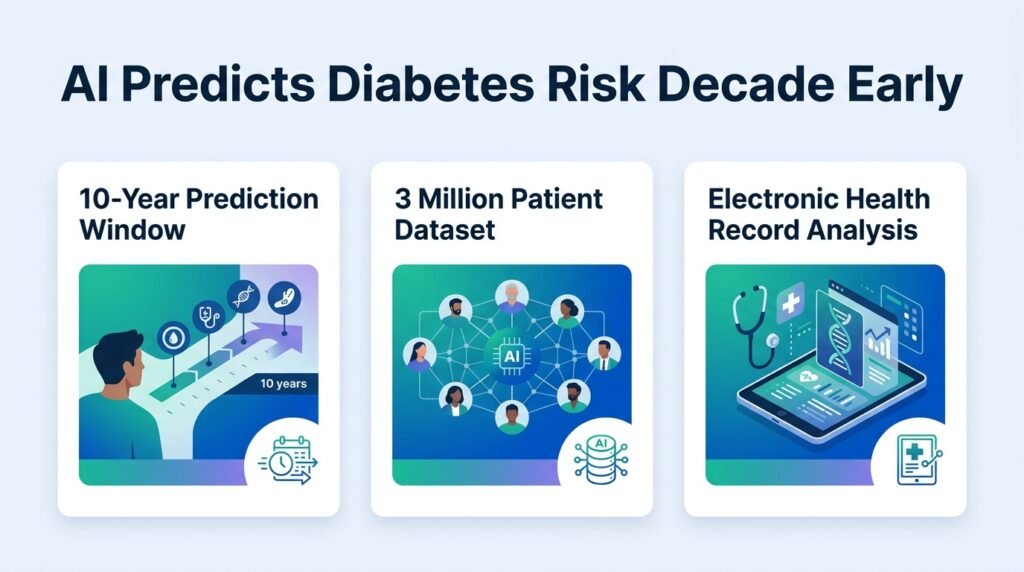
Predictive algorithms can now spot type 2 diabetes risk ten years in advance, but the real bottleneck is how healthcare systems will handle millions of newly flagged patients.
Over 60% of American adults carry risk factors for type 2 diabetes. Current prevention programs are already stretched to their limits. This creates a massive gap between detection and actual care.
A new machine learning model trained on data from over three million patients aims to bridge this gap. By combining routine clinical data with neighborhood socioeconomic factors, the tool offers a highly precise look at future illness a decade before symptoms appear.
The Scalability Trap
Identifying risk is no longer the hardest part of the equation. The actual challenge is intervention. If an algorithm flags hundreds of thousands of patients as high-risk, where do they go?
Primary care clinics are already facing severe burnout. Lifestyle intervention programs cannot scale overnight to meet this demand. Without a plan to expand care, early detection just creates a longer waiting list.
Moving Past Predictions
To prove its worth, this model must show it actually changes patient outcomes. Researchers are planning prospective clinical trials to see if automated risk stratification actually boosts enrollment in prevention programs.
Until then, we have a highly capable radar but no clear runway for the patients it detects.