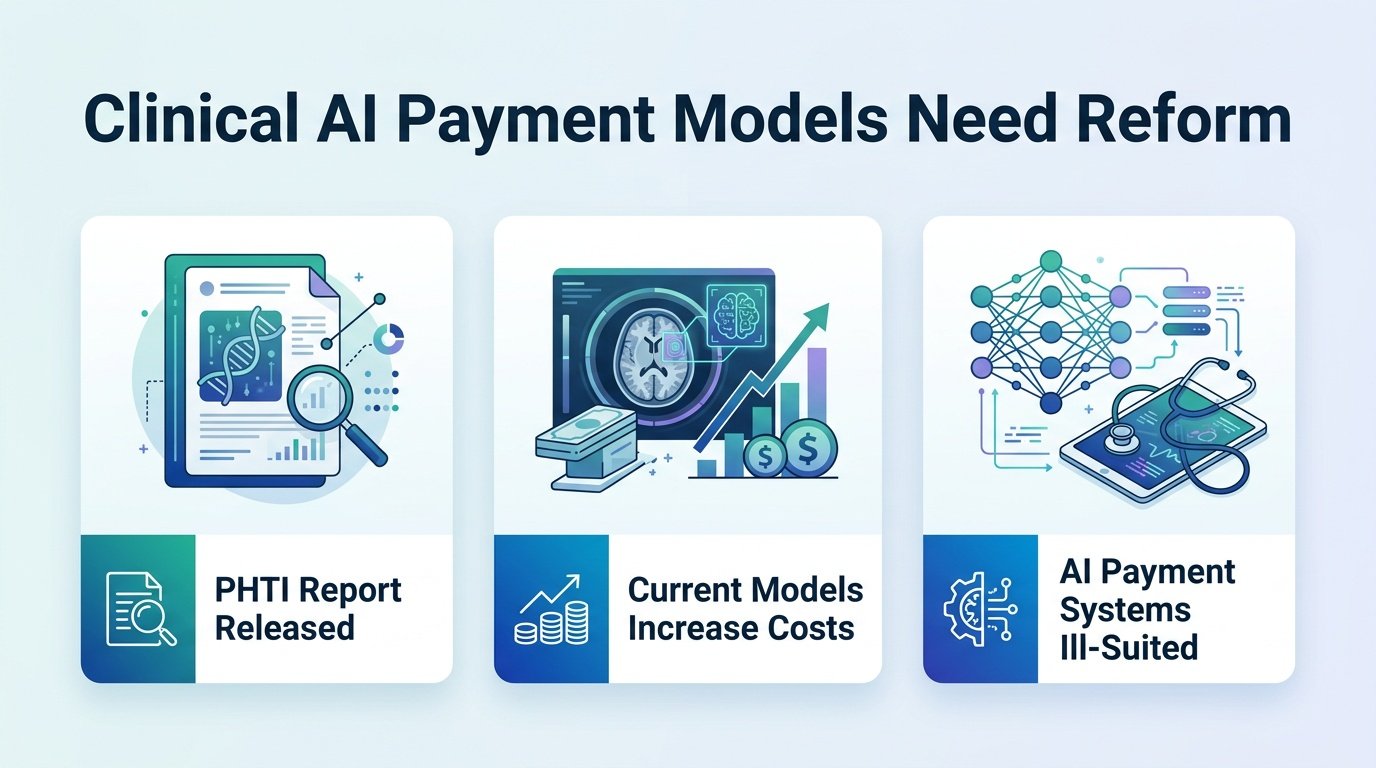
Healthcare is funding clinical artificial intelligence through a broken payment system that rewards volume over value, threatening to spark an administrative arms race.
Deploying artificial intelligence in clinics was supposed to cut administrative waste. Instead, it is supercharging it. Under current fee-for-service models, hospitals are adopting AI scribes to maximize billing codes. In response, insurers deploy their own algorithms to automatically deny those claims.
The Billing Arms Race
This “bot-versus-bot” dynamic does not improve patient care. It simply automates the friction that already inflates healthcare costs. This automated standoff creates a loop of endless appeals and denials, driving up administrative expenses without helping a single patient.
If technology only serves to optimize billing, it becomes an inflationary tax on the entire system. Providers are incentivized to use software to extract higher payments, while payers use it to shield their margins. To break this cycle, reimbursement must shift toward outcome-based payment structures.
A Deflationary Path
Rather than paying per AI-generated document, payment must tie directly to measurable clinical improvements. Transitioning to these models is notoriously difficult. Federal initiatives like the ten-year ACCESS model show a willingness to experiment with value-based care. However, transition timelines are long and legacy incentives remain deeply entrenched.
Until payment structures reward actual health outcomes rather than the sheer volume of automated tasks, clinical AI will remain an expensive administrative weapon rather than a tool for efficiency.