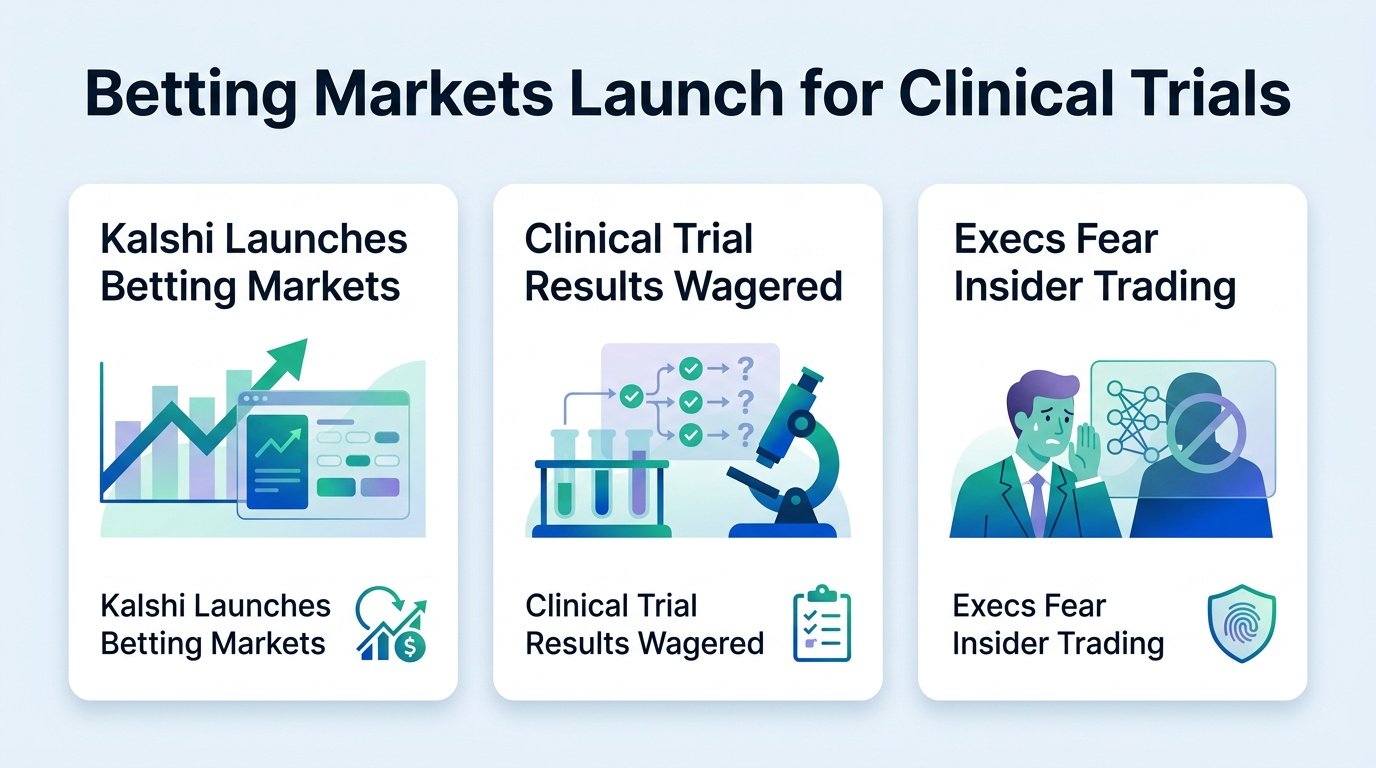
Treating drug development like a sports book introduces financial incentives that could compromise scientific integrity.
The New Casino
Prediction market Kalshi is now letting traders bet on clinical trial outcomes and FDA approvals. In partnership with AI platform AppliedXL, the pilot targets late-stage trials with closed enrollment, starting with high-profile treatments like Gilead’s cancer drug anito-cel.
Proponents argue this brings transparency to a notoriously opaque sector. Currently, nearly 30% of mandatory clinical trial results go unreported. A public market could force clearer forecasting and hold drugmakers accountable.
But treating drug development like a sports book introduces dangerous incentives.
The Integrity Risk
Bioethicists and healthcare executives are sounding alarms. While Kalshi bans trading by FDA staff and trial researchers, enforcing this is a regulatory nightmare.
The stakes are higher than a lost wager. Financial incentives could tempt insiders to leak data early. Worse, it could prompt patients to drop out of trials if they see the market betting against their treatment. It could even incentivize scientific fraud to manipulate outcomes.
This is not just about insider trading. It is about the erosion of trust in clinical data. If a trial’s success can be shorted, the motivation to publish negative results honestly plummets. When life-saving medicine becomes a speculative asset, the data itself becomes vulnerable to distortion.