A new joint venture is shifting AI’s role from designing molecules to actually building them at scale.
For years, artificial intelligence in biotech was a laboratory story. Algorithms found targets and designed molecules, but the messy, physical work of manufacturing remained stubbornly analog. That division of labor is collapsing.
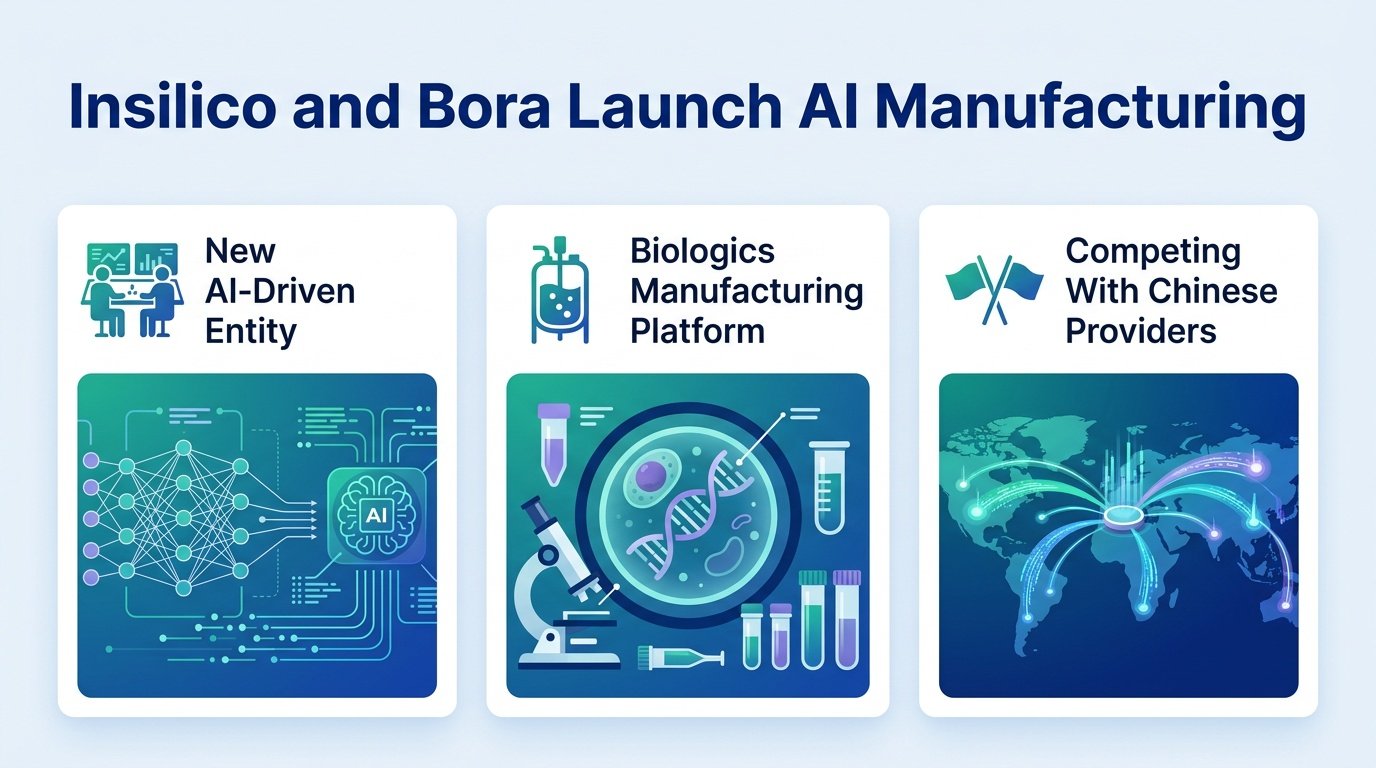
Insilico Medicine and Bora Pharmaceuticals are launching a joint venture to build an AI-driven biologics manufacturing platform. The alliance, valued at up to $2.5 billion, aims to integrate machine learning directly into formulation and production.
Challenging the Giants
This is not just a tech upgrade. It is a direct geopolitical play. By combining algorithmic design with physical factories, the new venture aims to compete directly with dominant contract development and manufacturing organizations (CDMOs) based in China.
Western drugmakers are desperate to diversify their supply chains. However, moving production away from established hubs is notoriously slow and expensive. The partners bet that AI can bridge this gap by automating quality control and optimizing yields faster than traditional facilities can.
The Reality Check
But coding a neural network is different from running a sterile bioreactor. Biologics are living drugs, highly sensitive to tiny environmental shifts.
Whether algorithms can truly master the physical unpredictability of biology at scale remains unproven. If they succeed, the traditional wall between drug discovery and manufacturing will disappear forever. The factory floor is the new frontier for computational biology.