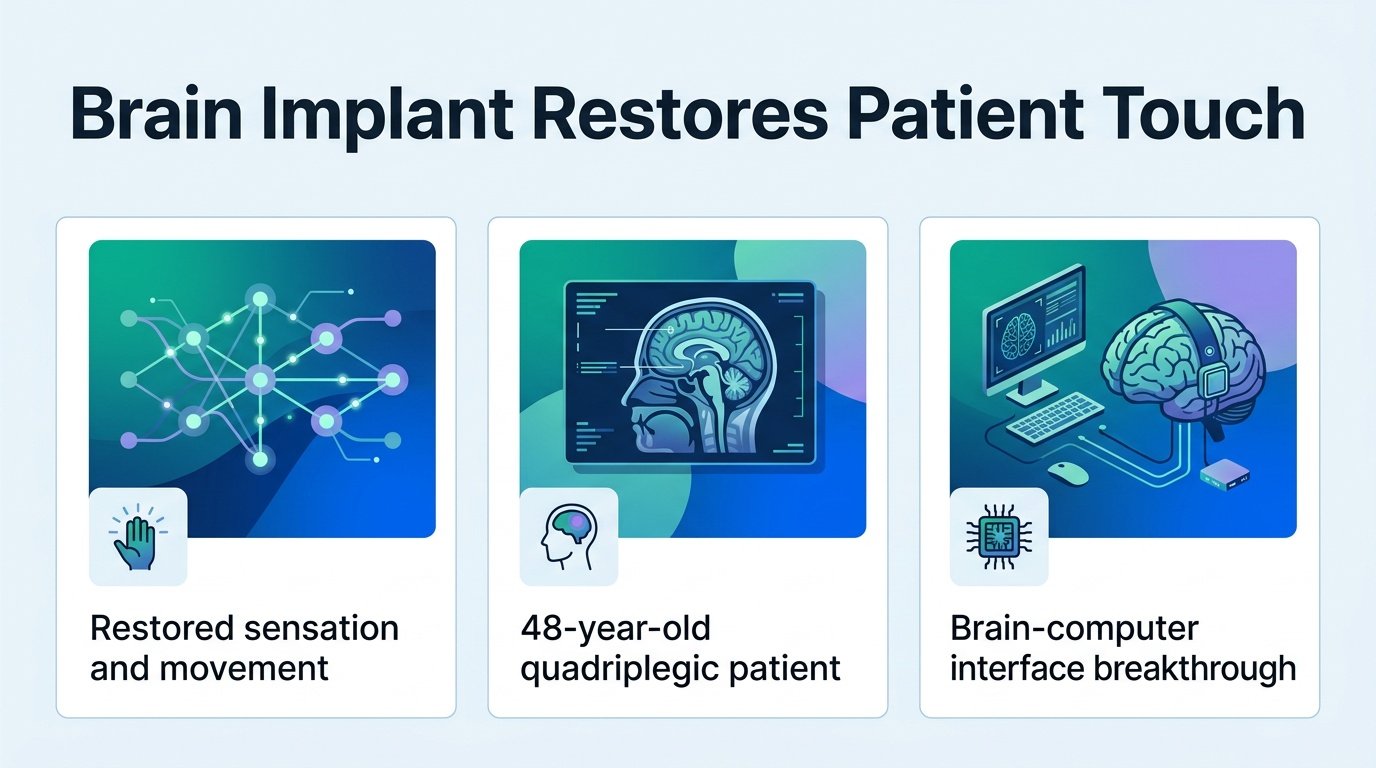
A new brain-computer interface does more than bypass spinal cord injuries; it might actually help heal them.
For years, neuroprosthetics operated on a simple premise: build a digital bridge over a broken biological pathway. But a recent study reveals a much more ambitious reality. By combining a brain-computer interface with spinal cord stimulation, researchers did not just restore temporary movement to a paralyzed patient. They triggered lasting physical recovery.
This challenges the entire philosophy of assistive tech.
Rewiring the damage
The patient, a 48-year-old man with quadriplegia, used a double neural bypass system. Crucially, his gains in arm strength and touch sensation persisted for more than two years after the system was turned off.
This suggests the technology did not just act as a temporary crutch. It promoted neuroplasticity, physically rewiring the nervous system to heal itself.
The long-term hurdle
Historically, the fear with brain implants has been longevity. Will the body reject the hardware over time? A concurrent decade-long study offers reassurance, proving that intracortical microstimulation remains safe for long-term use.
This shifts the conversation from “can we do this in a lab” to “can we deploy this for life.”
Of course, massive hurdles remain. This therapy requires highly invasive open-brain surgery. The external hardware is complex, and we do not yet know if these results can be replicated across larger, diverse patient groups.
But the proof of physical rewiring changes the goalpost. We are no longer just building better digital tools to manage paralysis. We are learning how to repair the spine itself.