The era of unchecked algorithmic care denials in Medicare Advantage is hitting a bipartisan wall in Washington.
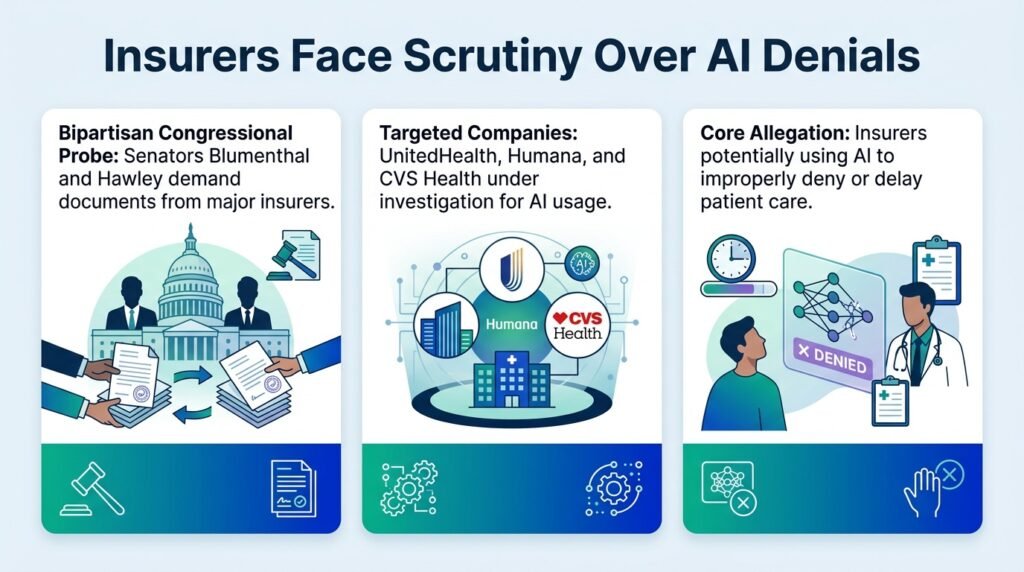
For years, major health insurers operated under a highly profitable assumption: algorithms could deny patient care quietly, and very few patients would ever fight back. That assumption is now unraveling on Capitol Hill. Senate investigators are demanding internal documents from UnitedHealth, Humana, and CVS. The bipartisan probe targets how these giants use predictive technologies to systematically reject post-acute care claims.
The Denial Machine
These three insurers control nearly 60 percent of the Medicare Advantage market. A scathing Senate report reveals they disproportionately deployed automated systems to cut off rehabilitation and nursing home care.
The business model relies on a grim statistical reality. Proprietary algorithms like nH Predict reportedly suffer from high error rates. Yet, class-action lawsuits allege insurers gamble on patient exhaustion, knowing only a tiny fraction of people actually appeal automated denials. It is a high-volume, low-friction method to restrict spending.
The Policy Backlash
This is no longer just a corporate public relations headache. It signals a systemic regulatory shift. Lawmakers are already moving to block federal funding for a government pilot program using AI for prior authorization.
The message to the industry is clear. The rush to automate clinical decisions has outpaced public trust and regulatory tolerance. Insurers can no longer treat their algorithms as proprietary black boxes. If they cannot prove their tools prioritize clinical accuracy over profit margins, they face aggressive federal intervention. The era of automated rubber-stamped denials is ending. The technology was sold as an efficiency tool, but regulators now see it as a shield for bad-faith denials.