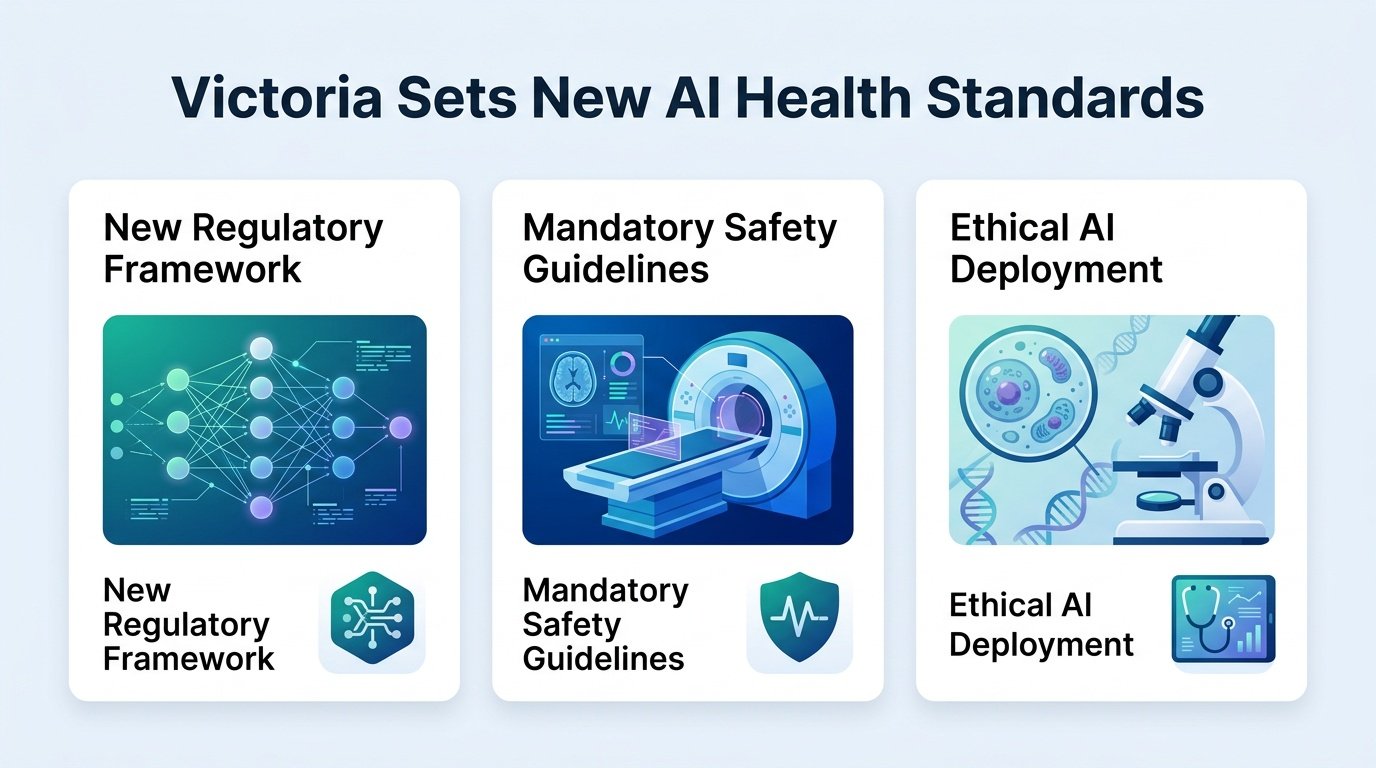
Australia’s state of Victoria is drawing a hard line on clinical AI, forcing health systems to choose between rapid automation and strict data sovereignty.
The promise of clinical AI always clashes with the reality of patient privacy. Victoria’s new minimum safety and ethical standards for public health AI make one thing clear: the era of unregulated experimentation is over. Health administrators can no longer quietly test consumer-grade tools behind closed doors.
The Guardrails Arrive
The state’s Department of Health stepped in following warnings against using tools like ChatGPT for clinical purposes. The new rules aim to streamline outpatient systems and triage urgent cases safely. However, setting guidelines is the easy part. The real challenge lies in enforcement across a fragmented public health network.
This policy shift is not happening in a vacuum. It follows previous restrictions on generative AI in the public sector. The state wants the efficiency of machine learning but fears the liability of algorithmic error.
The Sovereignty Clash
The rollout has already triggered political pushback. Lawmakers are demanding greater transparency and robust data safeguards. There is specific anxiety around potential partnerships with controversial global data analytics firms. Critics worry that public health systems might trade patient privacy for operational speed.
This tension exposes the real analytical reality. Ethical frameworks are meaningless if health services rely on proprietary black-box models. For clinical AI to succeed, Victoria must prove it can audit these systems, not just write rules for them.