Health systems are outsourcing the clinical interview to algorithms, but the real test is whether doctors actually regain their time.
The modern doctor’s visit is broken, buried under a mountain of administrative charting. Now, Penn Medicine is betting that AI agents can fix the intake process before a physician even enters the virtual room.
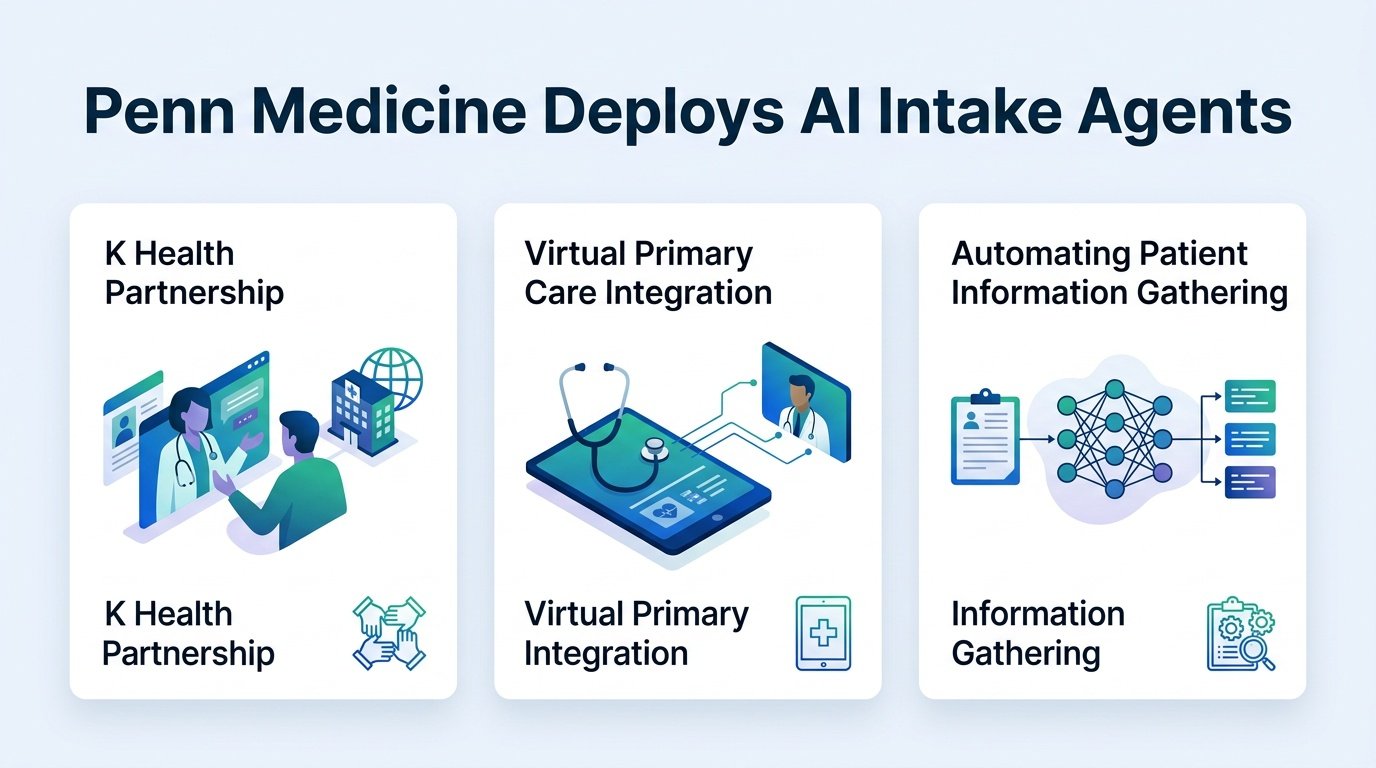
By integrating K Health’s conversational AI into its virtual urgent care service, the health system plans to automate the patient interview. The AI dynamically questions patients about their symptoms and drafts a clinical chart directly into the electronic health record. The goal sounds simple: free up human doctors for actual care rather than data entry.
The Triage Gamble
This is not just about convenience. It is a calculated move to address severe administrative burnout and capacity crunches. If an algorithm can handle the initial information-gathering, doctors can theoretically focus purely on clinical decision-making.
But clinical intake is rarely a straight line. Patients often misrepresent symptoms or omit crucial details that a human clinician would probe further. Relying on an AI’s draft chart means physicians must still rigorously verify the machine’s work. If verification takes as long as the original interview, the tool simply shifts the administrative burden rather than eliminating it.
Scaling the Experiment
Penn Medicine plans to expand this tool from virtual urgent care into in-person primary care and specialties like cardiology. The health systems’ partnership also includes co-developing peer-reviewed research to validate the AI’s clinical utility. This scientific backing is crucial, as similar tools are rapidly spreading across other major health networks.
As health systems rush to adopt these intake bots, the industry must watch closely. If these tools fail to reduce cognitive load, they risk becoming just another layer of digital noise in an already fractured workflow.