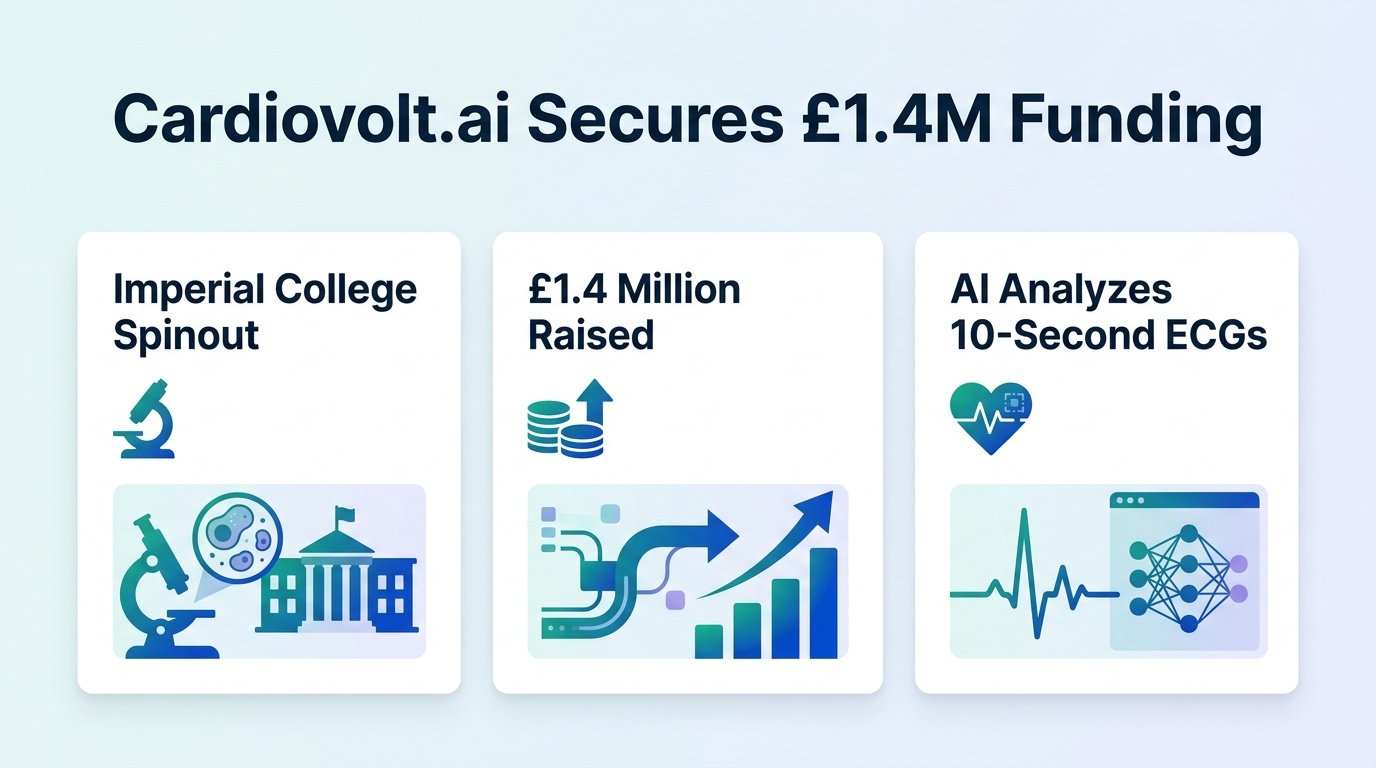
A routine ten-second heart trace holds hidden clues to chronic diseases far beyond the cardiovascular system.
For decades, the electrocardiogram has done one job: mapping the electrical rhythm of the heart. But what if a standard ten-second ECG could flag kidney disease or diabetes before symptoms even appear?
Imperial College London spinout Cardiovolt.ai has secured £1.4 million to prove that the heart’s electrical signals contain systemic biomarkers invisible to human clinicians. The company’s deep learning models, trained on millions of international ECG records, can diagnose structural heart diseases with 93% accuracy. More surprisingly, they flag non-cardiovascular conditions like diabetes and kidney disease with 80% accuracy.
Beyond the heart
This is not just about faster cardiac triage. It signals a shift toward using the heart as a window into overall systemic health.
By analyzing subtle, microscopic variations in a standard ECG, the software detects structural changes and metabolic imbalances that traditional analysis misses. The clinical implications are massive. Instead of ordering a battery of expensive, time-consuming blood tests and imaging scans, a simple, cheap bedside test could serve as a multi-disease screening tool.
The validation hurdle
However, clinical adoption is rarely as fast as software development. Cardiovolt.ai must now navigate the regulatory pathways of the UK, EU, and US.
While validation against UK Biobank data is promising, real-world healthcare systems are notoriously fragmented. Integrating this software into existing clinical workflows without triggering alarm fatigue in overworked doctors will be the real test. If successful, the humble ECG could become the ultimate triage tool for modern medicine.