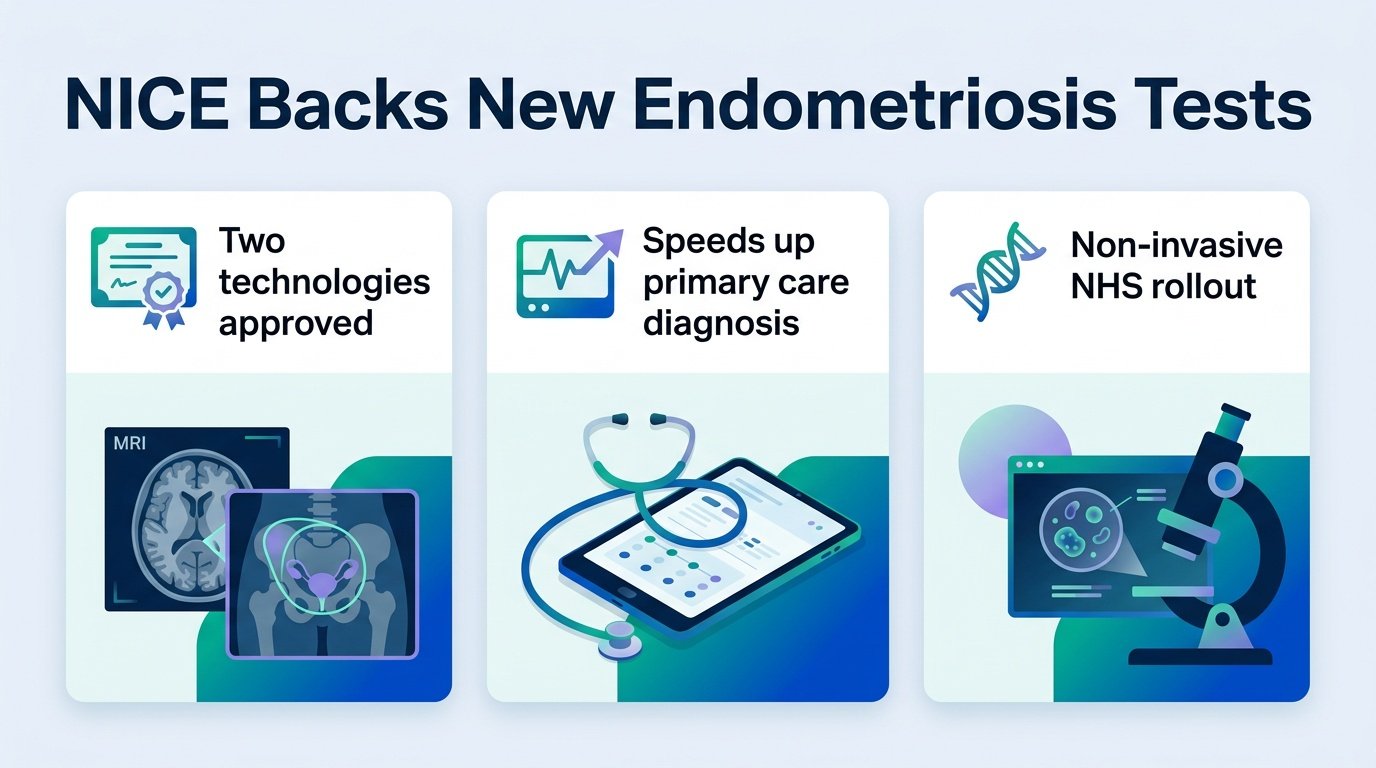
A decade of silent suffering for endometriosis patients might finally be cut short by a shift toward non-invasive diagnostics.
Women in the UK wait an average of nine years and four months to get an endometriosis diagnosis. For ethnically diverse communities, that agonizing delay stretches to 11 years. The bottleneck is not a lack of clinical concern. It is the reliance on diagnostic laparoscopy, an invasive surgery that requires operating rooms, specialists, and recovery time.
Now, a regulatory pivot is opening the door to simpler tools in primary care.
The new diagnostic toolkit
Draft guidance has cleared two non-invasive tests for early use. One measures gut electrical signals, while the other analyzes saliva microRNAs to detect the condition. A third test was excluded due to insufficient data, proving that regulators are maintaining a strict threshold even when rushing to solve a crisis.
These tools will undergo a three-year trial period to gather real-world evidence. This is not a permanent green light. It is a pragmatic compromise to get technology to patients while proving clinical utility on the fly.
Rethinking the diagnostic pathway
Moving diagnosis to local clinics could dramatically lower costs. But the real shift is cultural.
For years, chronic pelvic pain has been dismissed or misdiagnosed. By validating objective biomarkers, these tests could validate patient pain much earlier.
The challenge now lies in implementation. General practitioners must be trained to interpret these results. If positive tests still lead to massive backlogs for specialist treatment, the bottleneck will simply shift from diagnosis to therapy. True progress requires a healthcare system ready to act on early data, not just collect it.