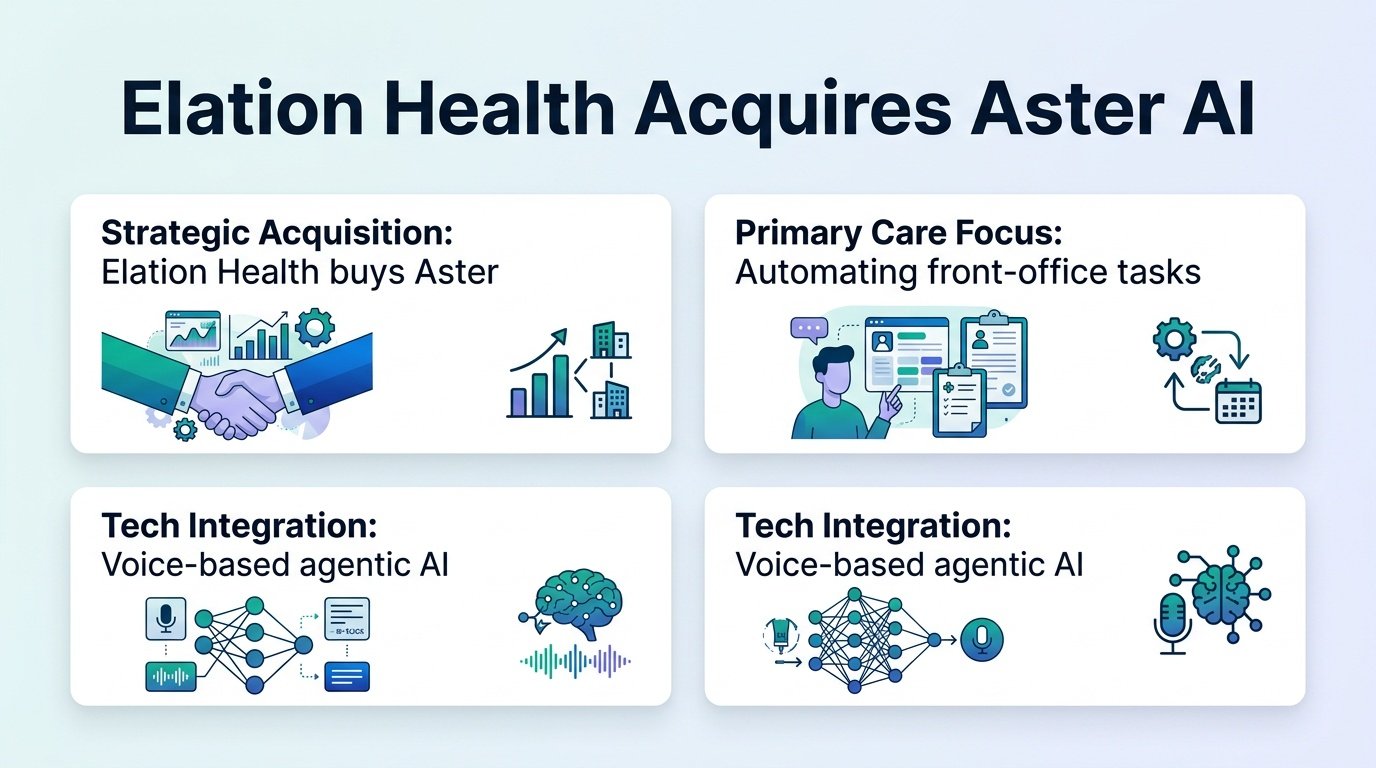
The acquisition of Aster by Elation Health signals a major shift from AI that merely listens to AI that actively operates.
For the past two years, healthcare AI has mostly meant ambient scribes. These tools sit quietly in the exam room, draft clinical notes, and wait for a human doctor’s approval. That passive era is ending.
The Agentic Shift
By acquiring Aster, Elation Health is building what it calls the first **agentic operating system** for primary care. This is not another dictation tool. Agentic AI acts as an autonomous coworker. Instead of just documenting a conversation, Aster’s technology is designed to execute tasks. It aims to handle complex, multi-step workflows like insurance verification, patient scheduling, and care navigation without constant human prompting.
This moves software from the passenger seat to the steering wheel. For independent and direct primary care practices, the promise of offloading administrative friction is highly attractive. It targets the operational bottlenecks that drain clinic resources. The acquisition also highlights how quickly the AI market is consolidating. Elation is betting that clinical data and administrative action must live in the same system.
The Trust Gap
But autonomy introduces new operational risks. A clinician can easily catch a hallucination in a draft medical note. It is much harder to spot an autonomous agent quietly making errors in insurance verification or patient routing. The industry must now prove these agents can operate safely without constant human babysitting. If they succeed, the traditional clinic back-office will look entirely different. If they fail, they will only add to the administrative chaos they promise to solve.