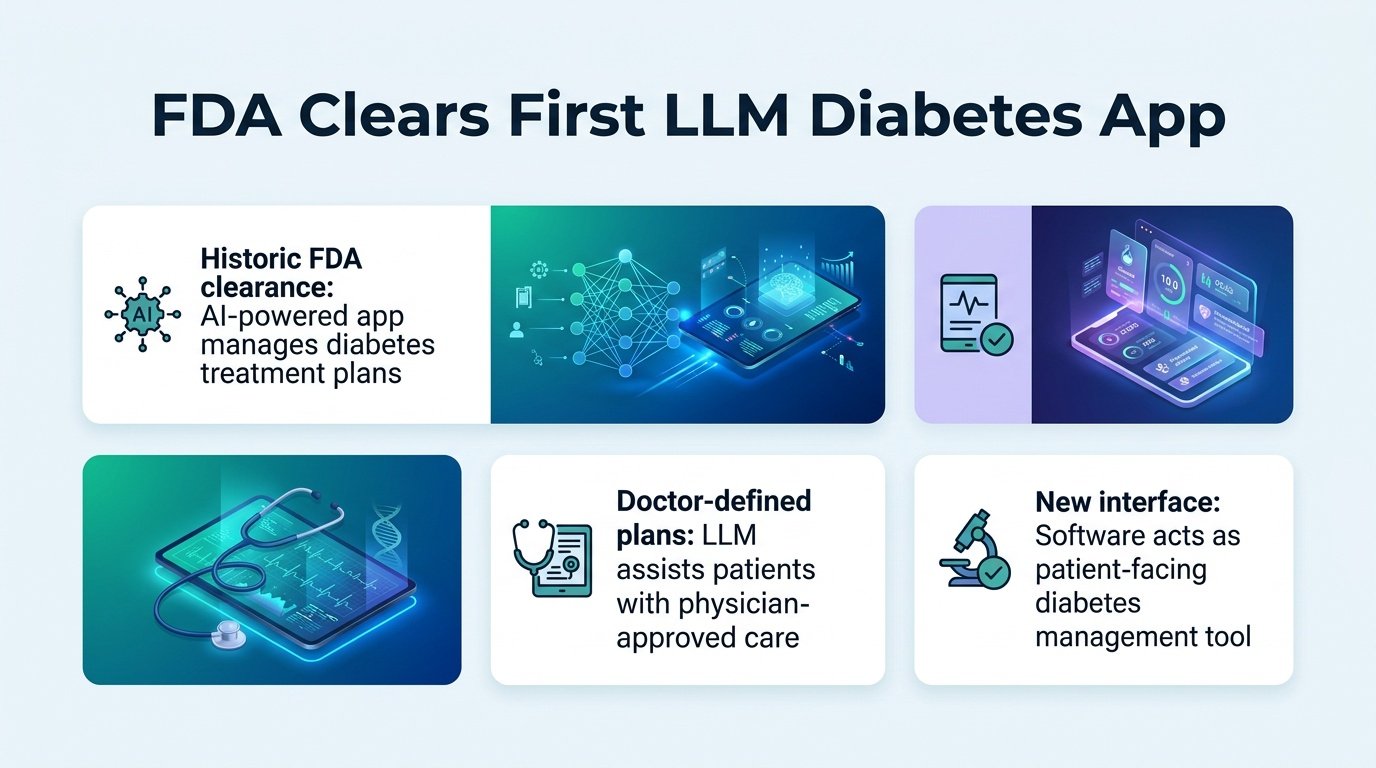
The FDA just cleared its first patient-facing generative AI tool, but the algorithm is not the one writing your prescription.
The recent clearance of a diabetes management app is being hailed as a historic milestone for clinical artificial intelligence. But a closer look at the technology reveals a much more conservative reality. The regulator has not handed the keys of clinical decision-making to a chatbot.
The conversational illusion
The software helps patients manage type 2 diabetes through a conversational interface. To the user, it feels like the model is actively guiding their care. In reality, the generative model is strictly a translator.
The high-risk calculations, such as adjusting insulin doses, remain locked inside traditional, deterministic software. The system uses clinical protocols defined by doctors, not the unpredictable logic of a large language model.
The regulatory boundary
This setup exposes a clear boundary in how regulators view generative tools. The FDA is comfortable with these models translating complex medical data into friendly, accessible language. However, it remains deeply skeptical of letting them make actual clinical judgments.
For digital health developers, this clearance is a blueprint. The path to regulatory approval does not involve letting an LLM run wild. Instead, success lies in keeping the generative model on a tight leash, using it purely as a front-end interface while keeping the actual medicine hardcoded and explainable.
This compromise solves the hallucination problem, but it raises another question. If the AI is just a wrapper for old-school algorithms, are we truly seeing a new era of medicine, or just a highly polished upgrade to the user interface? For now, safety lies in restriction.