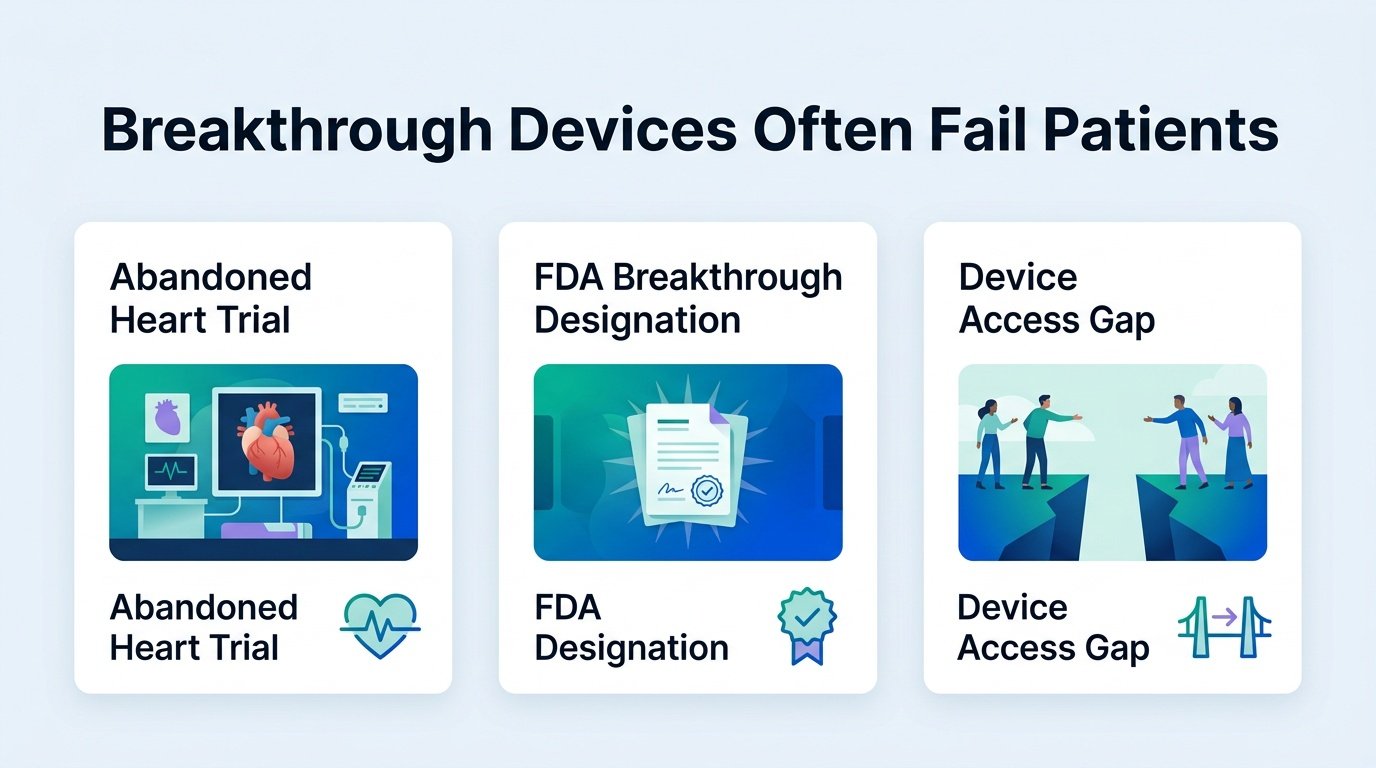
The sudden collapse of a major heart failure trial exposes a quiet failure point in how regulators fast-track medical technology.
The FDA’s “breakthrough” designation is supposed to signal a fast track to patient care. Instead, it often serves as a marketing shield for devices that corporate boards can abandon at will.
When LivaNova abruptly halted its trial of the VITARIA vagus nerve stimulator, it did not cite safety concerns. The safety board actually recommended continuing. The decision was purely financial.
This corporate retreat left doctors in an ethical bind and patients with implanted hardware that may now be useless. Truncated data eventually showed no significant clinical benefit.
The Cost of Abandonment
The breakthrough program accelerates approval based on early promise. Yet it lacks any mechanism to force companies to finish the trials they start. This creates a dangerous loophole where early-stage hype is subsidized by patient risk, only for the project to be killed when corporate priorities shift.
For patients who volunteered to have hardware surgically implanted, the abandonment feels like a betrayal. They took on surgical risks for a trial that was ultimately treated as a line item on a balance sheet.
A Systemic Blind Spot
When a drug trial fails, the data is scrutinized. When a device trial is shelved for cash flow, the technology simply vanishes into a corporate archive.
This case exposes how easily corporate strategy can override clinical science. If the FDA continues to fast-track devices without holding sponsors accountable for finishing their trials, the “breakthrough” label will lose all clinical meaning. It becomes a tool for corporate valuation rather than patient progress.