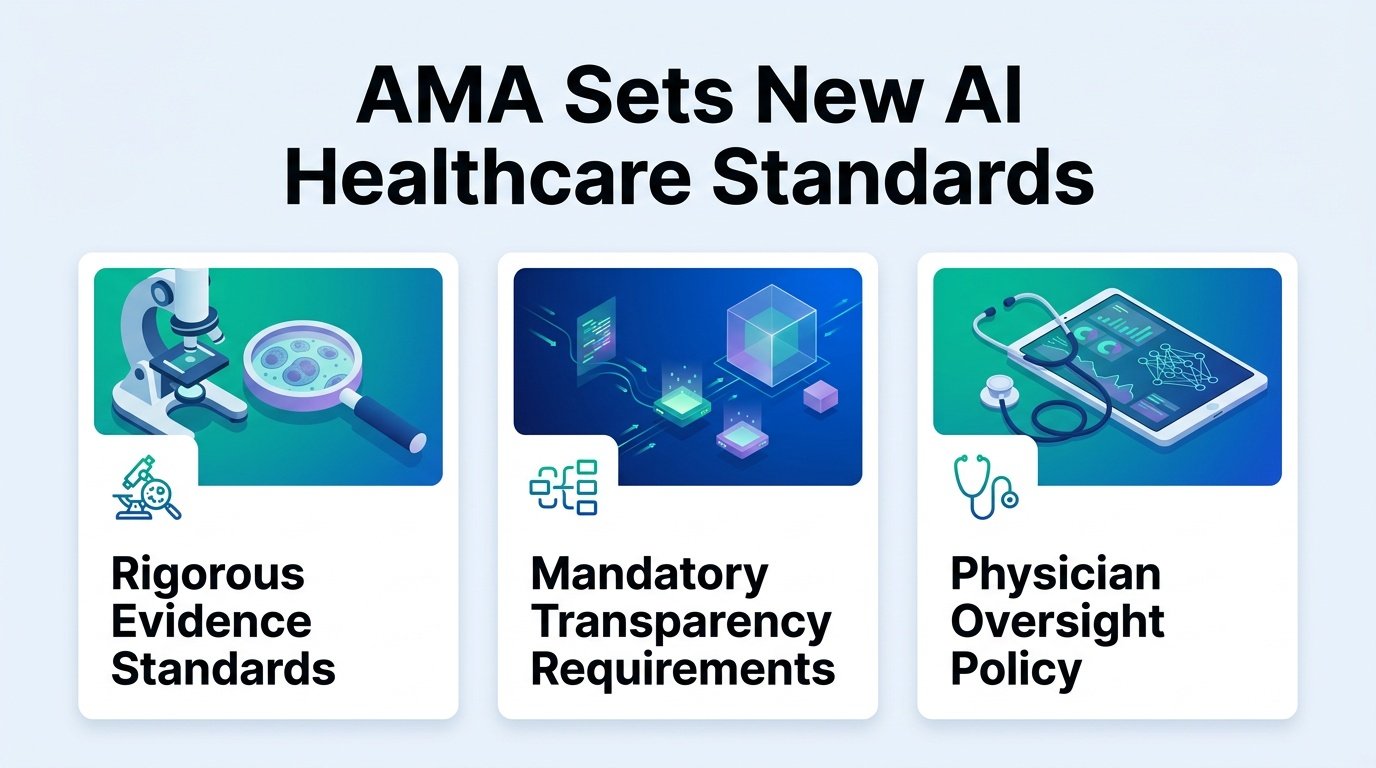
As artificial intelligence quietly shifts from an administrative helper to a clinical decision-maker, physicians are demanding veto power over the algorithms.
The Battle for Oversight
For years, health insurers have quietly deployed algorithms to automate coverage denials and streamline prior authorizations. Now, clinical leaders are drawing a hard line. The medical establishment is demanding strict, evidence-based standards and mandatory human oversight for clinical AI.
This is not just about administrative friction. It is a fundamental battle over who controls the practice of medicine. While 81 percent of physicians now use some form of augmented intelligence to ease their workloads, a dangerous divide is opening. There is a massive difference between a tool that drafts clinical notes and one that decides if a patient qualifies for life-saving surgery.
The Trust Deficit
The core issue is transparency. Many proprietary algorithms remain black boxes. Doctors are expected to trust clinical recommendations without knowing what data trained the model or whether that data is biased.
This opacity creates a massive liability trap. If an AI misdiagnoses a patient, the physician, not the software developer, faces the malpractice suit. Furthermore, a staggering 61 percent of doctors express deep concern over insurers using autonomous AI to bypass human review. When insurers use these systems to automate denials, they prioritize cost-cutting over clinical nuance. Patients are left stranded, and doctors are left fighting machines.
The Path Forward
Medicine cannot afford blind trust. The current push for federal legislation mandating auditable safety data is a necessary defense mechanism. If AI is to remain a trusted assistant rather than a rogue decision-maker, physicians must retain the ultimate veto power over every algorithmic output.