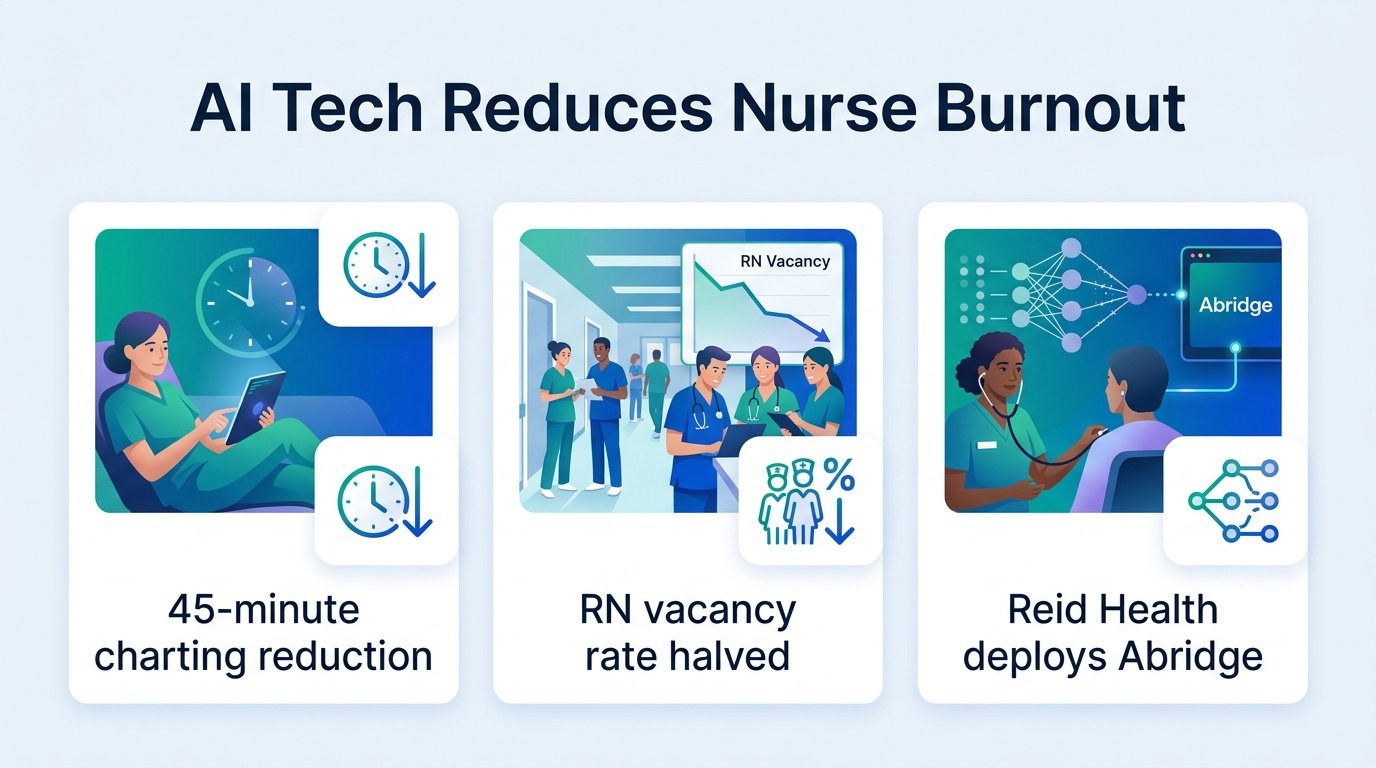
While doctors usually dominate the healthcare AI conversation, the real battle against clinical burnout is being won at the nursing bedside.
For years, administrative overload has quietly driven nurses out of the profession. While physicians get the spotlight for digital assistants, nurses spend hours translating chaotic patient interactions into rigid electronic health records. It is a mechanical grind that actively detracts from patient care.
A rural health system, Reid Health, shifted this dynamic by deploying ambient AI specifically for its nursing staff. The results challenge the assumption that administrative AI is only valuable for doctors. By automating documentation, the system cut after-shift charting by up to 45 minutes per shift.
The Retention Payoff
More importantly, the technology helped cut the registered nurse vacancy rate more than in half.
This is not just a metric of convenience. For rural hospitals facing severe staffing shortages, it is a survival strategy.
Beyond Narrative Notes
The technical hurdle for nursing AI is exceptionally steep. Doctors typically need narrative summaries. Nurses, however, live in structured EHR flowsheets. Translating casual bedside conversations into precise, structured flowcharts requires highly specialized natural language processing.
While early adoption shows massive promise, scaling this across diverse hospital environments remains a challenge. Yet, as nursing shortages persist, shifting the administrative burden away from frontline staff is no longer optional.