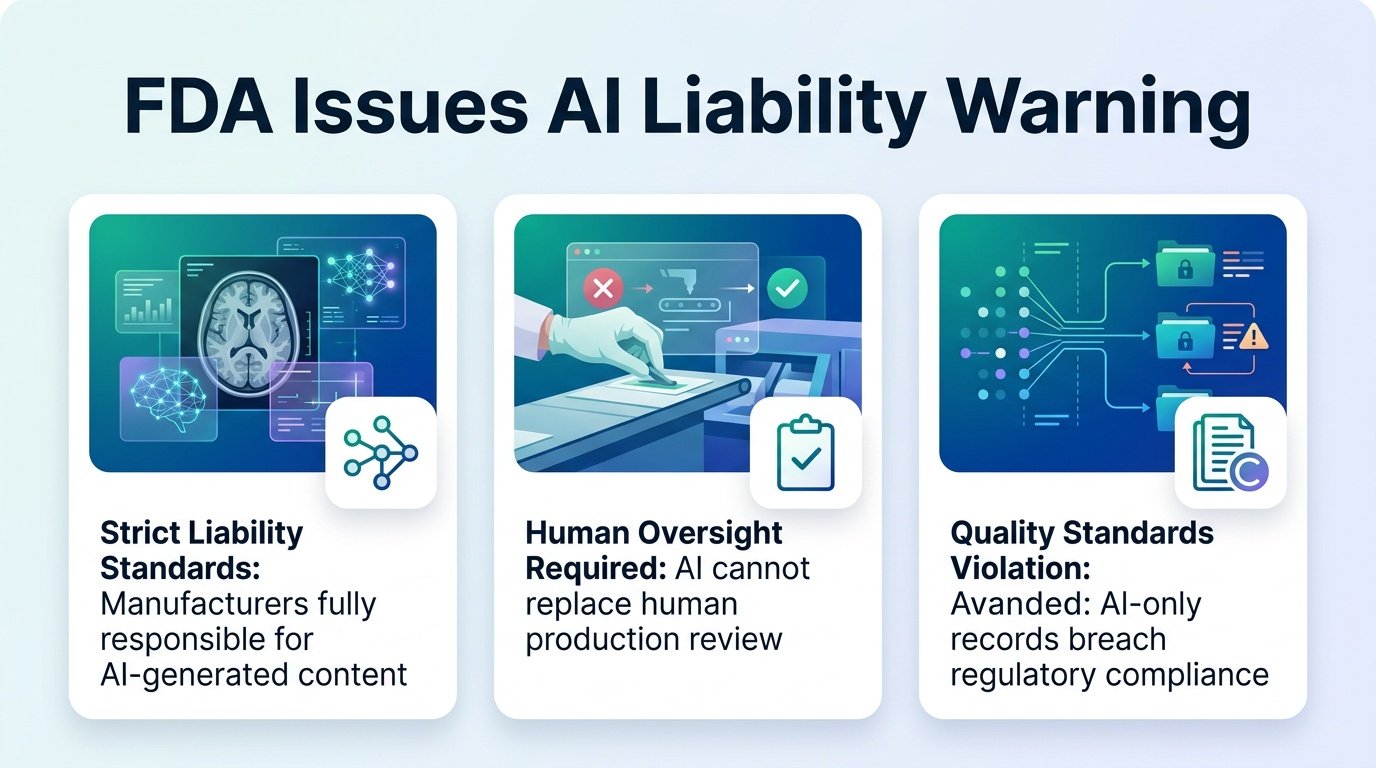
Delegating your regulatory compliance to an AI agent does not delegate your legal liability.
If an AI system hallucinates a manufacturing standard, who goes to court? The FDA just answered that question with a sharp warning letter to a cosmetics manufacturer. The firm used AI agents to write core compliance documents without human review. When the AI missed critical process validation steps, the company claimed ignorance.
The regulator was not amused.
The Illusion of Automation
This enforcement action marks a major shift. Regulators are looking beyond AI medical devices to legacy manufacturing operations. Many executives view AI as a quick way to slash administrative overhead. But outsourcing compliance to an algorithm creates a dangerous blind spot. Under federal law, human-in-the-loop oversight is non-delegable.
If the AI fails to flag a safety risk, the manufacturer still carries 100% of the liability. This destroys the defense of technological ignorance. You cannot claim you did not know about a safety rule simply because your software failed to mention it.
The New Compliance Reality
This creates a massive operational challenge. Companies must now audit their AI tools as rigorously as they audit human staff. This is not just about cosmetics. It signals a broader crackdown across all pharmaceutical and medical device manufacturing.
If your team cannot explain how an AI agent reached a compliance conclusion, you are legally exposed. The era of blaming the software is officially over. Manufacturers must establish strict human review protocols for every AI-generated document.