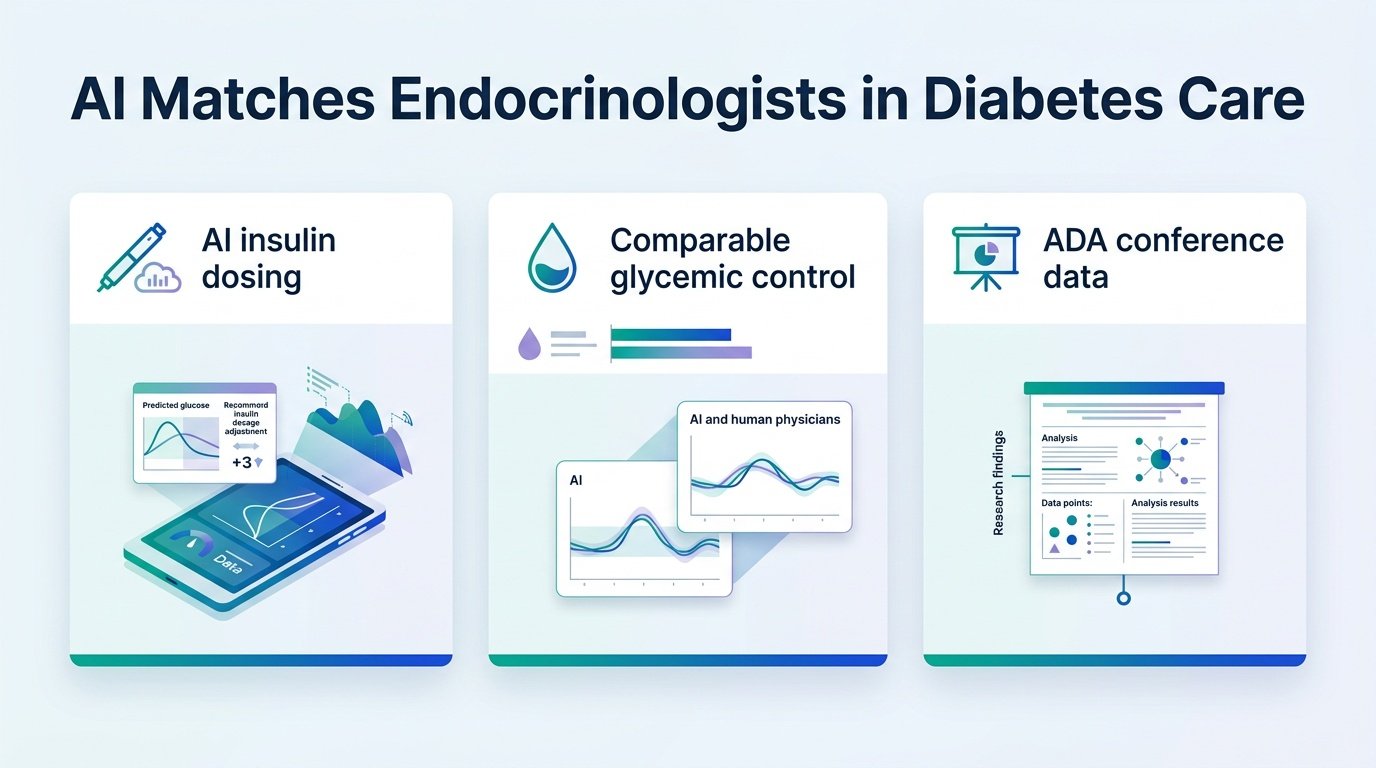
Algorithms can now recommend insulin doses as safely as human specialists, shifting the bottleneck of diabetes care from clinical expertise to patient trust.
For decades, managing type 1 diabetes has required a relentless series of high-stakes math problems. Patients and doctors must constantly calculate carbohydrate intake, insulin sensitivity, and metabolic variables to avoid dangerous blood sugar swings.
Now, clinical trial data shows that AI-generated insulin dose recommendations deliver glycemic control outcomes comparable to those of experienced endocrinologists. This is not just a minor automation upgrade. It is a fundamental shift in clinical responsibility.
The Shift to Autopilot
By automating carbohydrate estimation and insulin calculations, these tools target the daily cognitive friction of diabetes. But matching a specialist in a clinical trial is different from navigating real-world chaos.
The immediate challenge is not the math. It is trust and liability. If an algorithm suggests an incorrect dose, who is responsible? Medical systems must now decide how much autonomy to cede to software.
Limits of the Code
Clinicians face a delicate balance. While AI can reduce burnout by handling routine decisions, it also introduces risks of algorithmic bias and overreliance.
Human oversight remains essential because algorithms cannot sense the unmeasured context of a patient’s life. The technology is ready to prescribe. The regulatory and ethical frameworks are still catching up.
The true test of automated diabetes care will not be its clinical accuracy, but how safely it handles the unpredictable nature of human behavior. If clinicians become too reliant on automated suggestions, they risk losing the very intuition needed when the technology inevitably fails.