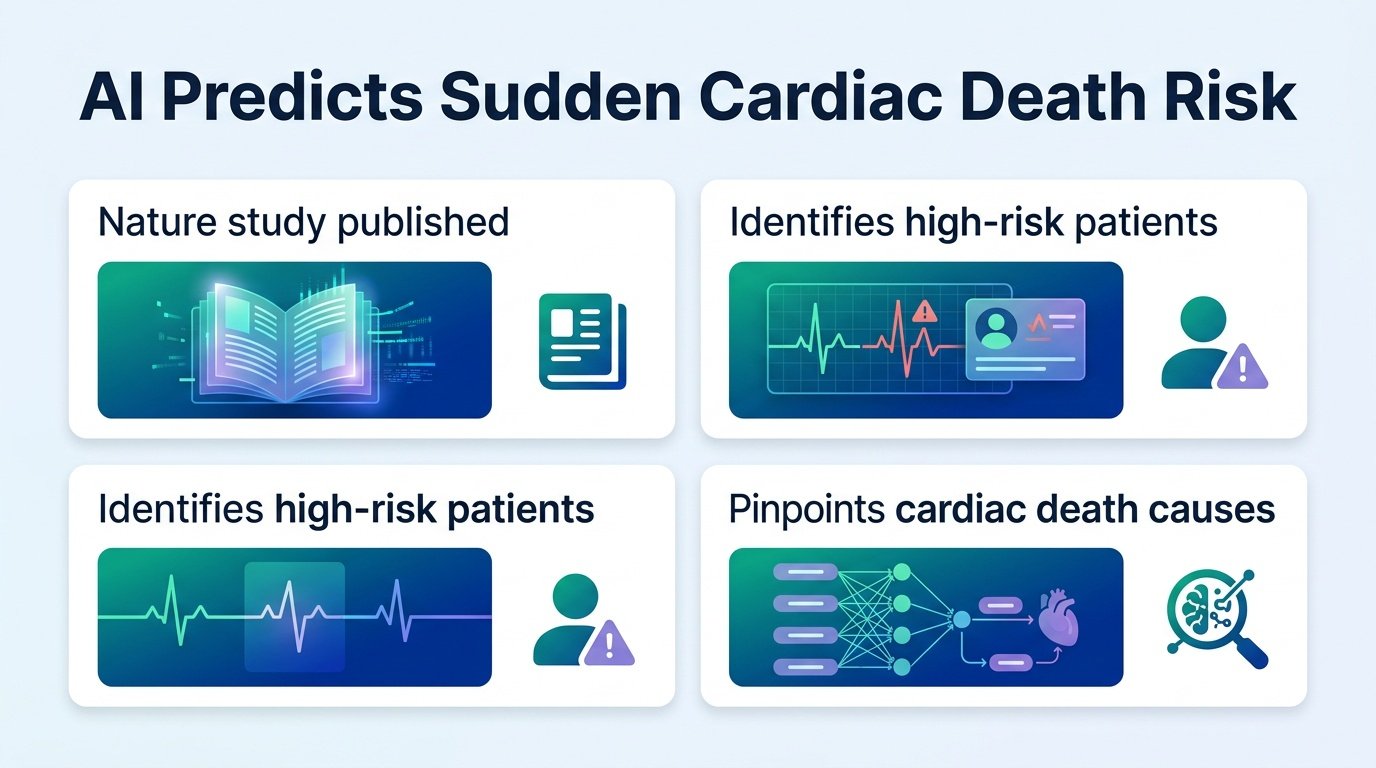
A new wave of AI models is finding invisible patterns in routine heart tests to predict sudden cardiac arrest before it strikes.
Every year, sudden cardiac death claims over 300,000 lives in the U.S. alone. The most terrifying aspect of this condition is its absolute unpredictability. Most victims have no prior symptoms, leaving clinicians with no warning signs and few preventive options. Standard screening tools routinely miss the subtle electrical anomalies that precede a fatal event, making prevention a guessing game.
The Invisible Biomarker
AI is beginning to see what human cardiologists cannot. This is not just about automation. It is about discovering entirely new biology from old tests.
Researchers at UC Berkeley trained deep-learning models on more than 440,000 Swedish electrocardiograms. The algorithm successfully isolated a previously unrecognized, visible biomarker hidden within routine ECG data. Meanwhile, Johns Hopkins University developed the MAARS model, which uses heart MRIs to predict fatal arrhythmias.
These are not just faster diagnostic tools. They represent a fundamental shift in how we define cardiac risk. By analyzing massive datasets, neural networks are mapping the chaotic electrical pathways that lead to sudden death.
The Intervention Dilemma
But translating algorithmic predictions into clinical action is highly complex.
If an AI flags a patient as high-risk, the standard intervention is often an implantable defibrillator. These are invasive, expensive devices with their own set of complications. Clinicians now face a delicate balancing act. They must trust the AI enough to deploy life-saving interventions, while avoiding unnecessary surgeries for patients who might never have suffered an event.
The technology is proving it can solve the diagnostic mystery. Now, medicine must decide how to handle the answers.