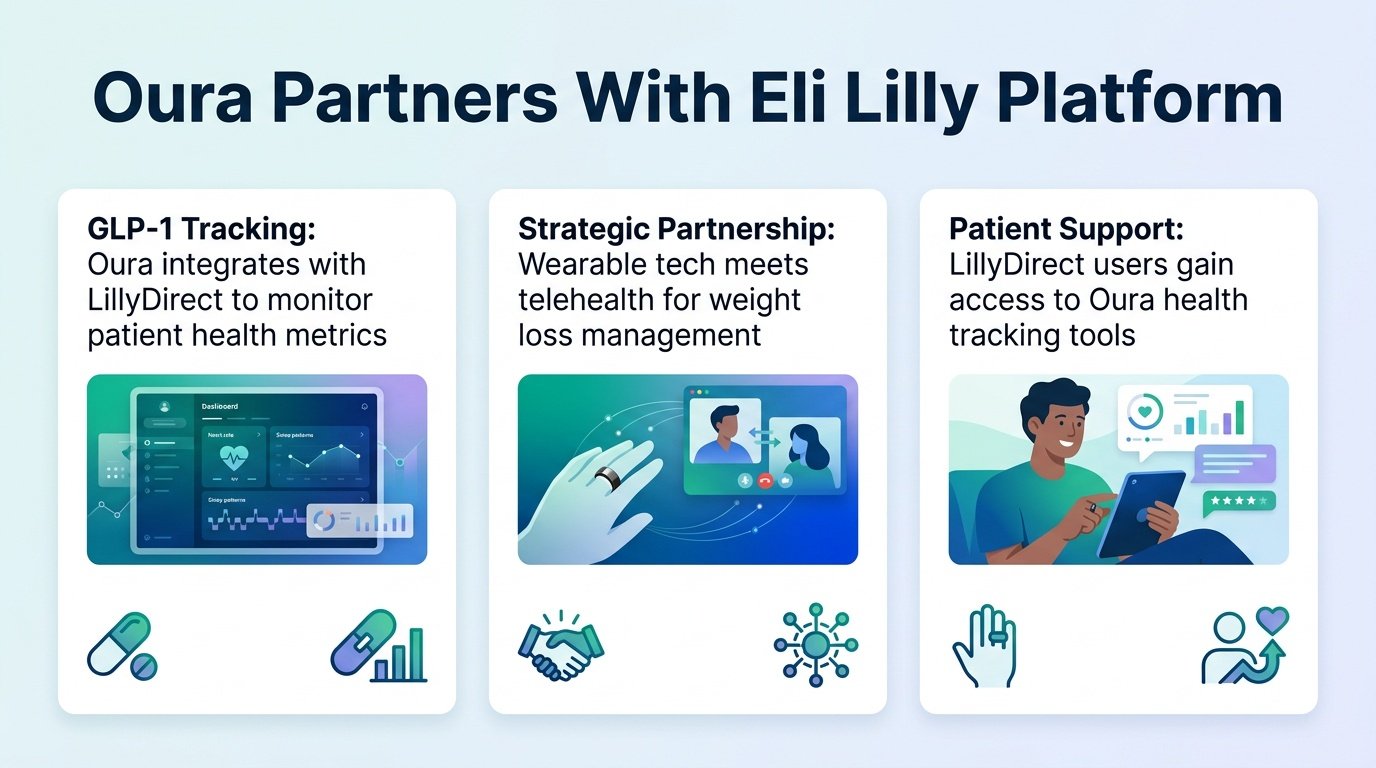
A new partnership between a smart ring maker and a pharmaceutical giant reveals how drugmakers are using consumer hardware to keep patients compliant.
The boom in GLP-1 weight-loss drugs is no longer just about the molecules. It is about the digital ecosystem built around them.
By integrating with Eli Lilly’s direct-to-consumer platform, Oura is positioning its smart ring as the digital companion for patients taking these high-demand medications. The integration allows users to monitor sleep, heart rate, and body temperature as they navigate their treatment.
The compliance play
For drugmakers, the biggest threat to long-term revenue is patient dropout. GLP-1 side effects can be harsh, and muscle loss is a constant concern.
By nudging patients to track their biometric data, Eli Lilly hopes to make the weight-loss journey more manageable. If patients can see positive cardiovascular trends even when the scale stalls, they are more likely to stay on the drug. This is not about clinical validation. It is about behavioral reinforcement.
The timing is deliberate. With the recent launch of Eli Lilly’s oral GLP-1 pill, Foundayo, the market is shifting from clinical injections to daily consumer habits. A smart ring fits perfectly into this daily routine.
The data wall
Crucially, this partnership does not involve data sharing between the two companies. Patients keep their biometric data private on their Oura app.
This boundary is necessary to maintain user trust, but it also limits the analytical power of the partnership. Without shared data, Eli Lilly cannot directly correlate real-world ring biometrics with drug efficacy. It remains a parallel tracking tool rather than a fully integrated digital therapeutic. For now, it is a clever marketing alignment in a market projected to exceed 100 million global users by 2030.