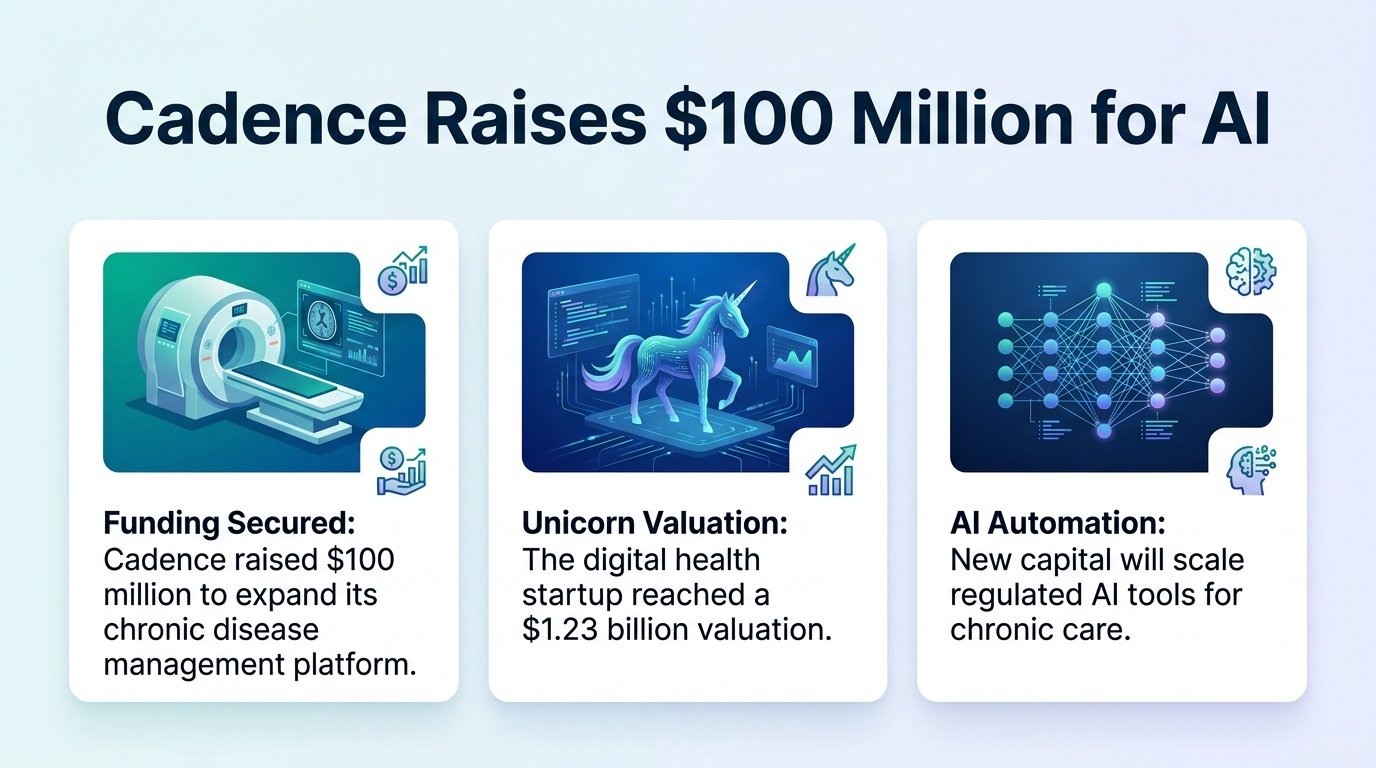
A massive new funding round proves that health systems are ready to delegate daily clinical tasks to supervised AI agents.
Cadence just secured $100 million at a $1.23 billion valuation. This is not just another digital health fundraise. It is a clear signal that major health systems are outsourcing the daily grind of chronic disease care to software.
The platform uses supervised AI agents to monitor vitals and adjust medications for over 100,000 active patients. It is a massive experiment in automated medicine.
The labor shortage reality
Hospitals are drowning in administrative work and facing severe clinician shortages. Human doctors cannot scale to monitor every heart failure or diabetes patient daily.
By automating routine check-ins, the platform reportedly saves Medicare $2.7 million weekly. This financial argument is what finally aligns health systems, insurers, and tech providers.
New partnerships with major networks like Duke Health and Texas Health Resources show that clinical leaders are comfortable letting algorithms handle patient touchpoints. This shift redefines the role of the physician. Doctors are transitioning from primary caregivers to system overseers, managing algorithms instead of patients.
The limits of automation
But can software truly replace human clinical judgment at scale?
Supervised AI still requires human oversight to prevent errors. As these platforms expand, the bottleneck may simply shift from front-line nursing to the clinicians auditing the AI’s decisions.
For now, the momentum is undeniable. The company tripled its annual recurring revenue last year. The future of medicine is automated. However, its safety still depends on the humans keeping watch.