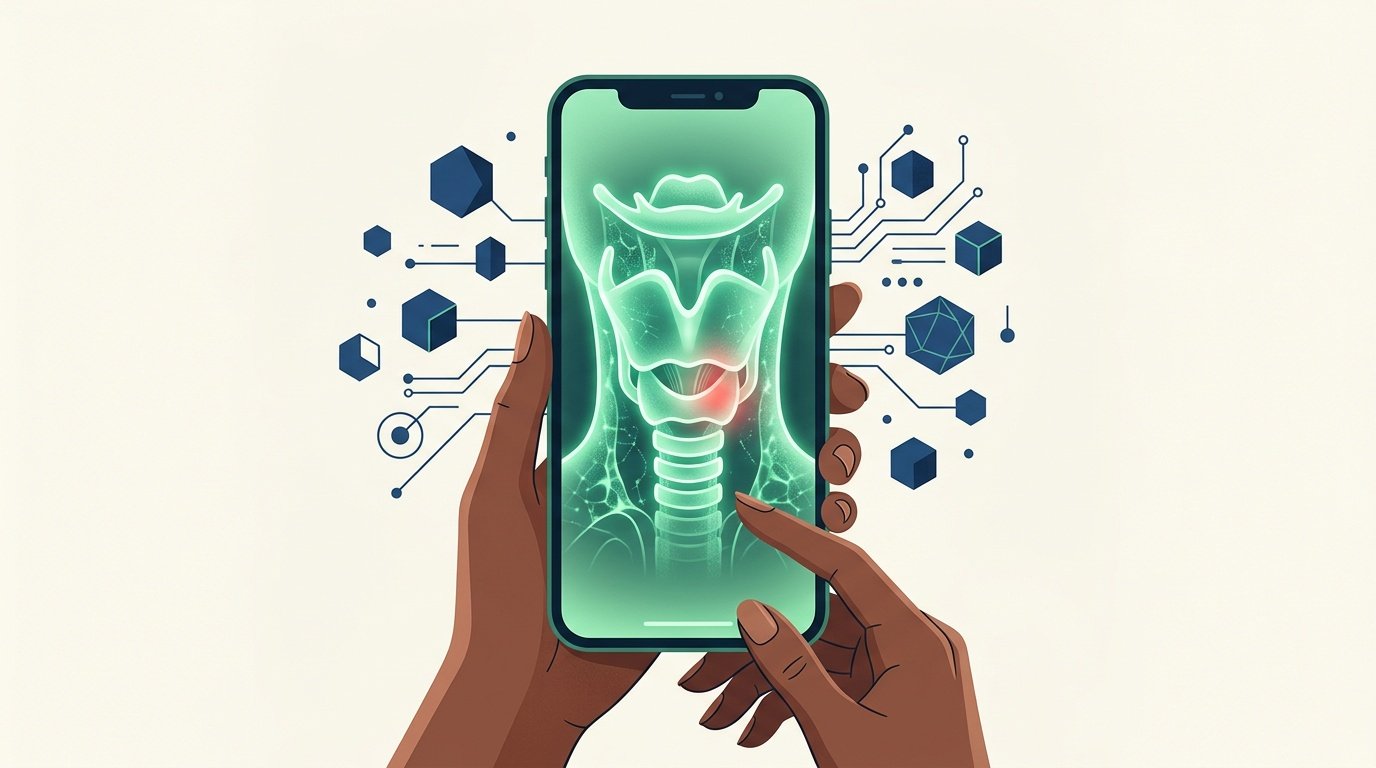
A smartphone camera might soon replace the physical throat swab, shifting the front line of infectious disease diagnosis from the clinic to the palm of your hand.
Every year, millions of sore throats lead to unnecessary antibiotic prescriptions. Doctors frequently prescribe them because they cannot easily distinguish between viral and bacterial infections without a lab test. A software-only alternative is now entering pivotal clinical trials to evaluate a smartphone-enabled AI that analyzes throat images to detect Strep A.
The diagnostic shift
The traditional rapid strep test requires a physical swab, a reagent kit, and minutes of waiting. A software-only approach removes these physical supply chains entirely. Pre-validation data showed the algorithm achieved 96.57% accuracy and a 100% negative predictive value. That perfect negative score is the critical metric. It means the software did not miss a single true infection, giving clinicians the confidence to withhold antibiotics safely and curb resistance.
The clinical hurdle
But real-world deployment introduces variables that controlled pre-validation studies often ignore. Poor smartphone camera quality, inconsistent lighting, and user error can degrade image inputs. The pivotal trial must prove the software remains resilient across diverse patient populations and hardware.
The FDA is increasingly receptive to these digital-first trials, actively seeking to integrate real-time data tracking to speed up validation. If this trial succeeds, it establishes a major precedent for Software as a Medical Device (SaMD) replacing physical lab infrastructure, particularly in remote regions where untreated Strep A can progress to fatal rheumatic heart disease.