⚡ Quick Summary
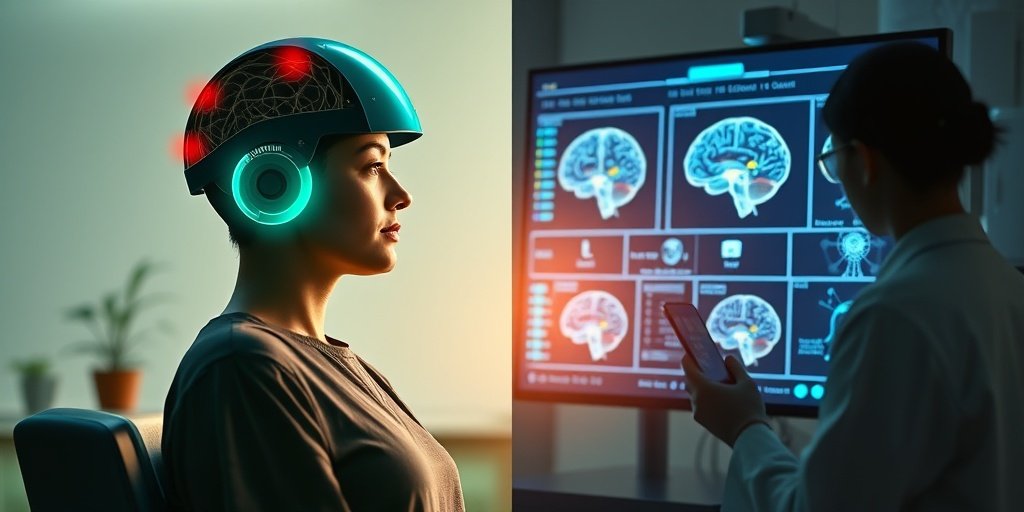
This review highlights the advancements in neuroengineering and its applications in neurodegenerative diseases such as Alzheimer’s and Parkinson’s. It emphasizes the need for co-adaptive systems that enhance human-machine interactions through artificial intelligence and deep learning technologies.
🔍 Key Details
- 🧠 Focus: Neuroengineering, neural interfaces, brain-machine interactions
- 🌐 Diseases addressed: Alzheimer’s disease (AD), Parkinson’s disease (PD)
- ⚙️ Technologies discussed: Brain-computer interfaces, AI, organoid technologies
- 🔄 Approach: Co-adaptive systems for individualized diagnostics
🔑 Key Takeaways
- 🧬 Neurotechnology is crucial for diagnosing and treating neurodegenerative diseases.
- 🤖 AI integration can enhance the adaptability of neural interfaces.
- 🔄 Co-adaptive systems allow for continuous learning between users and interfaces.
- 📊 Deep learning can improve adaptive decoding for better diagnostics.
- 💡 Reinforcement learning facilitates bidirectional feedback in human-machine interactions.
- 🧪 Hybrid organoid-brain-computer interfaces can mimic disease dynamics.
- ⚖️ Ethical standards must be maintained in the development of these technologies.
- 📈 Future research should focus on AI-enhanced neural interfaces for clinical viability.
📚 Background
Neurodegenerative diseases like Alzheimer’s and Parkinson’s pose significant challenges to public health, affecting millions globally. Traditional methods of diagnosis and treatment often fall short, necessitating innovative approaches. The integration of neuroengineering and artificial intelligence offers promising avenues for enhancing patient care and understanding disease progression.
🗒️ Study
This selective review consolidates findings from various fields, including neuroscience and AI, to explore the potential of co-adaptive systems in neuroengineering. The authors emphasize the importance of developing systems that not only assist patients but also learn from their interactions, thereby improving the overall efficacy of treatments for neurodegenerative diseases.
📈 Results
The review identifies significant gaps in the current research landscape, particularly in the realm of long-term AI-facilitated co-adaptation. It highlights the need for advanced technologies such as deep learning for adaptive decoding and reinforcement learning for effective feedback mechanisms. These advancements could lead to more personalized and effective treatment strategies for patients with AD and PD.
🌍 Impact and Implications
The implications of this research are profound. By fostering symbiotic human-machine interactions, we can enhance the quality of life for individuals suffering from neurodegenerative diseases. The proposed frameworks for next-generation AI-enhanced neural interfaces could revolutionize how we approach diagnosis, monitoring, and treatment, paving the way for more effective healthcare solutions.
🔮 Conclusion
This review underscores the transformative potential of neuroengineering and artificial intelligence in addressing the challenges posed by neurodegenerative diseases. By focusing on co-adaptive systems, we can create more effective and personalized treatment options. The future of neurotechnology looks promising, and continued research in this field is essential for advancing patient care.
💬 Your comments
What are your thoughts on the integration of AI in neuroengineering? We would love to hear your insights! 💬 Join the conversation in the comments below or connect with us on social media:
Neuroengineering Frontiers: A Selective Review of Neural Interfaces, Brain-Machine Interactions, and Artificial Intelligence in Neurodegenerative Diseases.
Abstract
Neurodegenerative diseases, including Alzheimer’s disease (AD) and Parkinson’s disease (PD), present a growing public health challenge globally. Recent advancements in neurotechnology and neuroengineering have significantly enhanced brain-computer interfaces, artificial intelligence, and organoid technologies, making them pivotal instruments for diagnosis, monitoring, disease modeling, treatment development, and rehabilitation of various diseases. Nonetheless, the majority of neural interface platforms focus on unidirectional control paradigms, neglecting the need for co-adaptive systems where both the human user and the interface continually learn and adapt. This selected review consolidates information from neuroscience, artificial intelligence, and organoid engineering to identify the conceptual underpinnings of co-adaptive and symbiotic human-machine interaction. We emphasize significant shortcomings in the advancement of long-term AI-facilitated co-adaptation, which permits individualized diagnostics and progression tracking in Alzheimer’s disease and Parkinson’s disease. We concentrate on incorporating deep learning for adaptive decoding, reinforcement learning for bidirectional feedback, and hybrid organoid-brain-computer interface platforms to mimic disease dynamics and expedite therapy discoveries. This study outlines the trends and limitations of the topics at hand, proposing a research framework for next-generation AI-enhanced neural interfaces targeting neurodegenerative diseases and neurological disorders that are both technologically sophisticated and clinically viable, while adhering to ethical standards.
Author: [‘Usman M’, ‘Ashebir S’, ‘Okey-Mbata C’, ‘Yun Y’, ‘Kim S’]
Journal: Appl Sci (Basel)
Citation: Usman M, et al. Neuroengineering Frontiers: A Selective Review of Neural Interfaces, Brain-Machine Interactions, and Artificial Intelligence in Neurodegenerative Diseases. Neuroengineering Frontiers: A Selective Review of Neural Interfaces, Brain-Machine Interactions, and Artificial Intelligence in Neurodegenerative Diseases. 2025; 15:(unknown pages). doi: 10.3390/app152111316