⚡ Quick Summary
This study explores the machine learning-driven discovery of therapeutic nucleoside hydrogels for treating periodontitis. By employing advanced predictive models, researchers identified two promising hydrogels, GMP and dGMP, demonstrating significant biocompatibility and antibacterial activity.
🔍 Key Details
- 📊 Models Used: Nine predictive models including decision trees, logistic regression, random forest, and extreme gradient boosting.
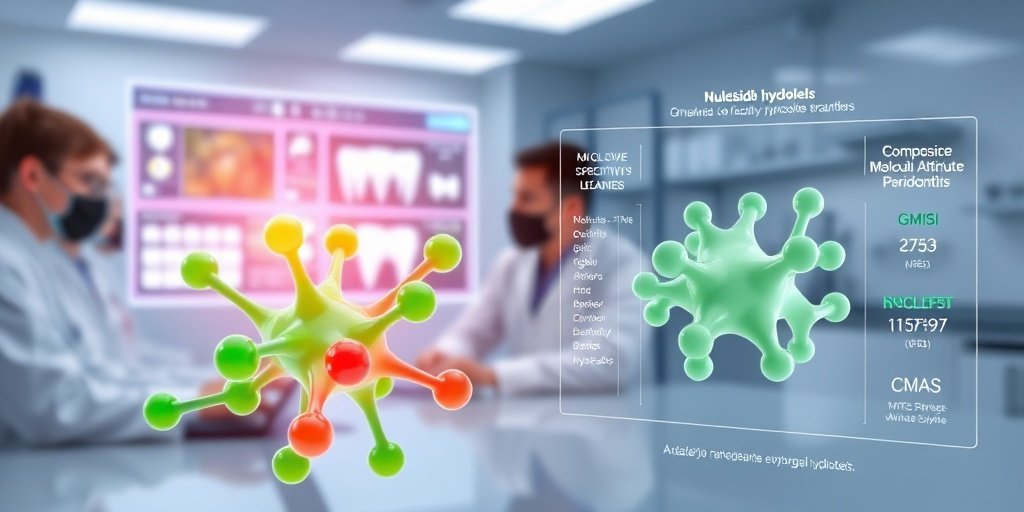
- 🧩 New Metrics: Molecular Bioactivity Specificity Index (MBSI) and Composite Molecular Attribute Score (CMAS).
- ⚙️ Focus: Bioactive nucleoside hydrogels for periodontitis treatment.
- 🏆 Candidates Identified: GMP and dGMP hydrogels.
🔑 Key Takeaways
- 💡 Machine learning can effectively predict the biological activity of nucleosides.
- 🔬 MBSI and CMAS are valuable tools for assessing nucleoside derivatives.
- 🌱 GMP and dGMP hydrogels exhibit high hydrogel-forming ability and biocompatibility.
- 🦠 Antibacterial activity of the identified hydrogels makes them suitable for periodontitis treatment.
- 🌍 This research paves the way for targeted therapies in oral diseases.
- 📅 Published in: International Journal of Oral Science, 2026.
- 🆔 DOI: 10.1038/s41368-026-00438-3.
📚 Background
Periodontitis is a prevalent oral disease characterized by inflammation and destruction of the supporting structures of the teeth. Traditional treatments often fall short in effectively targeting the underlying bacterial infections. The advent of supramolecular hydrogels offers a promising avenue for drug delivery and tissue engineering, yet predicting the bioactivity of nucleosides remains a challenge. This study aims to bridge that gap using machine learning techniques.
🗒️ Study
The research team developed nine predictive models to assess the biological activity of nucleosides, employing feature-selected machine learning methods. The introduction of MBSI and CMAS allowed for a more nuanced evaluation of nucleoside derivatives. Following this, the researchers established screening strategies to identify bioactive nucleoside hydrogels, ultimately leading to the discovery of GMP and dGMP.
📈 Results
The study successfully identified two candidate hydrogels, GMP and dGMP, which not only demonstrated high hydrogel-forming ability but also exhibited excellent biocompatibility and antibacterial properties. These findings were validated in models of periodontitis, showcasing the potential of these hydrogels as effective treatments.
🌍 Impact and Implications
The implications of this research are significant for the field of oral health. By leveraging machine learning and innovative metrics like MBSI and CMAS, the study highlights a new pathway for developing targeted therapies for periodontitis. This approach could lead to more effective treatments, improving patient outcomes and advancing the field of biomedical applications.
🔮 Conclusion
This study underscores the transformative potential of machine learning in the discovery of therapeutic agents. The identification of GMP and dGMP hydrogels as viable treatments for periodontitis marks a significant step forward in the development of targeted therapies for oral diseases. Continued research in this area could yield even more breakthroughs, enhancing the efficacy of treatments in the future.
💬 Your comments
What are your thoughts on the use of machine learning in developing new therapies for oral diseases? We would love to hear your insights! 💬 Leave your comments below or connect with us on social media:
Machine learning-driven discovery of therapeutic nucleoside hydrogels for periodontitis.
Abstract
Supramolecular hydrogels hold significant potential in drug delivery and tissue engineering, with standing out for their unique properties. Despite their promise, predicting nucleoside bioactivity remains challenging. This study aims to predict the biological activity of nucleosides to guide the rational synthesis of hydrogels. Specifically, nine predictive models and databases for various biological activities were built with feature-selected machine learning methods including decision trees, logistic regression, random forest, and extreme gradient boosting. Then, the Molecular Bioactivity Specificity Index (MBSI) was introduced to gauge the primary bioactivity of nucleoside derivatives, and the Composite Molecular Attribute Score (CMAS) was devised to measure the overall performance of nucleoside derivatives. Subsequently, screening strategies for bioactive nucleoside hydrogels were established, and two candidate hydrogels (GMP and dGMP) with high hydrogel-forming ability, biocompatibility, and antibacterial activity were identified. Finally, two hydrogels were validated for antibacterial treatment of periodontitis. This study highlights the feasibility of ML-based strategies and MBSI/CMAS in rationally designing bioactive nucleoside hydrogels for biomedical applications. The discovery of GMP and dGMP hydrogels and their successful validation in periodontitis models highlight the potential of this strategy for developing targeted therapies for oral diseases.
Author: [‘Li W’, ‘Wen Y’, ‘Huang Z’, ‘Shuai F’, ‘Yin Y’, ‘Chen Q’, ‘Zhu F’, ‘Xu H’, ‘Zhao H’]
Journal: Int J Oral Sci
Citation: Li W, et al. Machine learning-driven discovery of therapeutic nucleoside hydrogels for periodontitis. Machine learning-driven discovery of therapeutic nucleoside hydrogels for periodontitis. 2026; 18:(unknown pages). doi: 10.1038/s41368-026-00438-3