⚡ Quick Summary
This comprehensive review highlights the urgent need for robust privacy, security, and governance frameworks for AI-powered wearable Internet of Health Things (IoHT) in elderly care. With the elderly population projected to reach 1.4 billion by 2030, the study proposes a novel five-layer governance framework to address unique vulnerabilities in this demographic.
🔍 Key Details
- 📊 Dataset: 333 peer-reviewed articles from 2018 to 2025
- 🌍 Regions analyzed: Global, with a focus on the EU, US, and Asia-Pacific
- ⚙️ Technologies: AI-powered wearables including smartwatches and biosensors
- 🏛️ Regulatory frameworks: GDPR, AI Act, and sector-specific US regulations
🔑 Key Takeaways
- 👵 Aging population is rapidly increasing, with significant implications for healthcare systems.
- 🤖 AI-powered wearables are transforming elderly health monitoring and predictive analytics.
- ⚖️ Regulatory fragmentation exists, with the EU having the most comprehensive frameworks.
- 🌏 Asia-Pacific approaches vary widely, from mature to nascent regulatory environments.
- 🛡️ Elderly-specific provisions are largely absent in current regulations.
- 🔄 Proposed framework integrates security, privacy, ethical governance, and compliance.
- 🧠 Unique vulnerabilities of the elderly include cognitive decline and reduced digital literacy.
- 🔒 Privacy-preserving technologies like federated learning are essential for data security.
📚 Background
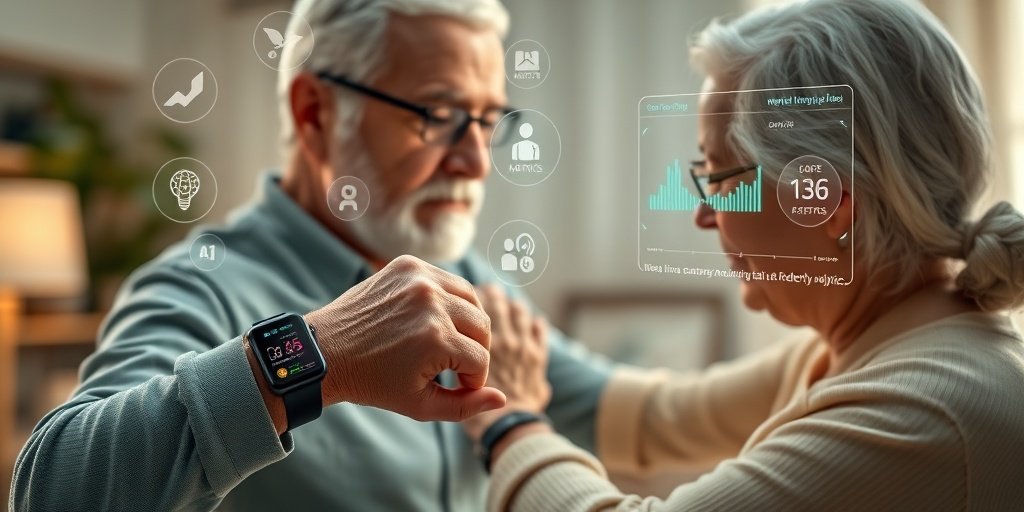
The global aging population is a pressing issue, with projections indicating that by 2050, there will be 2.1 billion individuals aged 60 and older. This demographic shift places immense pressure on healthcare systems, necessitating innovative solutions. AI-powered wearables, part of the Internet of Health Things (IoHT), offer promising avenues for real-time health monitoring and predictive analytics, particularly for the elderly.
🗒️ Study
This review synthesizes findings from 333 peer-reviewed articles published across various databases, including PubMed and Scopus, to analyze existing governance frameworks for AI-powered wearables in elderly care. The study identifies significant gaps in privacy and security measures, particularly concerning the elderly population, who may be more vulnerable to data misuse.
📈 Results
The analysis reveals a fragmented regulatory landscape. The European Union’s GDPR and AI Act provide a robust rights-based framework, while the United States relies on a patchwork of regulations that often overlook consumer wearables. In contrast, Asia-Pacific nations exhibit a wide range of regulatory maturity, with countries like Singapore and Japan leading, while others like Indonesia and Malaysia lag behind.
🌍 Impact and Implications
The findings underscore the critical need for harmonized, age-sensitive regulatory approaches to protect the elderly’s privacy and security. The proposed five-layer governance framework aims to unify various aspects of governance, ensuring that AI-powered wearables can enhance elderly healthcare without compromising their dignity or autonomy. This framework could serve as a model for future regulations, promoting the safe and ethical use of technology in healthcare.
🔮 Conclusion
This review highlights the transformative potential of AI-powered wearables in elderly care while emphasizing the urgent need for comprehensive governance frameworks. By addressing the unique vulnerabilities of the elderly and advocating for privacy-preserving technologies, we can ensure that these innovations fulfill their promise of enhancing healthcare without compromising essential rights. The future of elderly care is bright, but it requires concerted efforts to create a secure and supportive environment.
💬 Your comments
What are your thoughts on the integration of AI in elderly care? How can we better protect the privacy and security of our aging population? 💬 Join the conversation in the comments below or connect with us on social media:
Privacy, Security & Governance Frameworks for AI-Powered Wearable Internet of Health Things in Elderly Care: A Comprehensive Review.
Abstract
The global aging population is expanding at an unprecedented rate, with projections indicating that 1.4 billion people will be aged 60 years or older by 2030 and 2.1 billion by 2050, placing immense pressure on healthcare systems worldwide. Artificial intelligence (AI)-powered wearable Internet of Health Things (IoHT) devices – including smartwatches, biosensors, and continuous health monitors – have emerged as transformative tools for real-time elderly health monitoring, fall detection, and predictive analytics. However, the massive collection of sensitive biometric data by these devices raises critical concerns regarding privacy, security, and governance that remain insufficiently addressed, particularly for elderly populations. This comprehensive review synthesizes evidence from 333 peer-reviewed articles published between 2018 and 2025 cross PubMed, Scopus, Web of Science, IEEE Xplore, and Google Scholar to identify, analyze, and compare governance frameworks for AI-powered wearable IoHT in elderly care. The analysis reveals significant regulatory fragmentation across jurisdictions: while the European Union’s General Data Protection Regulation (GDPR) and AI Act provide the most comprehensive rights-based framework, the United States relies on a patchwork of sector-specific regulations with notable gaps for consumer wearables, and Asia-Pacific nations exhibit highly variable approaches ranging from mature (Singapore, Japan) to nascent (Indonesia, Malaysia). Elderly-specific provisions remain conspicuously absent across all regulatory regimes examined. This review proposes a novel five-layer integrative governance framework – the first to unify technical security, privacy protection, ethical AI governance, regulatory compliance, and person-centered governance specifically designed for elderly care contexts. The framework addresses unique vulnerabilities associated with cognitive decline, reduced digital literacy, and caregiver dependency. Findings underscore the urgent need for harmonized, age-sensitive regulatory approaches and privacy-preserving technologies such as federated learning and differential privacy to ensure that AI-powered wearable IoHT fulfills its promise of enhancing elderly healthcare without compromising dignity, autonomy, or data security.
Author: [‘Dharmansyah D’, ‘Rahayuwati L’, ‘Pramukti I’, ‘Mutyara K’]
Journal: Risk Manag Healthc Policy
Citation: Dharmansyah D, et al. Privacy, Security & Governance Frameworks for AI-Powered Wearable Internet of Health Things in Elderly Care: A Comprehensive Review. Privacy, Security & Governance Frameworks for AI-Powered Wearable Internet of Health Things in Elderly Care: A Comprehensive Review. 2026; 19:606165. doi: 10.2147/RMHP.S606165