⚡ Quick Summary
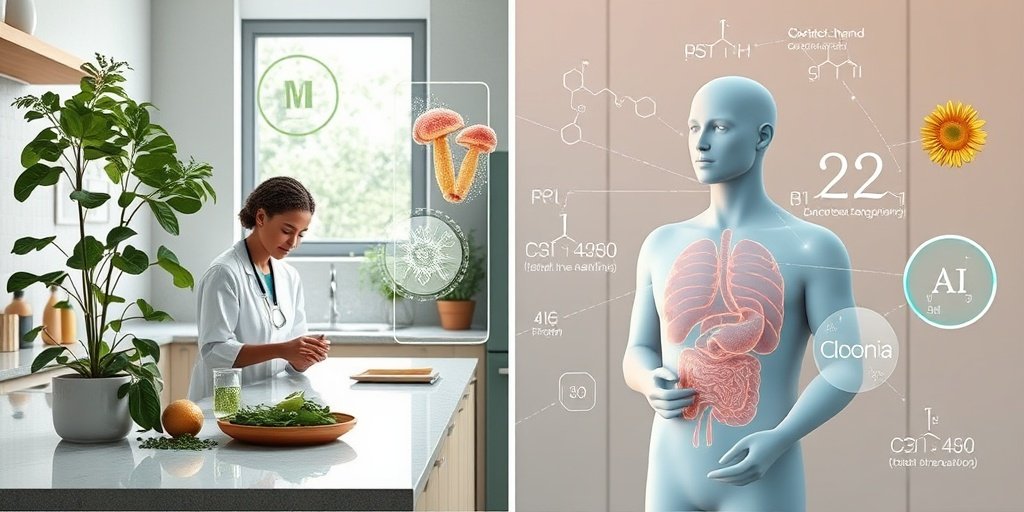
This review explores the potential of medicinal and edible plants in managing Inflammatory Bowel Disease (IBD) through their ability to modulate the microbiota-metabolite-immune axis. By leveraging the multi-component nature of these plants, the study highlights their role in restoring gut homeostasis and improving patient outcomes.
🔍 Key Details
- 🌱 Focus Plants: Crataegus pinnatifida, Ganoderma lucidum, Codonopsis pilosula
- 🔬 Key Bioactive Constituents: Polysaccharides, curcumin, geniposide
- ⚙️ Mechanisms: Modulation of SCFA production, oxidative stress, bile-acid signaling
- 📊 Framework Proposed: Precision-intervention integrating multi-omics and AI
🔑 Key Takeaways
- 🌿 Medicinal food homology (MFH) combines nutritional and therapeutic benefits of plants.
- 💡 Multi-target synergy from plant compounds can effectively restore gut homeostasis.
- 🧬 Bioactive constituents play a crucial role in regulating gut microbiota and immune function.
- ⚠️ Translational challenges exist in applying animal-model findings to human clinical settings.
- 🔍 A precision-intervention framework is essential for personalized IBD management.
- 📈 Evidence-based approaches are needed to validate the efficacy of MFH in clinical practice.
📚 Background
Inflammatory Bowel Disease (IBD) is a chronic condition characterized by inflammation of the gastrointestinal tract, often resulting from a complex interplay of gut dysbiosis, immune dysfunction, and metabolic disturbances. Traditional therapies frequently target specific pathways but may not adequately restore the intricate balance of the gut ecosystem. This has led to a growing interest in holistic dietary interventions, particularly those involving plants that serve both as food and medicine.
🗒️ Study
The review systematically examines how medicinal and edible plants can influence the gut’s microbiota, metabolites, and immune responses. By focusing on plants like Crataegus pinnatifida, Ganoderma lucidum, and Codonopsis pilosula, the authors discuss their bioactive compounds and their potential to restore gut health through various mechanisms, including the modulation of short-chain fatty acids (SCFAs) and oxidative stress.
📈 Results
The findings suggest that the bioactive constituents of these plants can significantly influence the gut microbiome and immune function. Specifically, they enhance the production of short-chain fatty acids (SCFAs), which are vital for maintaining gut health and reducing inflammation. The review emphasizes the need for further research to validate these effects in clinical settings and to address the challenges of translating animal-model findings to human applications.
🌍 Impact and Implications
The implications of this study are profound, as it opens new avenues for managing IBD through dietary interventions. By integrating medicinal plants into treatment regimens, healthcare providers may offer patients a more holistic approach to managing their condition. This could lead to improved patient outcomes and a better quality of life for those suffering from IBD. The proposed precision-intervention framework also highlights the importance of personalized medicine in the future of IBD management.
🔮 Conclusion
This review underscores the significant potential of medicinal and edible plants in the management of IBD. By harnessing their multi-component nature and understanding their mechanisms of action, we can pave the way for more effective, evidence-based, and personalized treatment strategies. The future of IBD management looks promising, with the integration of traditional knowledge and modern scientific approaches.
💬 Your comments
What are your thoughts on the use of medicinal plants for managing IBD? We would love to hear your insights! 💬 Please share your comments below or connect with us on social media:
Medicinal and Edible Plants for the Management of Inflammatory Bowel Disease: Synergistic Modulation of the Microbiota-Metabolite-Immune Axis.
Abstract
Inflammatory bowel disease (IBD) is a chronic condition driven by the intertwined interplay of gut dysbiosis, immune perturbation, and metabolic imbalance. Current single-target therapies often fail to durably restore homeostasis in this complex ecosystem, and have thereby increased interest in diet-based holistic interventions. Plants traditionally used as both food and medicine, such as Crataegus pinnatifida, Ganoderma lucidum, and Codonopsis pilosula, are natural products that possess both nutritional and therapeutic attributes. The use of such plants is commonly referred to as medicinal food homology (MFH) in East Asian literature. Their multi-component nature offers the potential to modulate intestinal homeostasis through multi-target synergy. This review systematically discusses how MFH regulates the “microbiota-metabolite-immune” axis via key bioactive constituents like polysaccharides, curcumin, and geniposide. Specifically, these constituents differentially influence short-chain fatty acid (SCFA) production, oxidative stress, and bile-acid signaling to thereby enable integrated regulation of the gut micro-ecosystem and host immune function. In parallel, we critically address the translational challenges of extrapolating animal-model findings to clinical applications, and propose a precision-intervention framework that integrates chemical standardization, multi-omics, artificial intelligence, and advanced ex vivo validation models to both overcome MFH’s intrinsic complexity and facilitate evidence-based, personalized IBD management.
Author: [‘Yang Q’, ‘Wang S’, ‘Huang C’, ‘Shao R’, ‘Wang Y’, ‘Zhao X’]
Journal: Am J Chin Med
Citation: Yang Q, et al. Medicinal and Edible Plants for the Management of Inflammatory Bowel Disease: Synergistic Modulation of the Microbiota-Metabolite-Immune Axis. Medicinal and Edible Plants for the Management of Inflammatory Bowel Disease: Synergistic Modulation of the Microbiota-Metabolite-Immune Axis. 2026; (unknown volume):1-31. doi: 10.1142/S0192415X26500291